

Product Information
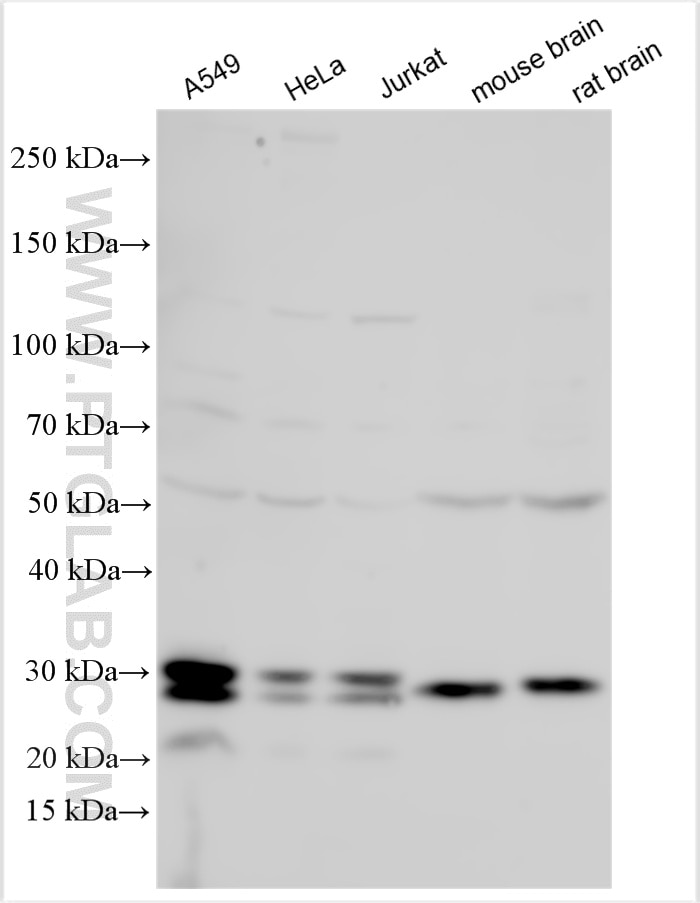
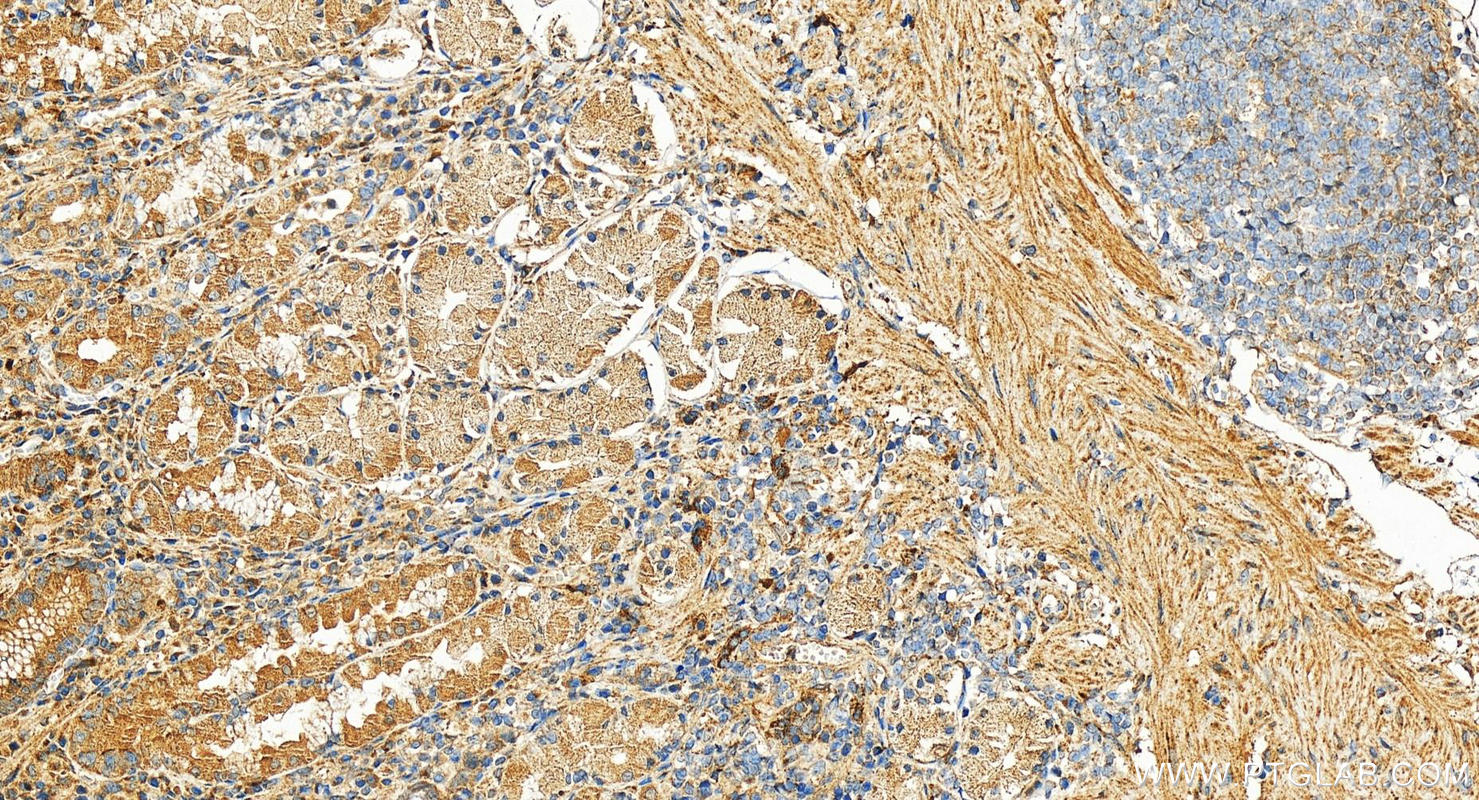
27252-1-PBS targets EPDR1 in WB, IHC, Indirect ELISA applications and shows reactivity with human, mouse, rat samples.
| Tested Reactivity | human, mouse, rat |
| Host / Isotype | Rabbit / IgG |
| Class | Polyclonal |
| Type | Antibody |
| Immunogen |
CatNo: Ag26120 Product name: Recombinant human EPDR1 protein Source: e coli.-derived, PGEX-4T Tag: GST Domain: 52-160 aa of BC018299 Sequence: QVMYQQSSGRNSRALLSYDGLNQRVRVLDERKALIPCKRLFEYILLYKDGVMFQIDQATKQCSKMTLTQPWDPLDIPQNSTFEDQYSIGGPQEQITVQEWSDRKSARSY Predict reactive species |
| Full Name | Mammalian ependymin-related protein 1 |
| Calculated Molecular Weight | 25 kDa |
| Observed Molecular Weight | 25-30 kDa |
| GenBank Accession Number | BC018299 |
| Gene Symbol | EPDR1 |
| Gene ID (NCBI) | 54749 |
| RRID | AB_3085942 |
| Conjugate | Unconjugated |
| Form | Liquid |
| Purification Method | Antigen affinity purification |
| UNIPROT ID | Q9UM22 |
| Storage Buffer | PBS only, pH 7.3. |
| Storage Conditions | Store at -80°C. |
Background Information
The ependymin-related 1 (EPDR1) gene, also known as MERP1 and UCC1, encodes for a protein related to ependymins, which are type II transmembrane proteins that are similar to two families of cell adhesion molecules: the protocadherins and ependymins. Ependymin-related protein 1 (EPDR1) was recently identified as a secreted human batokine regulating mitochondrial respiration linked to thermogenesis in brown fat. Proteomics studies of mammalian mannose-6-phosphate (M6P) glycoproteins have identified EPDR1 as a lysosomal protein with unknown function. The lysosomal localization of EPDR1 was further demonstrated in mouse brain homogenates by subcellular fractionation.(PMID: 36343918, PMID: 33902536, PMID: 30729188)



