

Tested Applications
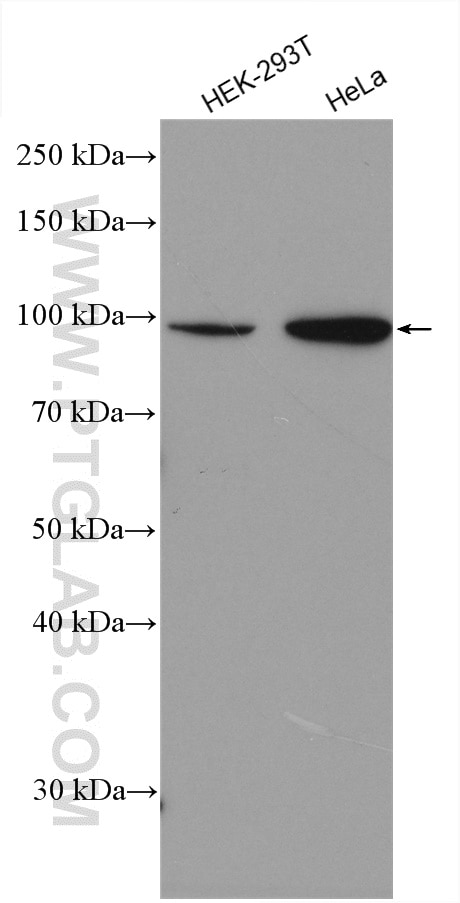
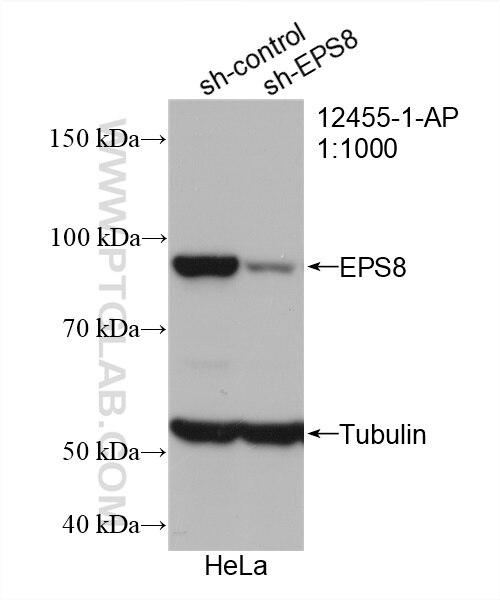
| Positive WB detected in | HEK-293T cells, HeLa cells |
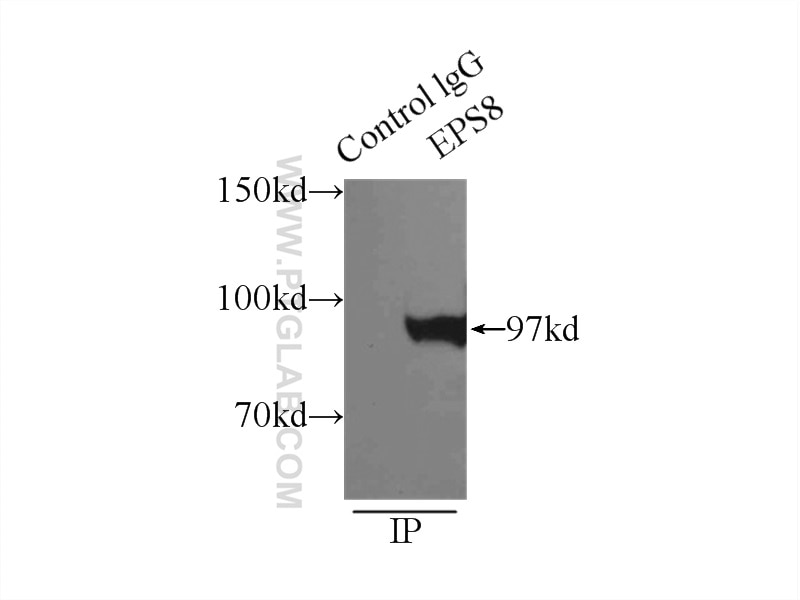
| Positive IP detected in | HeLa cells |
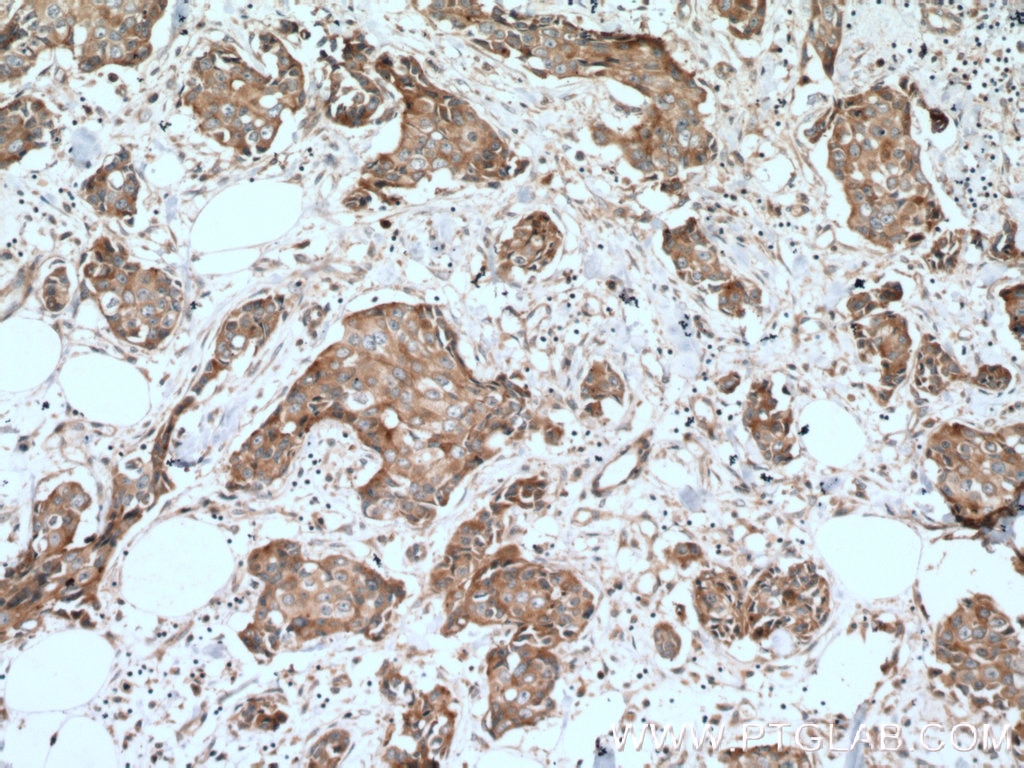
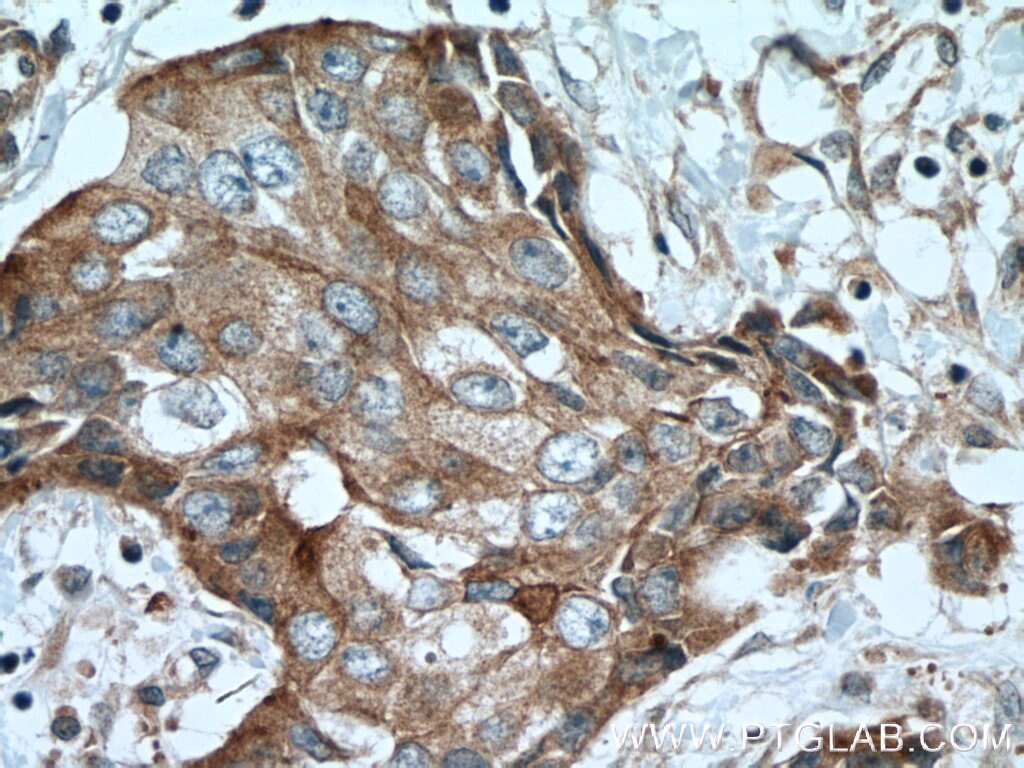
| Positive IHC detected in | human breast cancer tissue Note: suggested antigen retrieval with TE buffer pH 9.0; (*) Alternatively, antigen retrieval may be performed with citrate buffer pH 6.0 |
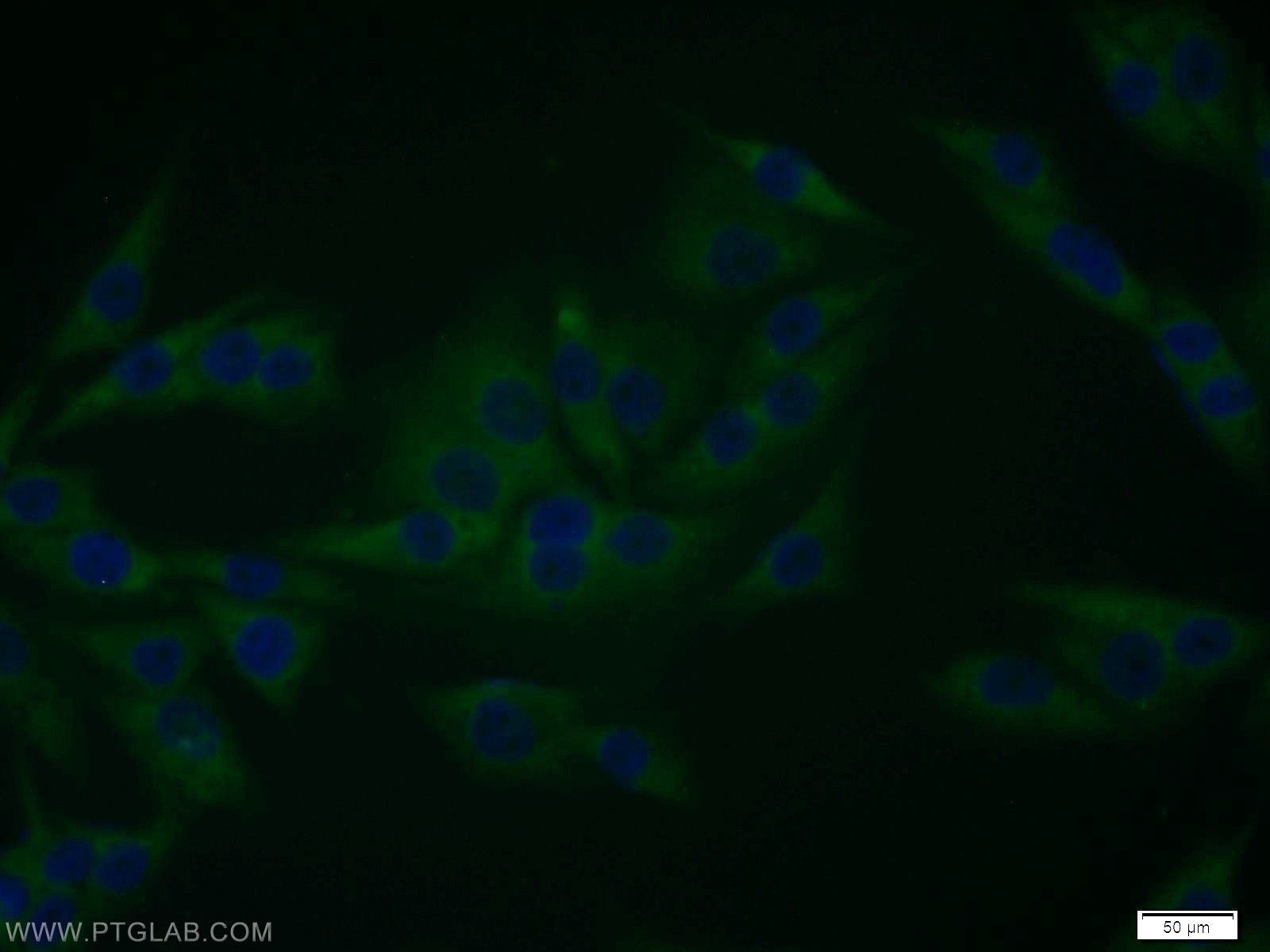
| Positive IF/ICC detected in | A375 cells |
Recommended dilution
| Application | Dilution |
|---|---|
| Western Blot (WB) | WB : 1:500-1:2000 |
| Immunoprecipitation (IP) | IP : 0.5-4.0 ug for 1.0-3.0 mg of total protein lysate |
| Immunohistochemistry (IHC) | IHC : 1:50-1:500 |
| Immunofluorescence (IF)/ICC | IF/ICC : 1:10-1:100 |
| It is recommended that this reagent should be titrated in each testing system to obtain optimal results. | |
| Sample-dependent, Check data in validation data gallery. | |
Product Information
12455-1-AP targets EPS8 in WB, IHC, IF/ICC, IP, ELISA applications and shows reactivity with human samples.
| Tested Reactivity | human |
| Cited Reactivity | human, mouse |
| Host / Isotype | Rabbit / IgG |
| Class | Polyclonal |
| Type | Antibody |
| Immunogen |
CatNo: Ag3121 Product name: Recombinant human EPS8 protein Source: e coli.-derived, PGEX-4T Tag: GST Domain: 13-267 aa of BC030010 Sequence: GMYPSQMNGYGSSPTFSQTDREHGSKTSAKALYEQRKNYARDSVSSVSDISQYRVEHLTTFVLDRKDAMITVDDGIRKLKLLDAKGKVWTQDMILQVDDRAVSLIDLESKNELENFPLNTIQHCQAVMHSCSYDSVLALVCKEPTQNKPDLHLFQCDEVKANLISEDIESAISDSKGGKQKRRPDALRMISNADPSIPPPPRAPAPAPPGTVTQVDVRSRVAAWSAWAADQGDFEKPRQYHEQEETPEMMAARID Predict reactive species |
| Full Name | epidermal growth factor receptor pathway substrate 8 |
| Calculated Molecular Weight | 822 aa, 92 kDa |
| Observed Molecular Weight | 97 kDa |
| GenBank Accession Number | BC030010 |
| Gene Symbol | EPS8 |
| Gene ID (NCBI) | 2059 |
| RRID | AB_2098836 |
| Conjugate | Unconjugated |
| Form | Liquid |
| Purification Method | Antigen affinity purification |
| UNIPROT ID | Q12929 |
| Storage Buffer | PBS with 0.02% sodium azide and 50% glycerol, pH 7.3. |
| Storage Conditions | Store at -20°C. Stable for one year after shipment. Aliquoting is unnecessary for -20oC storage. 20ul sizes contain 0.1% BSA. |
Background Information
Epidermal growth factor receptor Pathway Substrate 8 (EPS8) is a crucial regulator of the actin cytoskeleton dynamics accompanying cell motility and invasion. This protein contains one PH domain and one SH3 domain leading to its binding activity with multiple cellular targets. EPS8 can function as a unique actin capping protein specifically required for dendritic cell migration and plays roles in the regulation of axonal filopodia in neuronal development and synapse formation. The EPS8 gene may contribute to the development of a subset of colorectal cancers and could have applications in diagnosis and treatment.
Protocols
| Product Specific Protocols | |
|---|---|
| IF protocol for EPS8 antibody 12455-1-AP | Download protocol |
| IHC protocol for EPS8 antibody 12455-1-AP | Download protocol |
| IP protocol for EPS8 antibody 12455-1-AP | Download protocol |
| WB protocol for EPS8 antibody 12455-1-AP | Download protocol |
| Standard Protocols | |
|---|---|
| Click here to view our Standard Protocols |
Publications
What published studies show
The EPS8 polyclonal antibody (Cat# 12455-1-AP) has 4 total citations published in Nature Aging, Acta Biochimica et Biophysica Sinica, Experimental Cell Research, and Acta Otolaryngologica. The associated research fields include aging and protein aggregation via RAC signaling, gastric cancer (miR-345/Rac1 axis), pancreatic cancer (BMI1/ALDH7A1 pathway), and auditory hair cell biology (myosin XVa structure/function).
| Species | Application | Title |
|---|---|---|
Nat Aging The aging factor EPS8 induces disease-related protein aggregation through RAC signaling hyperactivation.
| ||
Acta Biochim Biophys Sin (Shanghai) miR-345 inhibits migration and stem-like cell phenotype in gastric cancer via inactivation of Rac1 by targeting EPS8.
| ||
Exp Cell Res EPS8 supports pancreatic cancer growth by inhibiting BMI1 mediated proteasomal degradation of ALDH7A1.
| ||
Acta Otolaryngol The 133-kDa N-terminal region of myosin XVa is critical for normal structure and function of auditory and hair cells |







