

Tested Applications
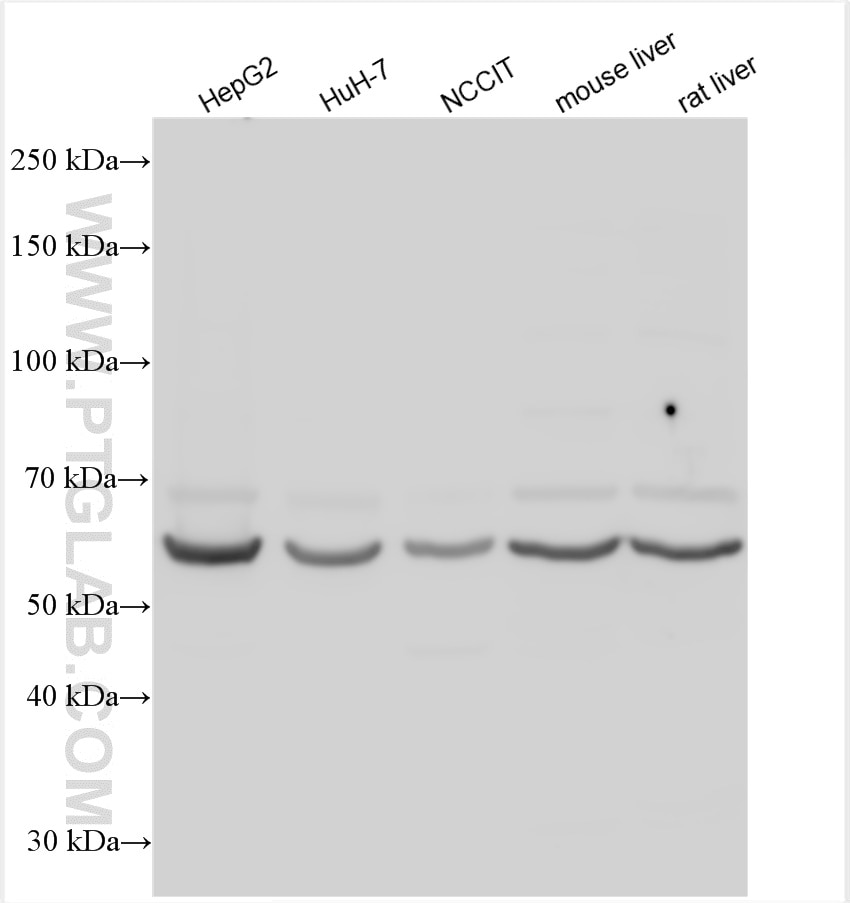
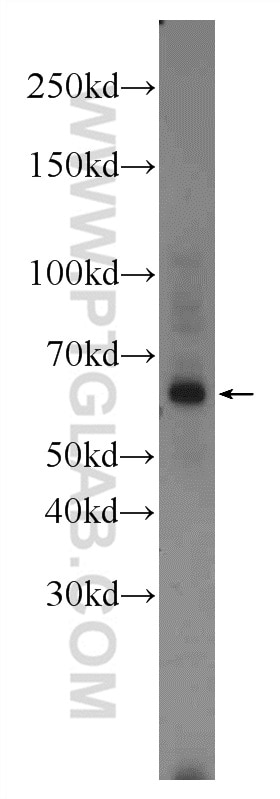
| Positive WB detected in | HepG2 cells, mouse colon tissue, HuH-7 cells, NCCIT cells, mouse liver tissue, rat liver tissue |
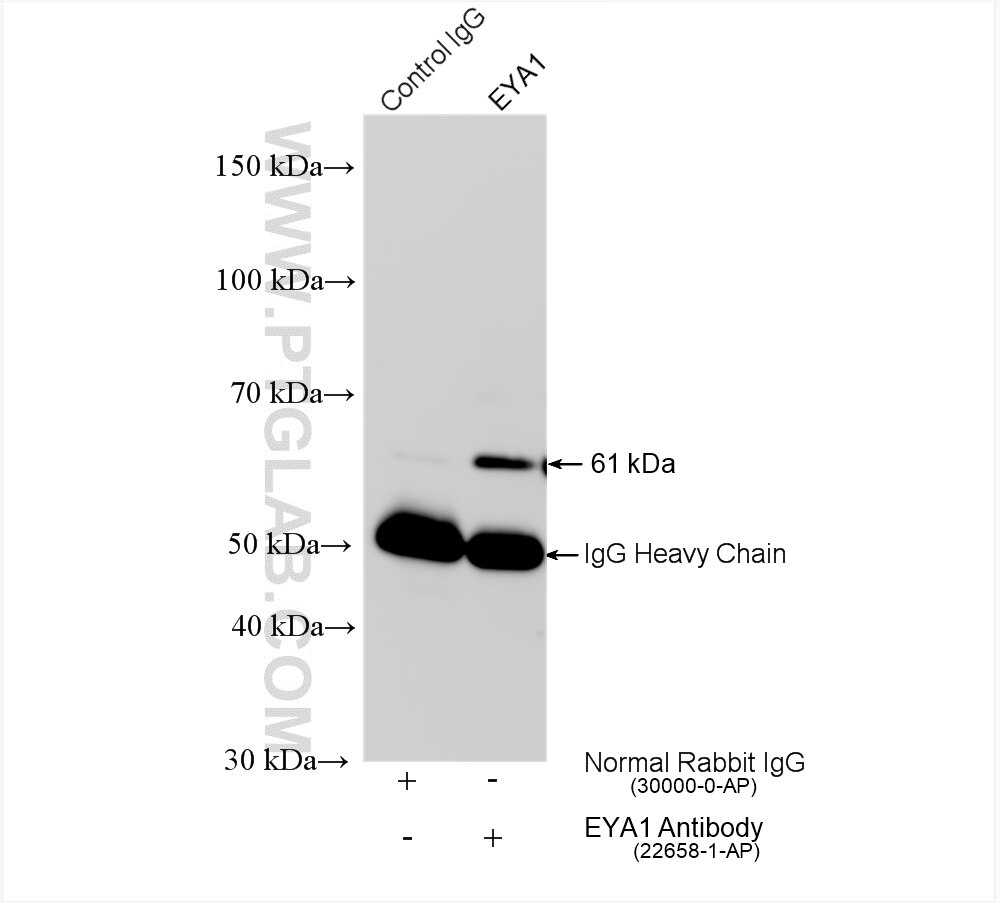
| Positive IP detected in | HepG2 cells |
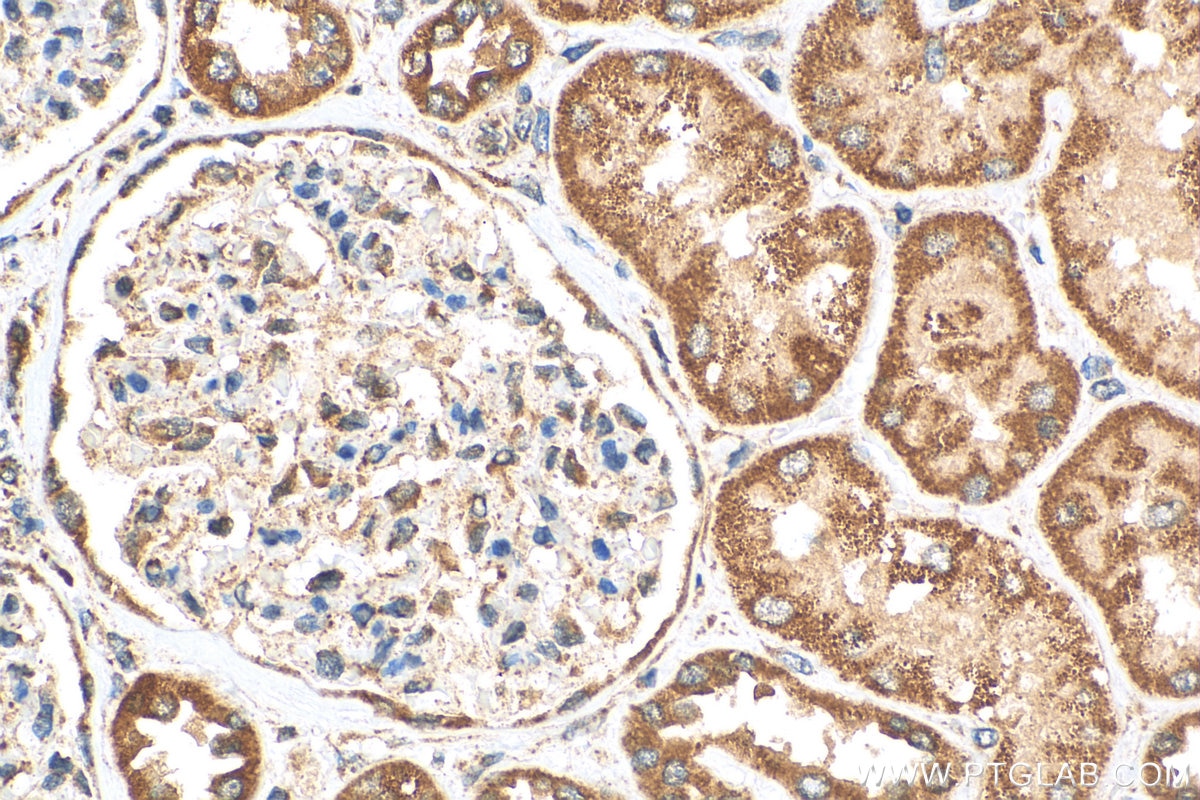
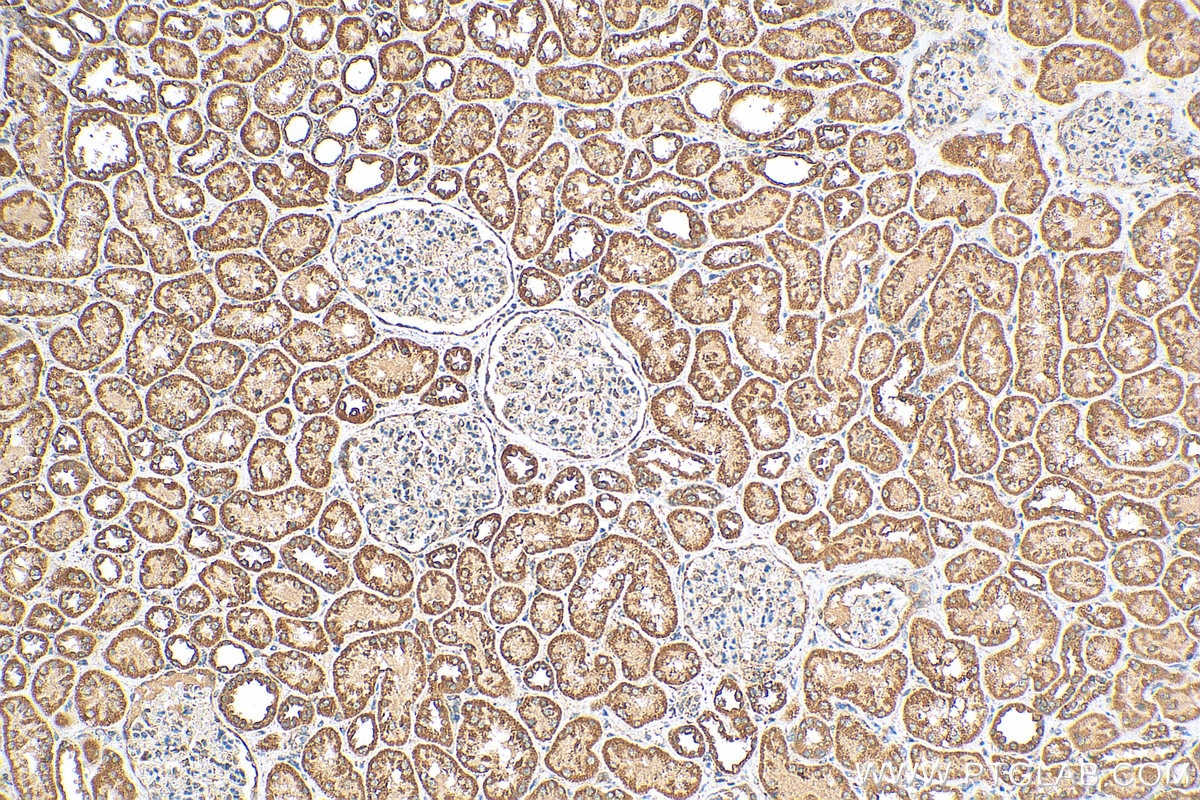
| Positive IHC detected in | human kidney tissue Note: suggested antigen retrieval with TE buffer pH 9.0; (*) Alternatively, antigen retrieval may be performed with citrate buffer pH 6.0 |
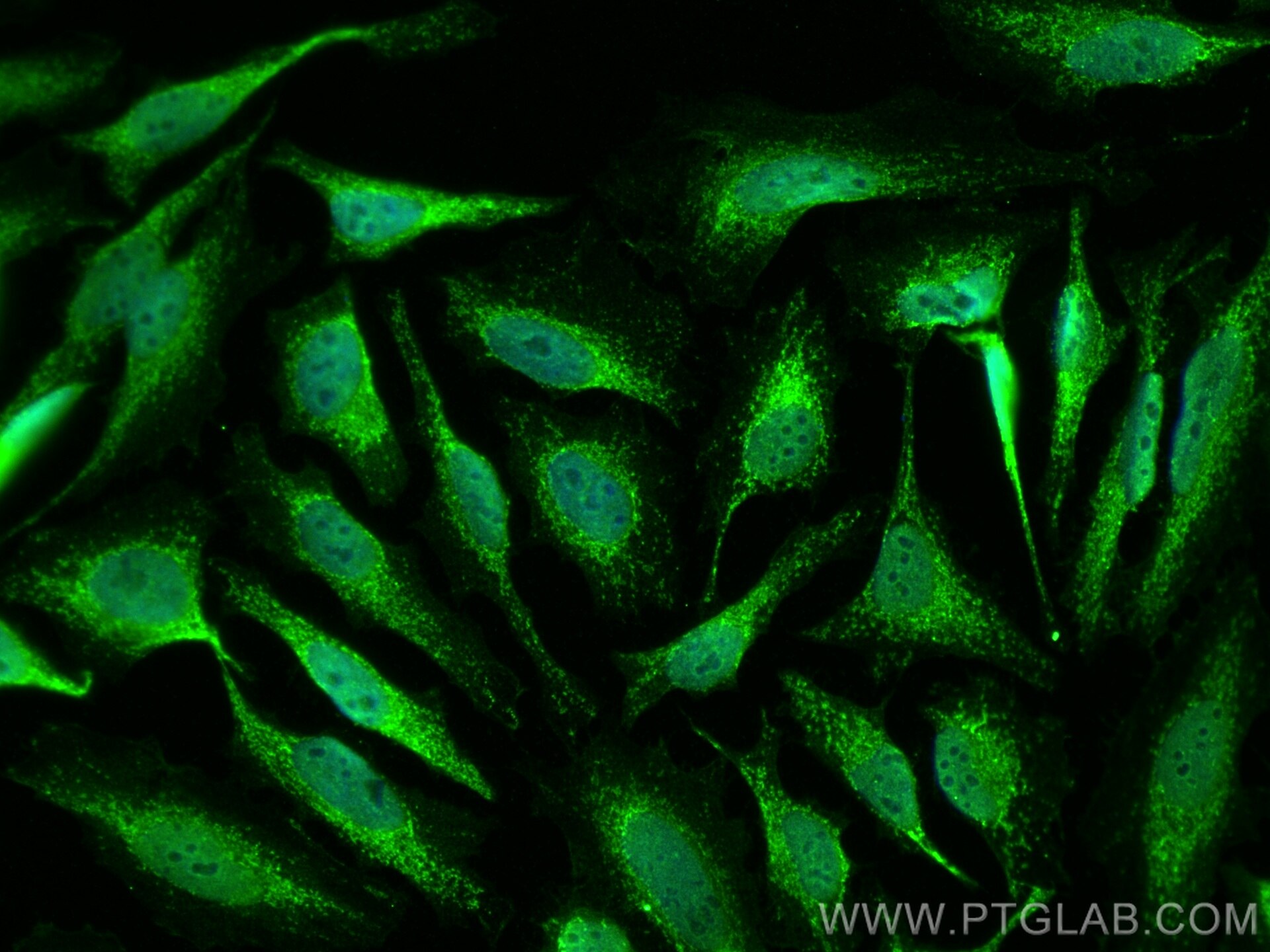
| Positive IF/ICC detected in | HeLa cells |
Recommended dilution
| Application | Dilution |
|---|---|
| Western Blot (WB) | WB : 1:2000-1:10000 |
| Immunoprecipitation (IP) | IP : 0.5-4.0 ug for 1.0-3.0 mg of total protein lysate |
| Immunohistochemistry (IHC) | IHC : 1:250-1:1000 |
| Immunofluorescence (IF)/ICC | IF/ICC : 1:200-1:800 |
| It is recommended that this reagent should be titrated in each testing system to obtain optimal results. | |
| Sample-dependent, Check data in validation data gallery. | |
Product Information
22658-1-AP targets EYA1 in WB, IHC, IF/ICC, IP, CoIP, ELISA applications and shows reactivity with human, mouse, rat samples.
| Tested Reactivity | human, mouse, rat |
| Cited Reactivity | human, mouse, rat |
| Host / Isotype | Rabbit / IgG |
| Class | Polyclonal |
| Type | Antibody |
| Immunogen |
CatNo: Ag18489 Product name: Recombinant human EYA1 protein Source: e coli.-derived, PGEX-4T Tag: GST Domain: 1-300 aa of BC121799 Sequence: MEMQDLTSPHSRLSGSSESPSGPKLGNSHINSNSMTPNGTEVKTEPMSSSETASTTADGSLNNFSGSAIGSSSFSPRPTHQFSPPQIYPSNRPYPHILPTPSSQTMAAYGQTQFTTGMQQATAYATYPQPGQPYGISSYGALWAGIKTEGGLSQSQSPGQTGFLSYGTSFSTPQPGQAPYSYQMQGSSFTTSSGIYTGNNSLTNSSGFNSSQQDYPSYPSFGQGQYAQYYNSSPYPAHYMTSSNTSPTTPSTNATYQLQEPPSGITSQAVTDPTAEYSTIHSPSTPIKDSDSDRLRRGSD Predict reactive species |
| Full Name | eyes absent homolog 1 (Drosophila) |
| Calculated Molecular Weight | 592 aa, 65 kDa |
| Observed Molecular Weight | 61 kDa and 65 kDa |
| GenBank Accession Number | BC121799 |
| Gene Symbol | EYA1 |
| Gene ID (NCBI) | 2138 |
| RRID | AB_2879145 |
| Conjugate | Unconjugated |
| Form | Liquid |
| Purification Method | Antigen affinity purification |
| UNIPROT ID | Q99502 |
| Storage Buffer | PBS with 0.02% sodium azide and 50% glycerol, pH 7.3. |
| Storage Conditions | Store at -20°C. Stable for one year after shipment. Aliquoting is unnecessary for -20oC storage. 20ul sizes contain 0.1% BSA. |
Background Information
The EYA1 (Eyes absent homolog 1) gene is the human homologue of the Drosophila Eya1 gene, which is essential for eye development in that species. There are 4 different isoforms of EYA1 (EYA1A, EYA1B, EYA1C, EYA1D), which are composed of 559 amino acids (AA), 592 AA, 592 AA and 557 AA, respectively. It should be noted that isoforms B and C have the same length; however, they could be considered different variants because of change in amino acidic composition (PMID: 24803398).
Protocols
| Product Specific Protocols | |
|---|---|
| IF protocol for EYA1 antibody 22658-1-AP | Download protocol |
| IHC protocol for EYA1 antibody 22658-1-AP | Download protocol |
| IP protocol for EYA1 antibody 22658-1-AP | Download protocol |
| WB protocol for EYA1 antibody 22658-1-AP | Download protocol |
| Standard Protocols | |
|---|---|
| Click here to view our Standard Protocols |
Publications
What published studies show
The EYA1 Polyclonal antibody (Cat# 22658-1-AP) has 20 citations. They appear in journals including Nature Communications, International Journal of Biological Sciences, Cell Reports, Stem Cell Research & Therapy, Molecular Therapy Nucleic Acids, Cells, Oncotarget, Frontiers in Cell and Developmental Biology, Clinical Kidney Journal, Stem Cells, iScience, Frontiers in Oncology, Genesis, Clinical Breast Cancer, Journal of Molecular Neuroscience, and American Journal of Translational Research. Research fields span cell cycle/mitosis, glioma, leukemia, melanoma, thyroid and breast cancer, hepatocellular carcinoma, craniofacial development, kidney disease, inner ear biology, osteoporosis, and Parkinson's disease.
| Species | Application | Title |
|---|---|---|
Nat Commun The Eyes Absent family members EYA4 and EYA1 promote PLK1 activation and successful mitosis through tyrosine dephosphorylation | ||
Int J Biol Sci Protein phosphatase EYA1 regulates the dephosphorylation and turnover of BCL2L12 to promote glioma development
| ||
Stem Cell Res Ther Co-transplantation with adipose-derived cells to improve parathyroid transplantation in a mice model. | ||
Cell Rep Retinal determination network reactivation drives chemoresistance and blocks myeloid differentiation in acute myeloid leukemia. | ||
Cell Rep Developmental reprogramming underlies chemotherapy resistance in favorable-histology Wilms tumor. | ||
Cell Rep YTHDF1 phase separation triggers the fate transition of spermatogonial stem cells by activating the IκB-NF-κB-CCND1 axis |







