

Tested Applications
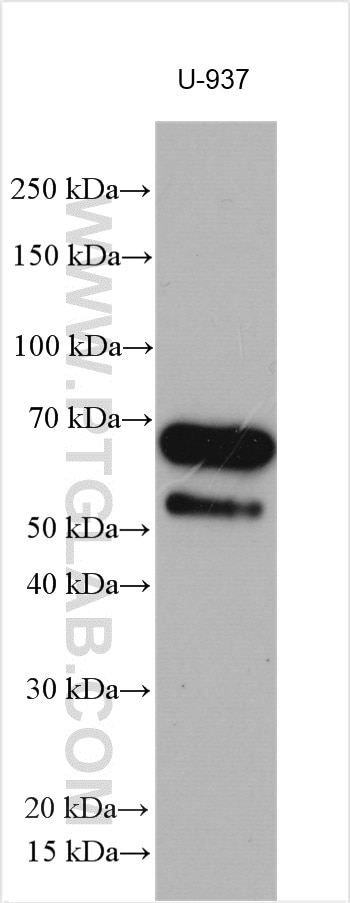
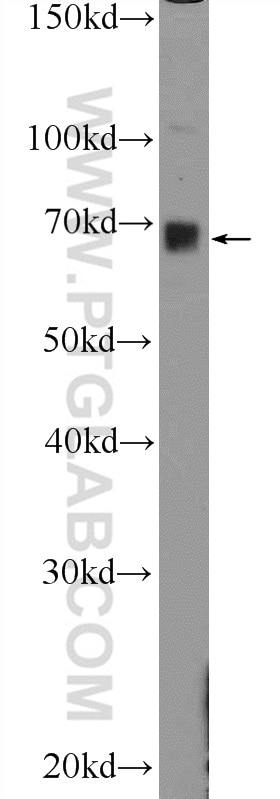
| Positive WB detected in | U-937 cells, Jurkat cells |
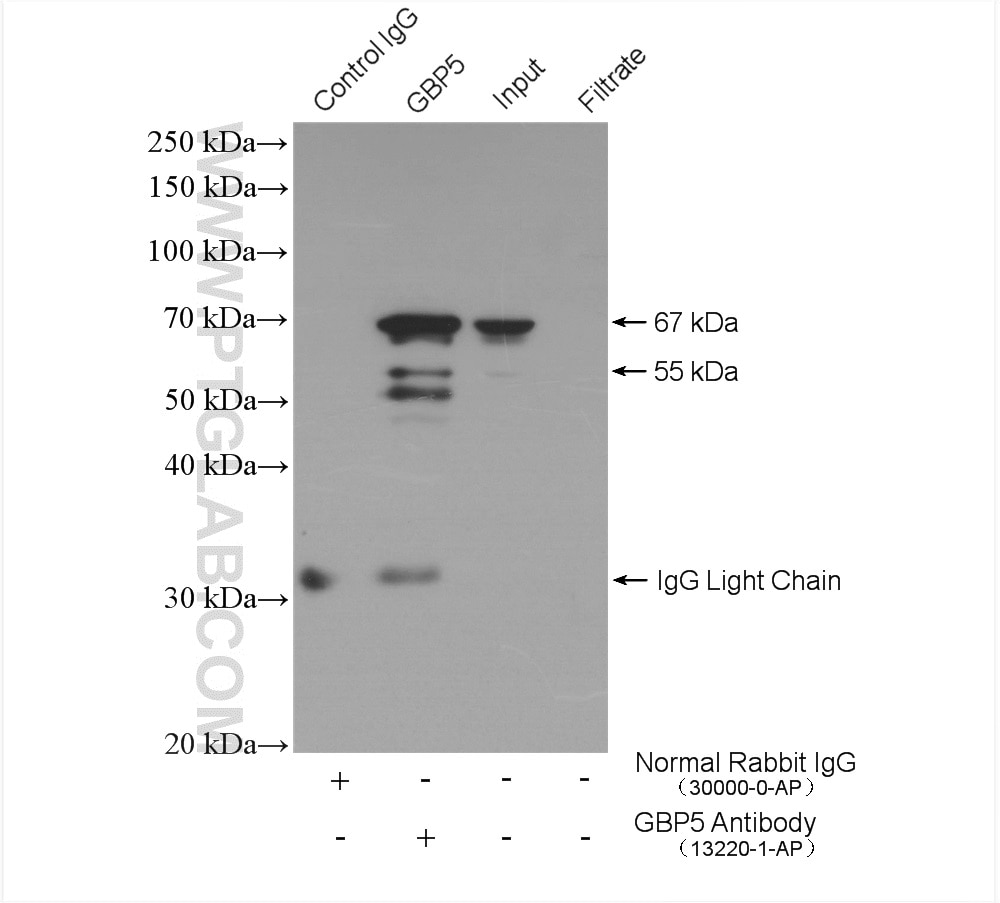
| Positive IP detected in | U-937 cells |
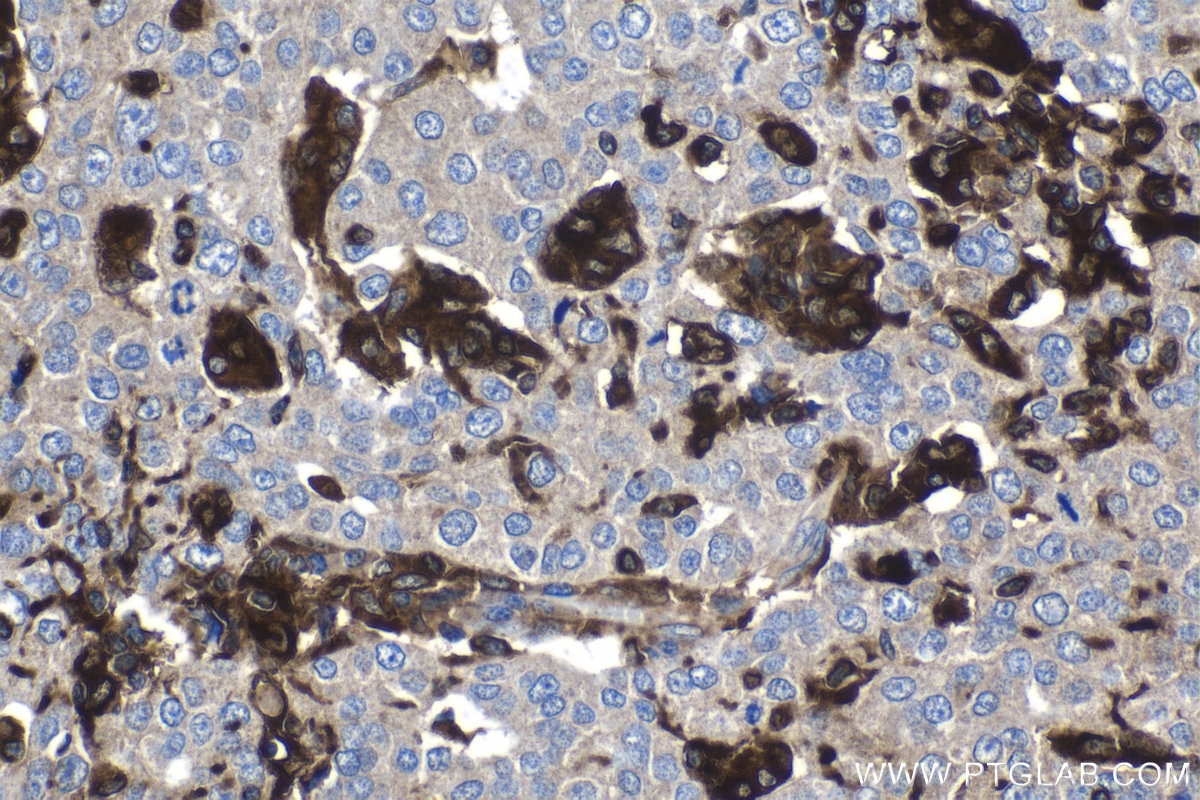
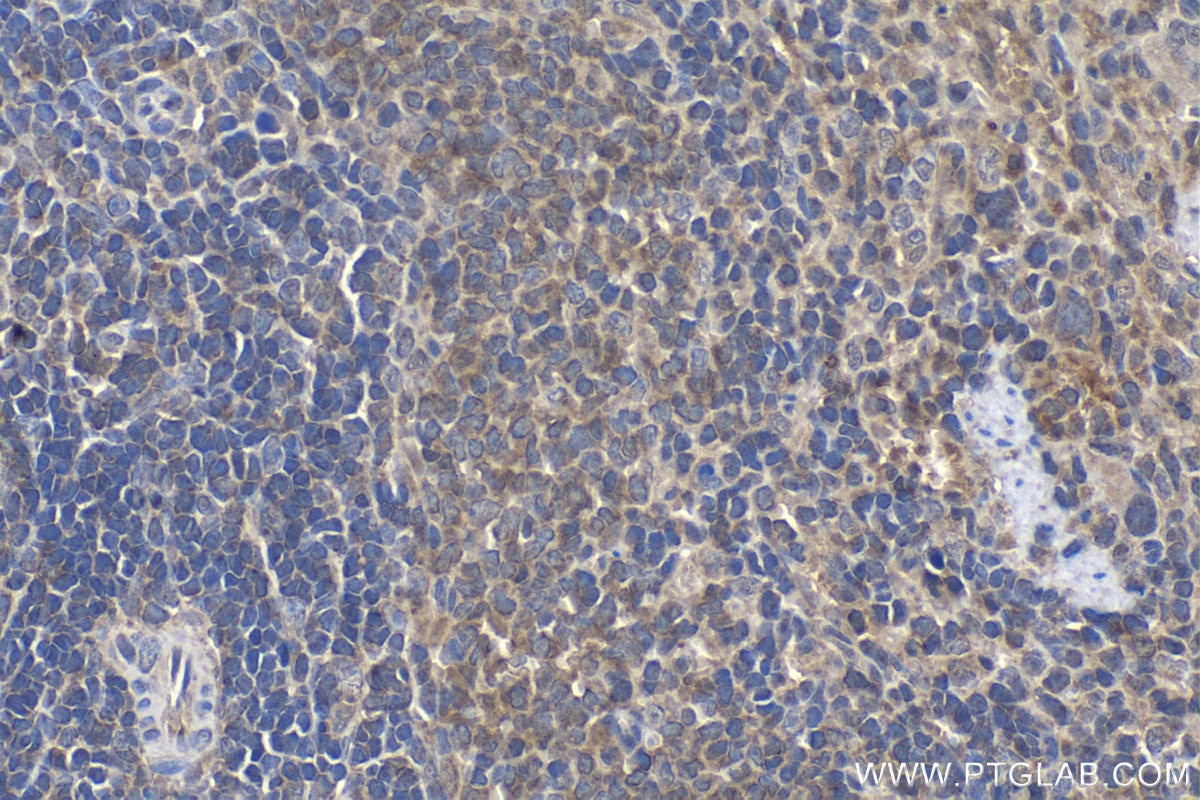
| Positive IHC detected in | human ovary tumor tissue, rat spleen tissue Note: suggested antigen retrieval with TE buffer pH 9.0; (*) Alternatively, antigen retrieval may be performed with citrate buffer pH 6.0 |
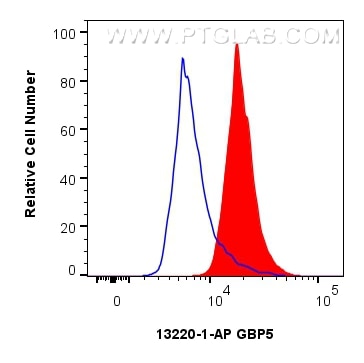
| Positive FC (Intra) detected in | MCF-7 cells |
Recommended dilution
| Application | Dilution |
|---|---|
| Western Blot (WB) | WB : 1:2000-1:16000 |
| Immunoprecipitation (IP) | IP : 0.5-4.0 ug for 1.0-3.0 mg of total protein lysate |
| Immunohistochemistry (IHC) | IHC : 1:250-1:1000 |
| Flow Cytometry (FC) (INTRA) | FC (INTRA) : 0.40 ug per 10^6 cells in a 100 µl suspension |
| It is recommended that this reagent should be titrated in each testing system to obtain optimal results. | |
| Sample-dependent, Check data in validation data gallery. | |
Product Information
13220-1-AP targets GBP5 in WB, IHC, IP, ELISA applications and shows reactivity with human samples.
| Tested Reactivity | human |
| Cited Reactivity | human |
| Host / Isotype | Rabbit / IgG |
| Class | Polyclonal |
| Type | Antibody |
| Immunogen |
CatNo: Ag4103 Product name: Recombinant human GBP5 protein Source: e coli.-derived, PGEX-4T Tag: GST Domain: 382-586 aa of BC031639 Sequence: LETLLDAKQNDICKRNLEASSDYCSALLKDIFGPLEEAVKQGIYSKPGGHNLFIQKTEELKAKYYREPRKGIQAEEVLQKYLKSKESVSHAILQTDQALTETEKKKKEAQVKAEAEKAEAQRLAAIQRQNEQMMQERERLHQEQVRQMEIAKQNWLAEQQKMQEQQMQEQAAQLSTTFQAQNRSLLSELQHAQRTVNNDDPCVLL Predict reactive species |
| Full Name | guanylate binding protein 5 |
| Calculated Molecular Weight | 586 aa, 67 kDa |
| Observed Molecular Weight | 65 kDa, 55 kDa |
| GenBank Accession Number | BC031639 |
| Gene Symbol | GBP5 |
| Gene ID (NCBI) | 115362 |
| RRID | AB_2109348 |
| Conjugate | Unconjugated |
| Form | Liquid |
| Purification Method | Antigen affinity purification |
| UNIPROT ID | Q96PP8 |
| Storage Buffer | PBS with 0.02% sodium azide and 50% glycerol, pH 7.3. |
| Storage Conditions | Store at -20°C. Stable for one year after shipment. Aliquoting is unnecessary for -20oC storage. 20ul sizes contain 0.1% BSA. |
Background Information
Guanylate binding protein (GBP) 5 belongs to the GBP family, which is involved in important cellular processes, including signal transduction, translation, vesicle trafficking, and exocytosis. GBP5 was reported to be a critical cellular factor in inflammasome assembly. Furthermore, GBP5 has been reported to induce inflammatory cytokines, including IL-1 beta and IL-18, through the activation of NLRP3 and AIM2. GBP5 encodes two isoforms: GBP-5a/b (67 kDa) and GBP-5ta (55 kDa)
Protocols
| Product Specific Protocols | |
|---|---|
| FC protocol for GBP5 antibody 13220-1-AP | Download protocol |
| IHC protocol for GBP5 antibody 13220-1-AP | Download protocol |
| IP protocol for GBP5 antibody 13220-1-AP | Download protocol |
| WB protocol for GBP5 antibody 13220-1-AP | Download protocol |
| Standard Protocols | |
|---|---|
| Click here to view our Standard Protocols |
Publications
What published studies show
The anti-GBP5 antibody (Cat# 13220-1-AP) has 58 citations spanning journals including Nature, Cell, Nature Immunology, Nature Microbiology, EMBO Journal, and PLoS Pathogens. Research fields cover innate immunity and inflammasome activation, intracellular infections (bacterial, viral, fungal, parasitic), cancer immunology (glioblastoma, breast cancer, lung cancer, oral squamous cell carcinoma), macrophage biology, ferroptosis, cGAS-STING signaling, autoimmune/inflammatory diseases, and nanomedicine-based drug delivery.
| Species | Application | Title |
|---|---|---|
Nature Caspase-11 activation requires lysis of pathogen-containing vacuoles by IFN-induced GTPases. | ||
Nature Ubiquitination and degradation of GBPs by a Shigella effector to suppress host defence. | ||
Cell IRGB10 Liberates Bacterial Ligands for Sensing by the AIM2 and Caspase-11-NLRP3 Inflammasomes. | ||
Nat Immunol The transcription factor IRF1 and guanylate-binding proteins target activation of the AIM2 inflammasome by Francisella infection. | ||
Nat Immunol Guanylate-binding proteins promote activation of the AIM2 inflammasome during infection with Francisella novicida.
|







