

Tested Applications
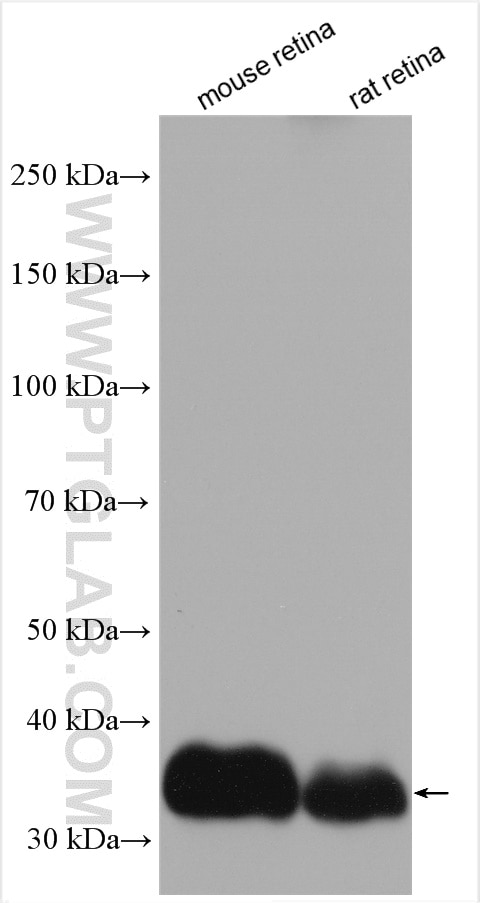
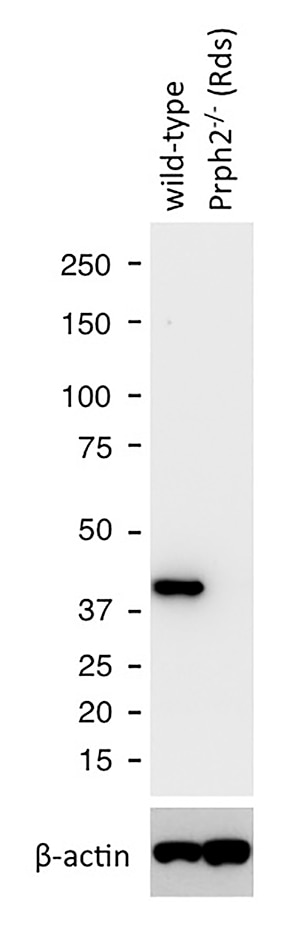
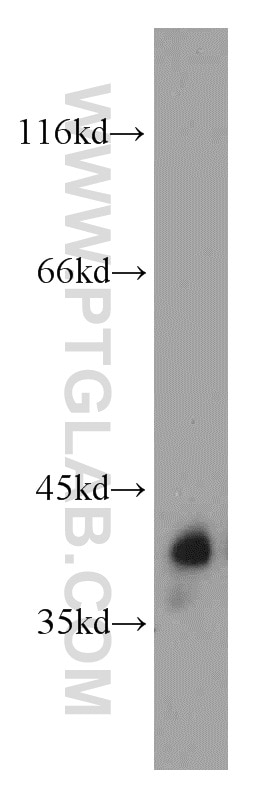
| Positive WB detected in | mouse retina tissue, mouse eye tissue, rat retina tissue |
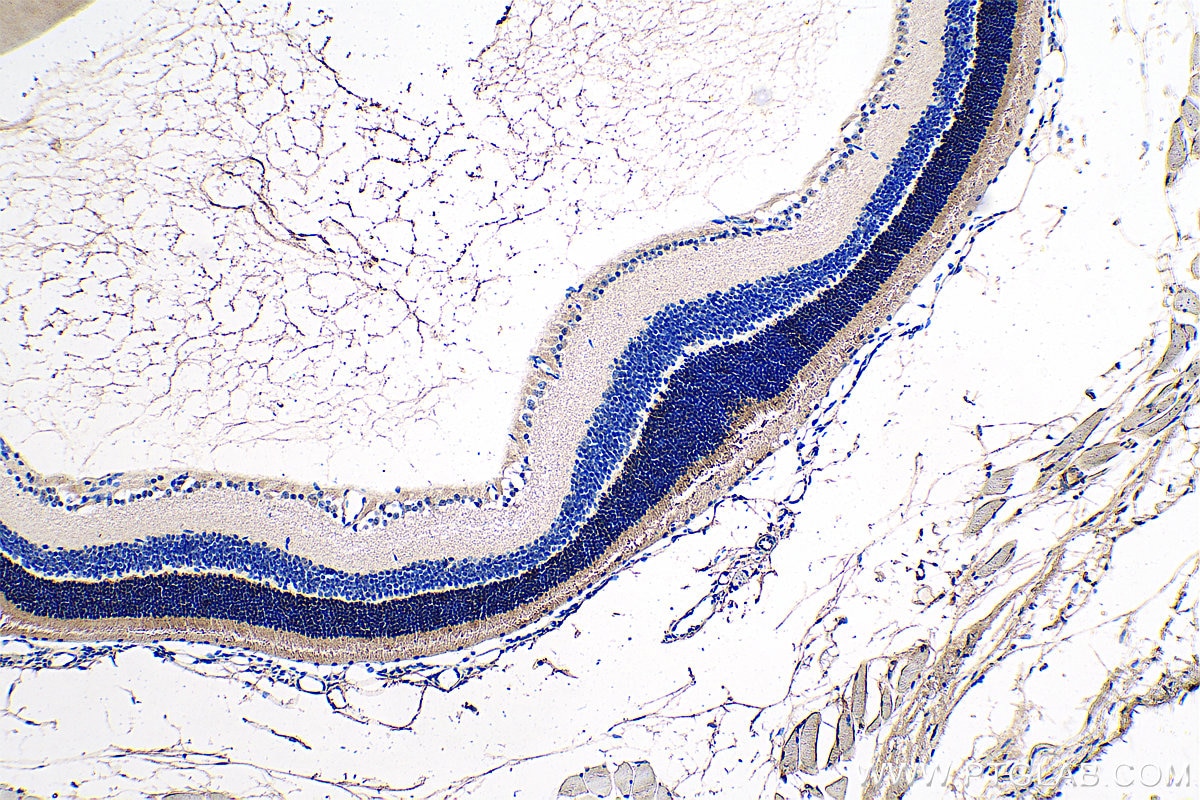
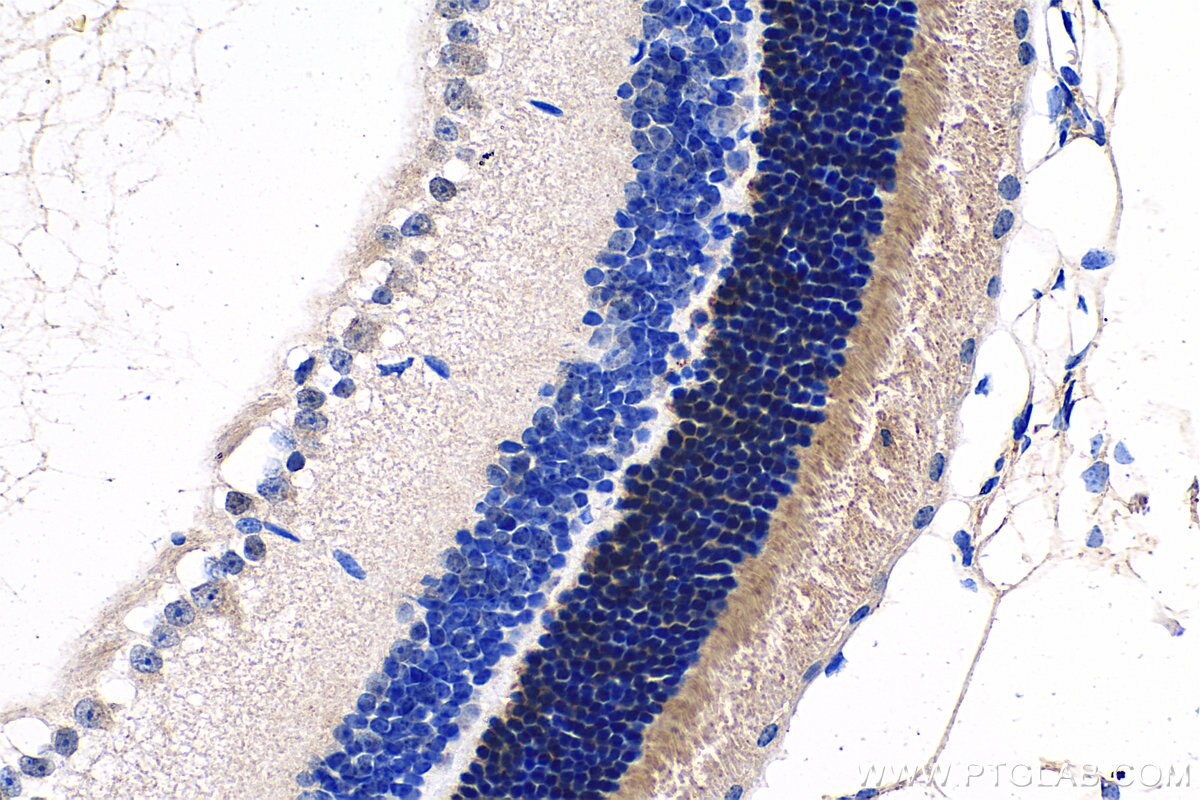
| Positive IHC detected in | mouse eye tissue Note: suggested antigen retrieval with TE buffer pH 9.0; (*) Alternatively, antigen retrieval may be performed with citrate buffer pH 6.0 |
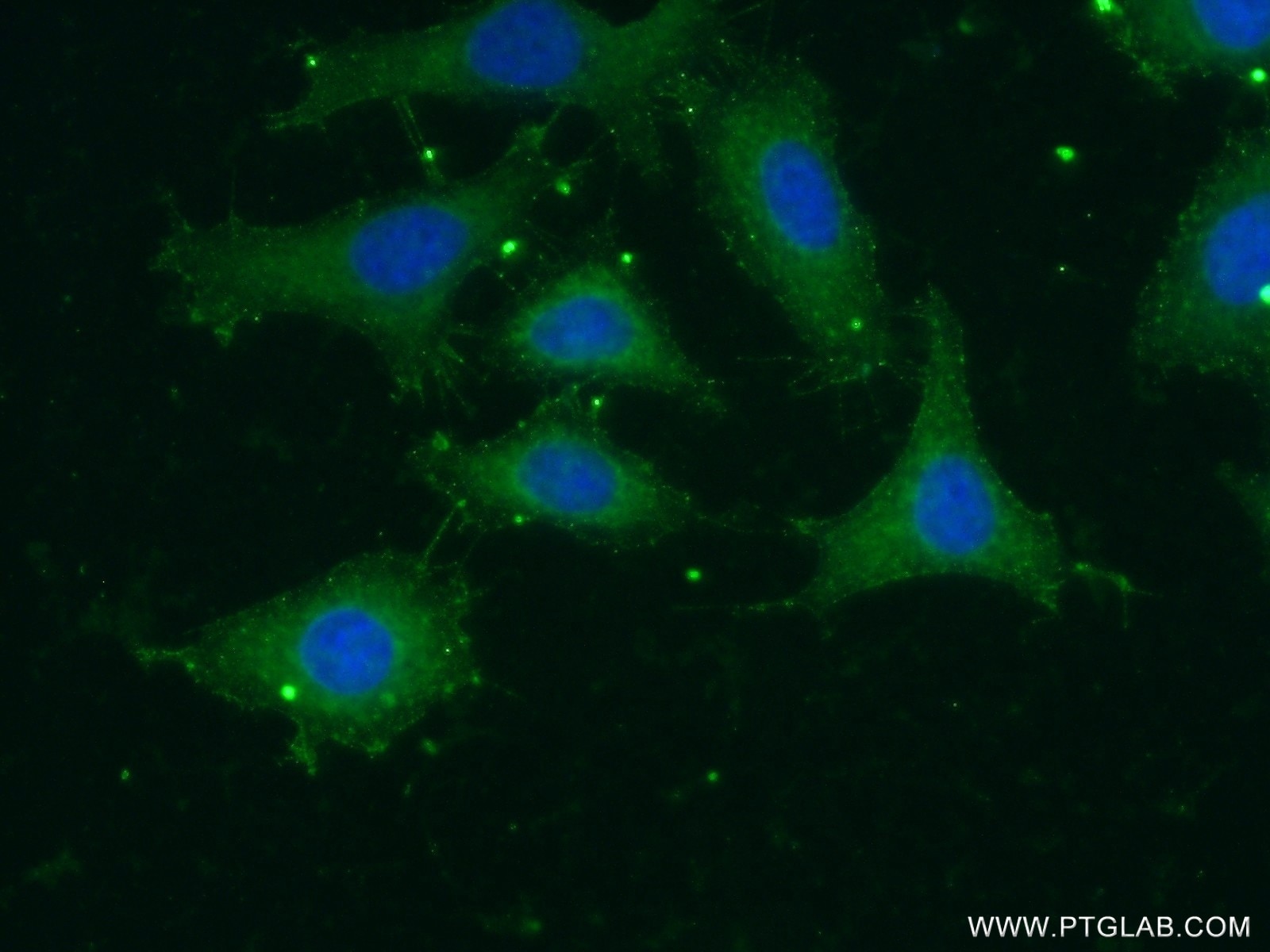
| Positive IF/ICC detected in | HeLa cells |
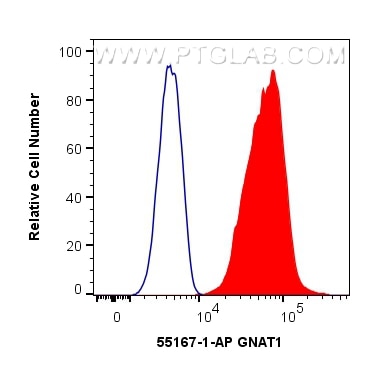
| Positive FC (Intra) detected in | HeLa cells |
Recommended dilution
| Application | Dilution |
|---|---|
| Western Blot (WB) | WB : 1:2000-1:10000 |
| Immunohistochemistry (IHC) | IHC : 1:750-1:3000 |
| Immunofluorescence (IF)/ICC | IF/ICC : 1:50-1:500 |
| Flow Cytometry (FC) (INTRA) | FC (INTRA) : 0.40 ug per 10^6 cells in a 100 µl suspension |
| It is recommended that this reagent should be titrated in each testing system to obtain optimal results. | |
| Sample-dependent, Check data in validation data gallery. | |
Product Information
55167-1-AP targets GNAT1 in WB, IHC, IF/ICC, FC (Intra), ELISA applications and shows reactivity with human, mouse, rat samples.
| Tested Reactivity | human, mouse, rat |
| Cited Reactivity | mouse, zebrafish |
| Host / Isotype | Rabbit / IgG |
| Class | Polyclonal |
| Type | Antibody |
| Immunogen |
Peptide Predict reactive species |
| Full Name | guanine nucleotide binding protein (G protein), alpha transducing activity polypeptide 1 |
| Calculated Molecular Weight | 40 kDa |
| Observed Molecular Weight | 35-40 kDa |
| GenBank Accession Number | NM_000172 |
| Gene Symbol | GNAT1 |
| Gene ID (NCBI) | 2779 |
| RRID | AB_10858788 |
| Conjugate | Unconjugated |
| Form | Liquid |
| Purification Method | Antigen affinity purification |
| UNIPROT ID | P11488 |
| Storage Buffer | PBS with 0.02% sodium azide and 50% glycerol, pH 7.3. |
| Storage Conditions | Store at -20°C. Stable for one year after shipment. Aliquoting is unnecessary for -20oC storage. 20ul sizes contain 0.1% BSA. |
Background Information
GNAT1, also named as GNATR, belongs to the G-alpha family and G(i/o/t/z) subfamily. Guanine nucleotide-binding proteins (G proteins) are involved as modulators or transducers in various transmembrane signaling systems. Transducin is an amplifier and one of the transducers of a visual impulse that performs the coupling between rhodopsin and cGMP-phosphodiesterase. Defects in GNAT1 are the cause of congenital stationary night blindness autosomal dominant type 3 (CSNBAD3). This antibody is specific to GNAT1.
Protocols
| Product Specific Protocols | |
|---|---|
| FC protocol for GNAT1 antibody 55167-1-AP | Download protocol |
| IF protocol for GNAT1 antibody 55167-1-AP | Download protocol |
| IHC protocol for GNAT1 antibody 55167-1-AP | Download protocol |
| WB protocol for GNAT1 antibody 55167-1-AP | Download protocol |
| Standard Protocols | |
|---|---|
| Click here to view our Standard Protocols |
Publications
What published studies show
GNAT1 Polyclonal antibody (Cat# 55167-1-AP) has accumulated 14 citations published in journals including Scientific Reports, FEBS Journal, Journal of Biological Chemistry, Human Molecular Genetics, Cells, iScience, Vision Research, eNeuro, Frontiers in Cellular Neuroscience, Frontiers in Cell and Developmental Biology, BBA–Molecular Basis of Disease, Environmental Health, Science of the Total Environment, and Molecular Therapy Advances. Associated research fields include photoreceptor biology, retinal degeneration, visual neuroscience, environmental toxicology, and ocular gene therapy.
| Species | Application | Title |
|---|---|---|
Sci Total Environ Maternal transfer of F-53B inhibited neurobehavior in zebrafish offspring larvae and potential mechanisms: Dopaminergic dysfunction, eye development defects and disrupted calcium homeostasis | ||
Environ Health (Wash) Chlorinated Polyfluoroalkyl Ether Sulfonic Acids (Cl-PFESAs) Are Associated with Eye Diseases in Humans and Eye Toxicity in Zebrafish | ||
Cells Loss of BAP31 Is Detrimentally Aging Photoreceptors Through ER Stress-Mediated Retinal Degeneration. | ||
Biochim Biophys Acta Mol Basis Dis Knockout of DLIC1 leads to retinal cone degeneration via disturbing Rab8 transport in zebrafish | ||
Sci Rep Loss of PRCD alters number and packaging density of rhodopsin in rod photoreceptor disc membranes. |








