
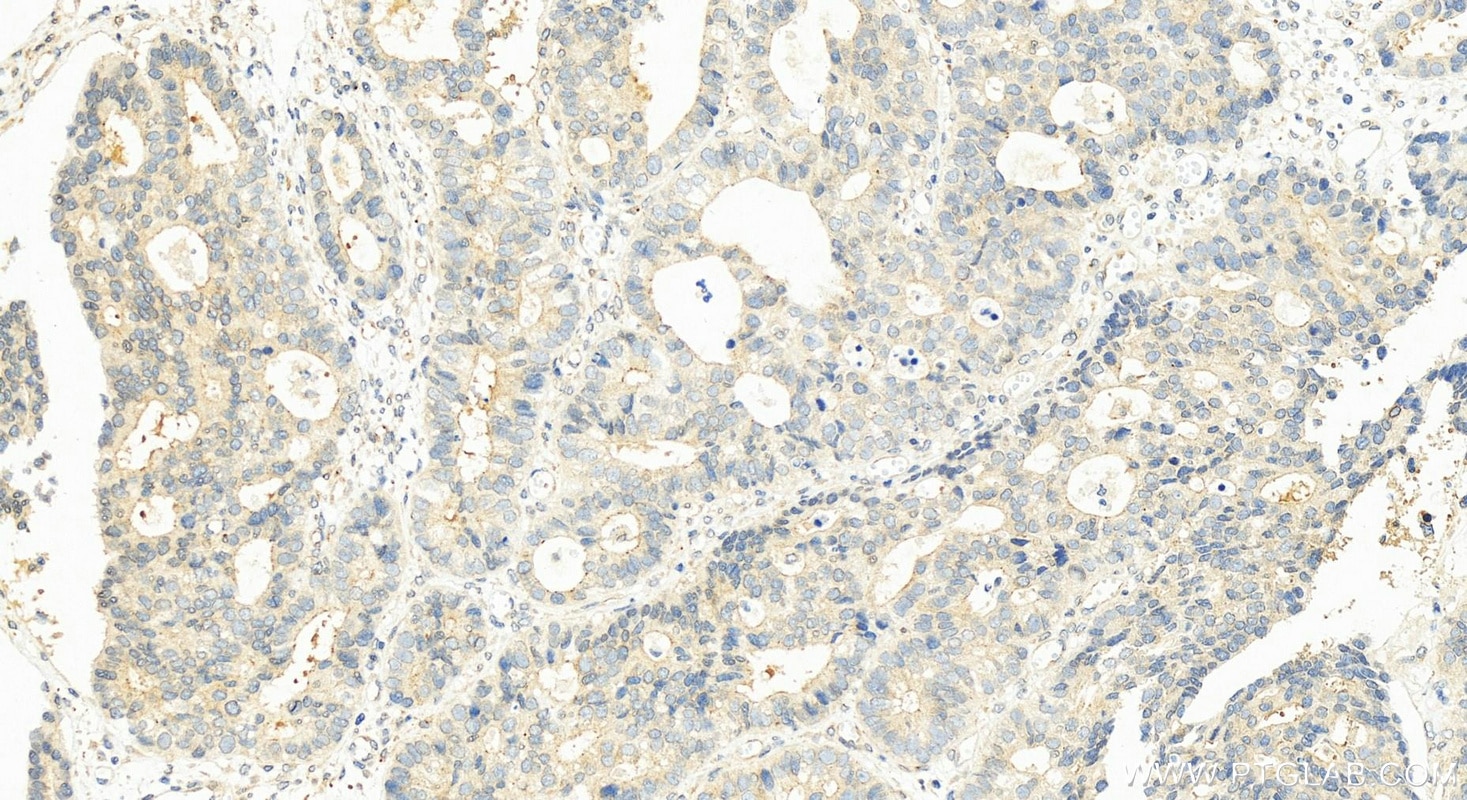
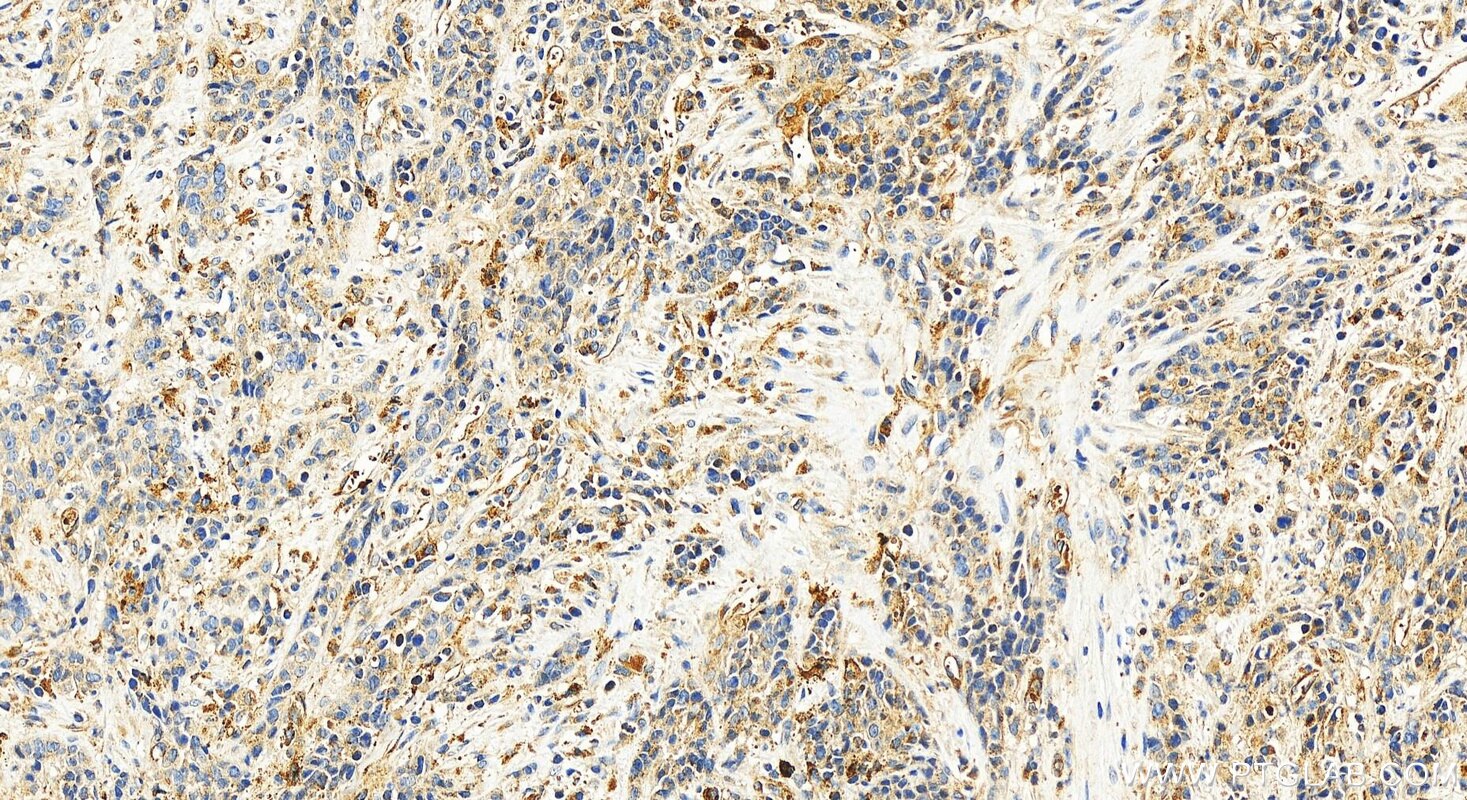


Tested Applications
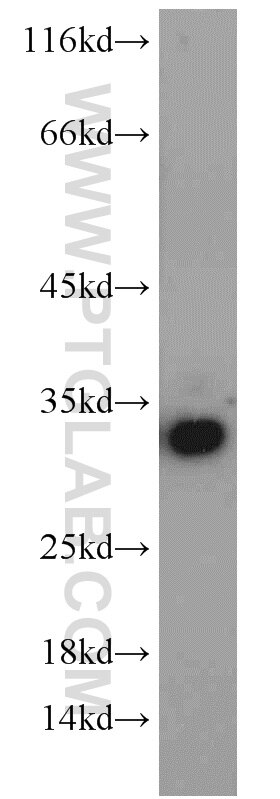
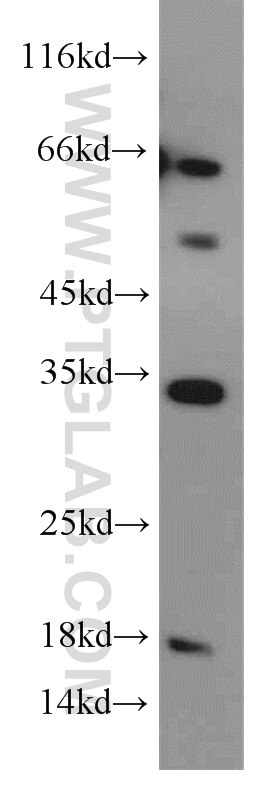
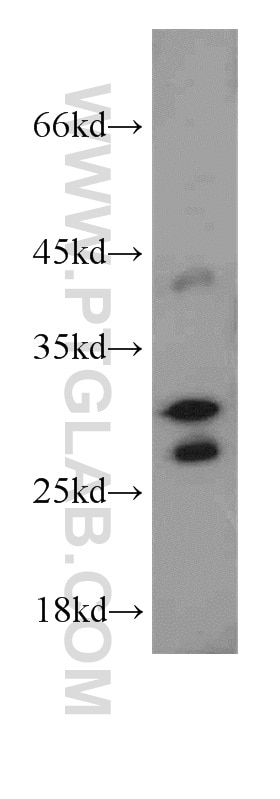
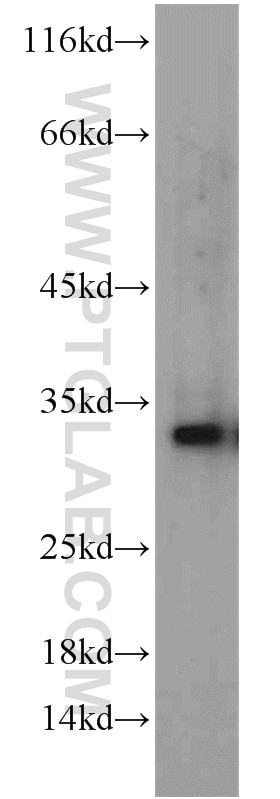
| Positive WB detected in | A549 cells, human brain tissue, human stomach tissue |
| Positive IHC detected in | human stomach cancer tissue Note: suggested antigen retrieval with TE buffer pH 9.0; (*) Alternatively, antigen retrieval may be performed with citrate buffer pH 6.0 |
| Positive FC (Intra) detected in | A549 cells |
Recommended dilution
| Application | Dilution |
|---|---|
| Western Blot (WB) | WB : 1:500-1:2000 |
| Immunohistochemistry (IHC) | IHC : 1:50-1:500 |
| Flow Cytometry (FC) (INTRA) | FC (INTRA) : 0.40 ug per 10^6 cells in a 100 µl suspension |
| It is recommended that this reagent should be titrated in each testing system to obtain optimal results. | |
| Sample-dependent, Check data in validation data gallery. | |
Product Information
55248-1-AP targets GPR35 in WB, IHC, IF, ELISA applications and shows reactivity with human samples.
| Tested Reactivity | human |
| Cited Reactivity | human, mouse |
| Host / Isotype | Rabbit / IgG |
| Class | Polyclonal |
| Type | Antibody |
| Immunogen |
Peptide Predict reactive species |
| Full Name | G protein-coupled receptor 35 |
| Calculated Molecular Weight | 34 kDa |
| Observed Molecular Weight | 34 kDa |
| GenBank Accession Number | NM_005301 |
| Gene Symbol | GPR35 |
| Gene ID (NCBI) | 2859 |
| RRID | AB_10836935 |
| Conjugate | Unconjugated |
| Form | Liquid |
| Purification Method | Antigen affinity purification |
| UNIPROT ID | Q9HC97 |
| Storage Buffer | PBS with 0.02% sodium azide and 50% glycerol, pH 7.3. |
| Storage Conditions | Store at -20°C. Stable for one year after shipment. Aliquoting is unnecessary for -20oC storage. 20ul sizes contain 0.1% BSA. |
Background Information
GPR35, also named the KYNA receptor, belongs to the G-protein coupled receptor 1 family. GPR35 acts as a receptor for kynurenic acid, an intermediate in the tryptophan metabolic pathway. The activity of GPR35 is mediated by G-proteins that elicit calcium mobilization and inositol phosphate production through G(qi/o) proteins (PMID:16754668). This antibody is specific to GPR35.
Protocols
| Product Specific Protocols | |
|---|---|
| FC protocol for GPR35 antibody 55248-1-AP | Download protocol |
| IHC protocol for GPR35 antibody 55248-1-AP | Download protocol |
| WB protocol for GPR35 antibody 55248-1-AP | Download protocol |
| Standard Protocols | |
|---|---|
| Click here to view our Standard Protocols |
Publications
What published studies show
The GPR35 Polyclonal antibody (Cat# 55248-1-AP) has 10 total citations. These appear in journals including Science, Nature Communications, Acta Pharmaceutica Sinica B, European Journal of Pharmacology, Frontiers in Nutrition, FEBS Journal, Microbiology Spectrum, Biochemistry, Medicine (Baltimore), and Cell Metabolism. The associated research fields span GPCR signaling, metabolic disorders (MASLD/steatotic liver disease), intestinal damage, colitis, atrial fibrillation, gastric and cervical cancer, and kynurenic acid metabolism, with applications in WB, IHC, and IF.
| Species | Application | Title |
|---|---|---|
Science Mitochondrial remodeling and ischemic protection by G protein-coupled receptor 35 agonists | ||
Nat Commun Kynurenic acid mediates epicardial fat-induced lymphatic metabolic dysfunction in atrial fibrillation. | ||
Acta Pharm Sin B Functional metabolomics reveal the role of AHR/GPR35 mediated kynurenic acid gradient sensing in chemotherapy-induced intestinal damage.
| ||
Eur J Pharmacol Aminosalicylates target GPR35, partly contributing to the prevention of DSS-induced colitis | ||
Front Nutr Processed silkworm powder (Hongjam) ameliorates metabolic dysfunction-associated steatotic liver disease via GPR35/PKA and SIRT1/AMPK pathways. | ||








