

Tested Applications
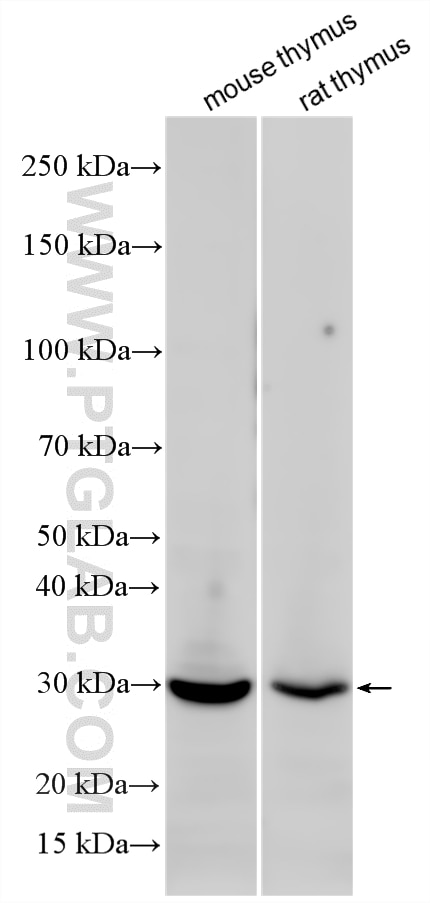
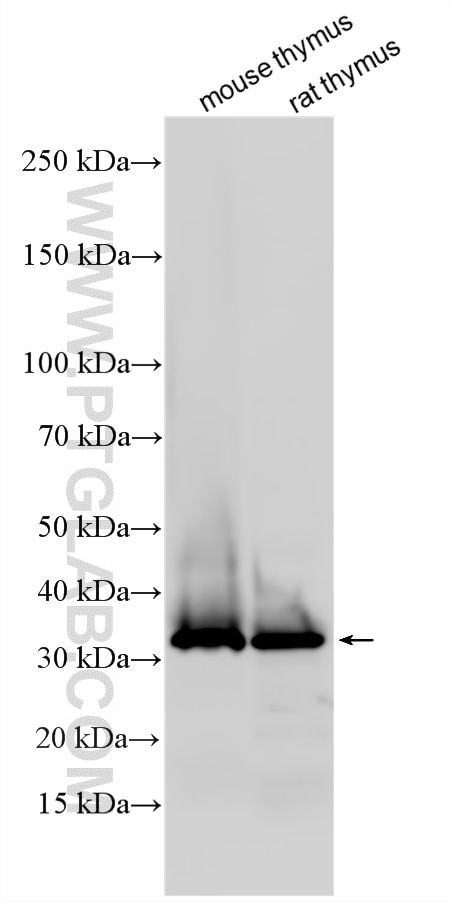
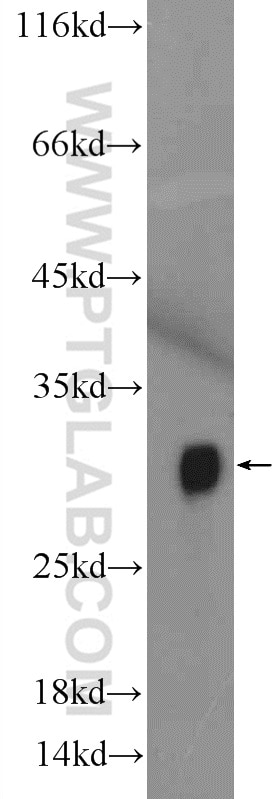
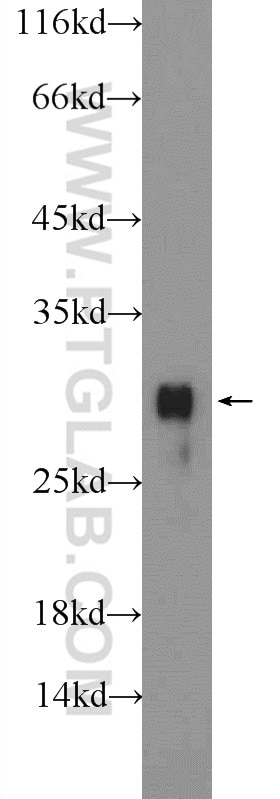
| Positive WB detected in | mouse thymus tissue, mouse kidney tissue, mouse lung tissue |
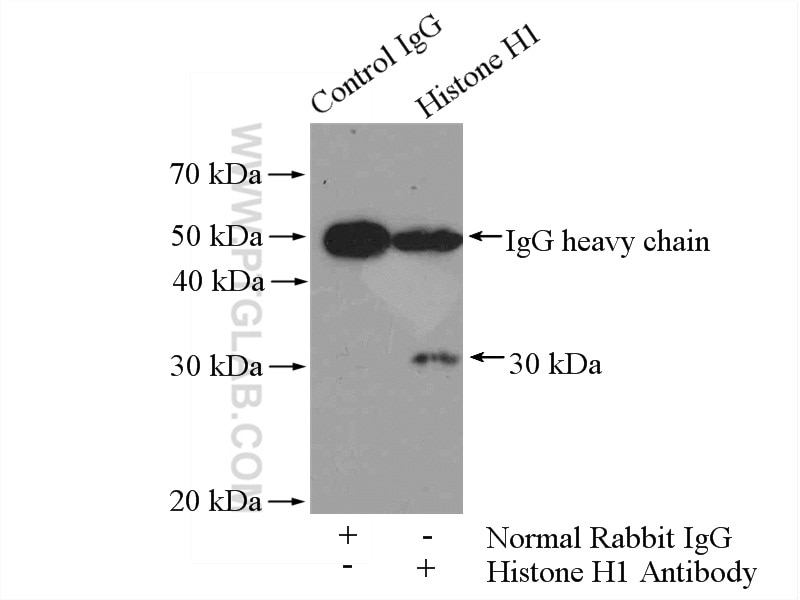
| Positive IP detected in | mouse kidney tissue |
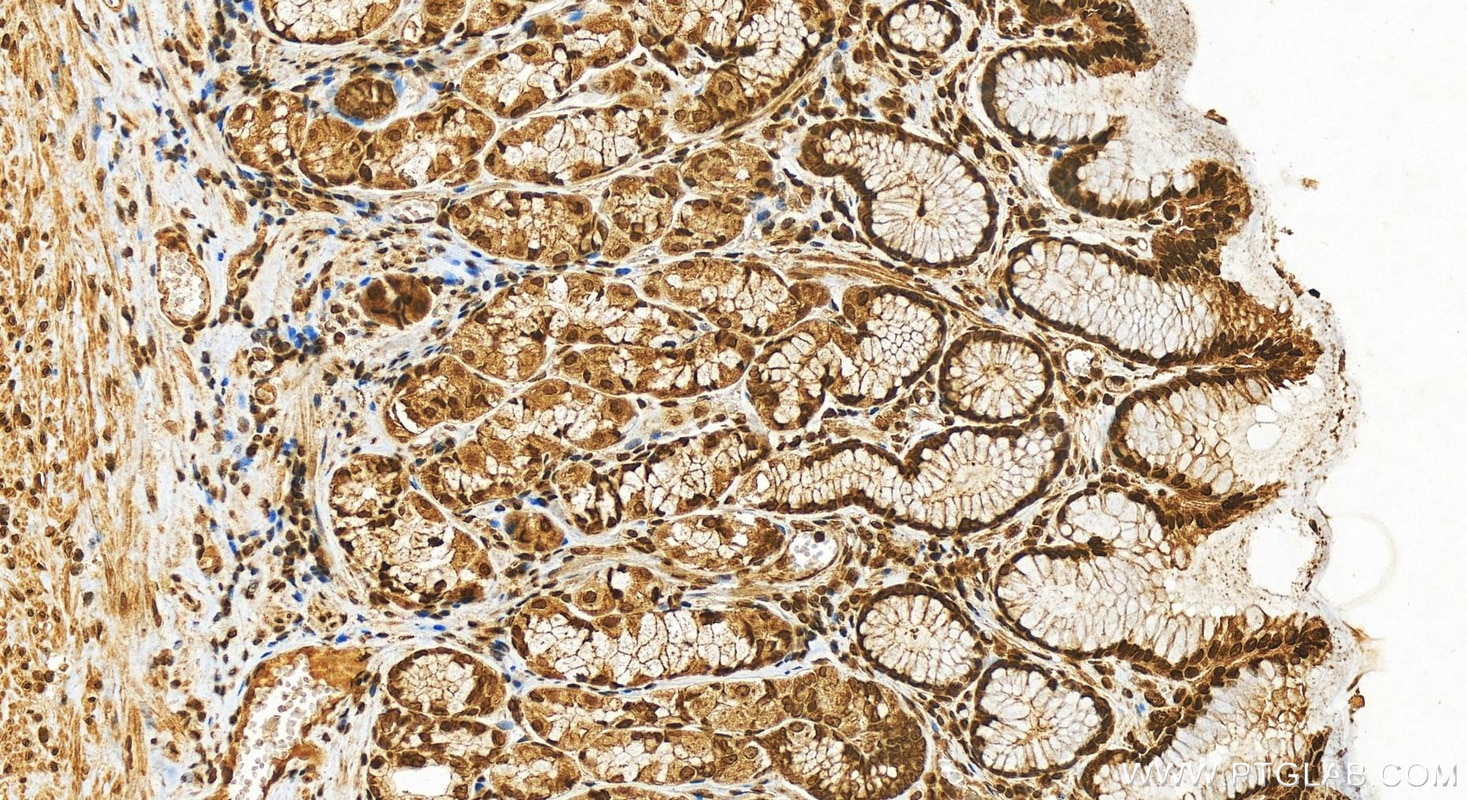
| Positive IHC detected in | human stomach tissue Note: suggested antigen retrieval with TE buffer pH 9.0; (*) Alternatively, antigen retrieval may be performed with citrate buffer pH 6.0 |
Recommended dilution
| Application | Dilution |
|---|---|
| Western Blot (WB) | WB : 1:500-1:1000 |
| Immunoprecipitation (IP) | IP : 0.5-4.0 ug for 1.0-3.0 mg of total protein lysate |
| Immunohistochemistry (IHC) | IHC : 1:50-1:500 |
| It is recommended that this reagent should be titrated in each testing system to obtain optimal results. | |
| Sample-dependent, Check data in validation data gallery. | |
Product Information
18201-1-AP targets Histone H1 in WB, IHC, IF, IP, ELISA applications and shows reactivity with human, mouse, rat samples.
| Tested Reactivity | human, mouse, rat |
| Cited Reactivity | human, mouse |
| Host / Isotype | Rabbit / IgG |
| Class | Polyclonal |
| Type | Antibody |
| Immunogen |
CatNo: Ag12704 Product name: Recombinant human Histone H1 protein Source: e coli.-derived, PGEX-4T Tag: GST Domain: 1-215 aa of BC101593 Sequence: MSETVPPAPAASAAPEKPLAGKKAKKPAKAAAASKKKPAGPSVSELIVQAASSSKERGGVSLAALKKALAAAGYDVEKNNSRIKLGIKSLVSKGTLVQTKGTGASGSFKLNKKASSVETKPGASKVATKTKATGASKKLKKATGASKKSVKTPKKAKKPAATRKSSKNPKKPKTVKPKKVAKSPAKAKAVKPKAAKARVTKPKTAKPKKAAPKKK Predict reactive species |
| Full Name | histone cluster 1, H1a |
| Calculated Molecular Weight | 215 aa, 22 kDa |
| Observed Molecular Weight | 28 kDa, 30 kDa |
| GenBank Accession Number | BC101593 |
| Gene Symbol | Histone H1 |
| Gene ID (NCBI) | 3024 |
| RRID | AB_10859820 |
| Conjugate | Unconjugated |
| Form | Liquid |
| Purification Method | Antigen affinity purification |
| UNIPROT ID | Q02539 |
| Storage Buffer | PBS with 0.02% sodium azide and 50% glycerol, pH 7.3. |
| Storage Conditions | Store at -20°C. Stable for one year after shipment. Aliquoting is unnecessary for -20oC storage. 20ul sizes contain 0.1% BSA. |
Background Information
Histone H1 is a key chromatin structural protein, which mediates higher-order chromatin folding. H1 is also emerging as an important epigenetic mark and regulator of gene expression and cellular differentiation.
Protocols
| Product Specific Protocols | |
|---|---|
| IHC protocol for Histone H1 antibody 18201-1-AP | Download protocol |
| IP protocol for Histone H1 antibody 18201-1-AP | Download protocol |
| WB protocol for Histone H1 antibody 18201-1-AP | Download protocol |
| Standard Protocols | |
|---|---|
| Click here to view our Standard Protocols |
Publications
What published studies show
The Histone H1 Polyclonal antibody (Cat# 18201-1-AP) has 12 citations published in journals including Nature Communications, Autophagy, Advanced Science, Experimental Molecular Medicine, Pharmacological Research, European Journal of Pharmacology, International Journal of Molecular Sciences, Cell Calcium, Pharmaceuticals, Scientific Reports, and bioRxiv. Research fields span viral autophagy, necroptosis in diabetic cardiomyopathy and kidney disease, glioma stem cell biology, cardiac hypertrophy, Alzheimer's neuroprotection, neuronal L1 adhesion, post-ischemic brain plasticity, VEGFA/ROS regulation, and pancreatic cancer immunosuppression.
| Species | Application | Title |
|---|---|---|
Autophagy Pseudorabies virus gM protein and herpesvirus homologs block selective autophagy to enhance viral replication | ||
Nat Commun NPM3 functions as a lactyltransferase to promote necroptosis in male diabetic cardiomyopathy mice models via FASN transcription modulation. | ||
Exp Mol Med Keratin 18 functions as a lactyltransferase to trigger necroptosis in diabetic kidney disease by modulating Fas transcription. | ||
Adv Sci (Weinh) Histone Lactylation-Driven Upregulation of VRK1 Expression Promotes Stemness and Proliferation of Glioma Stem Cells | ||
Pharmacol Res YAP K236 acetylation facilitates its nucleic export and deprived the protection against cardiac hypertrophy in mice | ||
Pharmaceuticals (Basel) Integrating UHPLC-QE-MS and Bioinformatics with Experimental Validation Reveals MAPK/FOS-Mediated Podocyte Apoptosis as the Key Mechanism of Alpiniae oxyphyllae and Saposhnikovia divaricata in Treating Diabetic Kidney Disease. |







