
Recombinant Human ADIPOQ protein (hFc Tag)
Species
Human
Purity
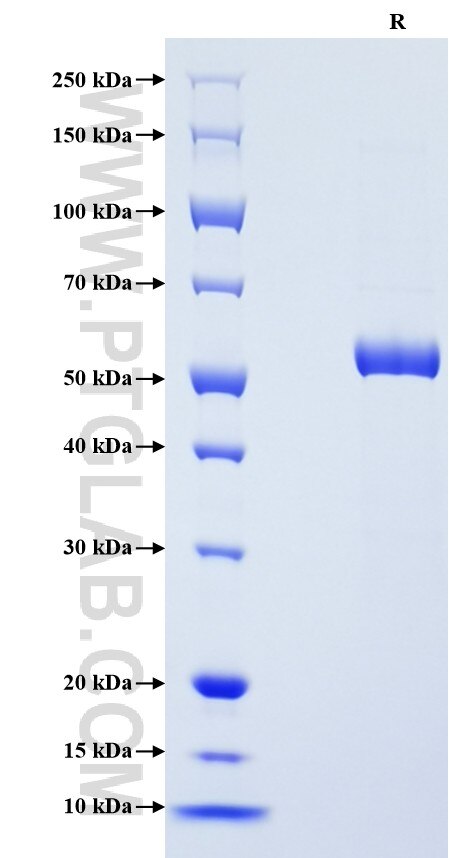
>90 %, SDS-PAGE
Tag
hFc Tag
Activity
not tested
Cat no : Eg0327
Validation Data Gallery
Product Information
| Purity | >90 %, SDS-PAGE |
| Endotoxin | <0.1 EU/μg protein, LAL method |
| Activity |
Not tested |
| Expression | HEK293-derived Human ADIPOQ protein Glu19-Asn244 (Accession# Q15848) with a human IgG Fc tag at the N-terminus. |
| GeneID | 9370 |
| Accession | Q15848 |
| PredictedSize | 51.6 kDa |
| SDS-PAGE | 52-60 kDa, reducing (R) conditions |
| Formulation | Lyophilized from 0.22 μm filtered solution in PBS, pH 7.4. Normally 5% trehalose and 5% mannitol are added as protectants before lyophilization. |
| Reconstitution | Briefly centrifuge the tube before opening. Reconstitute at 0.1-0.5 mg/mL in sterile water. |
| Storage Conditions |
It is recommended that the protein be aliquoted for optimal storage. Avoid repeated freeze-thaw cycles.
|
| Shipping | The product is shipped at ambient temperature. Upon receipt, store it immediately at the recommended temperature. |
Background
Adiponectin (AdipoQ), an adipocyte-derived hormone, is one of the most abundant adipokines in the blood circulation. Adiponectin modulates a number of metabolic processes, including improving INS sensitivity and anti-inflammatory activity. The role of AdipoQ in reproduction is not yet fully understood, but the expression of AdipoQ in reproductive tissues has been observed in various animals and humans, including chicken testis, bovine ovary, and human placenta. Adiponectin exerts its effects by activating a range of different signaling molecules via binding to two transmembrane AdipoQ receptors, AdipoR1 and AdipoR2. AdipoR1 is expressed primarily in the skeletal muscle, whereas AdipoR2 is predominantly expressed in the liver. AdipoQ May play a role in cell growth, angiogenesis and tissue remodeling by binding and sequestering various growth factors.
References:
1.Straub, Leon G, and Philipp E Scherer. Nat Metab. 2019;1(3):334-339.
2.Achari, Arunkumar E, and Sushil K Jain. Int J Mol Sci. 2017;18(6):1321.