
Recombinant Human AOC3 protein (rFc Tag)
Species
Human
Purity
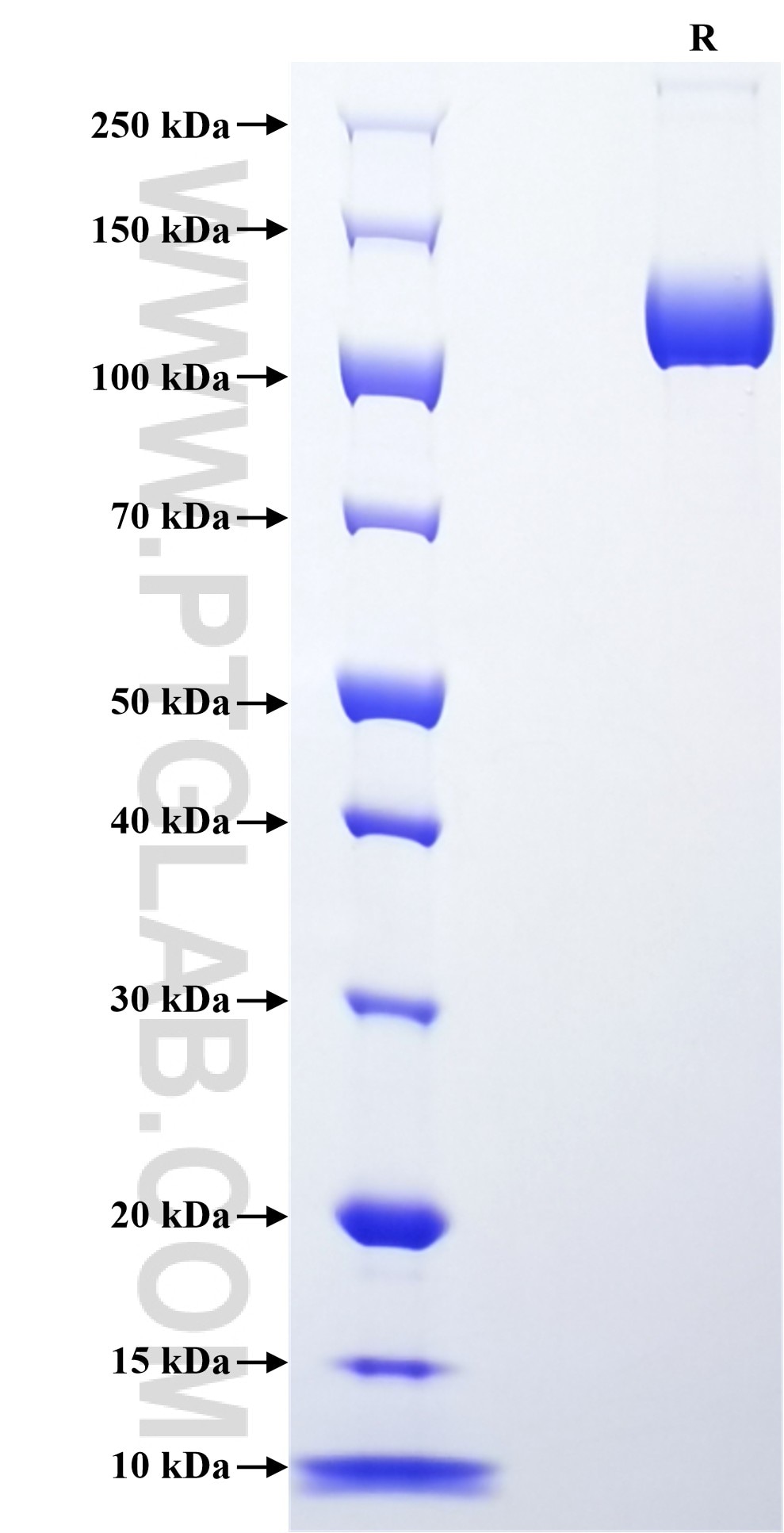
>90 %, SDS-PAGE
Tag
rFc Tag
Activity
not tested
Cat no : Eg5045
Validation Data Gallery
Product Information
| Purity | >90 %, SDS-PAGE |
| Endotoxin | <0.1 EU/μg protein, LAL method |
| Activity |
Not tested |
| Expression | HEK293-derived Human AOC3 protein Gly27-Asn763 (Accession# Q16853-1) with a rabbit IgG Fc tag at the N-terminus. |
| GeneID | 8639 |
| Accession | Q16853-1 |
| PredictedSize | 109.0 kDa |
| SDS-PAGE | 110-140 kDa, reducing (R) conditions |
| Formulation | Lyophilized from 0.22 μm filtered solution in PBS, pH 7.4. Normally 5% trehalose and 5% mannitol are added as protectants before lyophilization. |
| Reconstitution | Briefly centrifuge the tube before opening. Reconstitute at 0.1-0.5 mg/mL in sterile water. |
| Storage Conditions |
It is recommended that the protein be aliquoted for optimal storage. Avoid repeated freeze-thaw cycles.
|
| Shipping | The product is shipped at ambient temperature. Upon receipt, store it immediately at the recommended temperature. |
Background
AOC3 (Amine Oxidase Copper Containing 3), also known as VAP-1 (vascular adhesion protein-1), belongs to the copper-dependent amine oxidase family and is a membrane-bound monoamine oxidase. This protein catalyzes the oxidative deamination of primary amines to produce aldehydes, hydrogen peroxide, and ammonia, thereby participating in inflammatory responses and transendothelial migration of leukocytes. AOC3 is significantly upregulated in chronic inflammatory diseases (e.g., rheumatoid arthritis, atherosclerosis, non-alcoholic fatty liver disease), and its soluble form (sVAP-1) can serve as a biomarker of systemic inflammation. As a drug target, AOC3 inhibitors are being developed for the treatment of metabolic and autoimmune diseases.
References:
1. Boyer, David S et al. International journal of retina and vitreous vol. 7,1 (2021): 30.
2. Qi, Luxia et al. Heliyon vol. 10,17 (2024): e37070.
3. Özcan, Özge et al. In vivo (Athens, Greece) vol. 38,5 (2024): 2300-2309.
4. Filip, Anna et al. Frontiers in cardiovascular medicine vol. 9 (2022): 848680.