
Speedy™ Human APOE One-Step ELISA Kit
Cat no : SE50082
Synonyms
Apo E, Apo-E, apoe4, apolipoprotein E, ApolipoproteinE
Validation Data Gallery
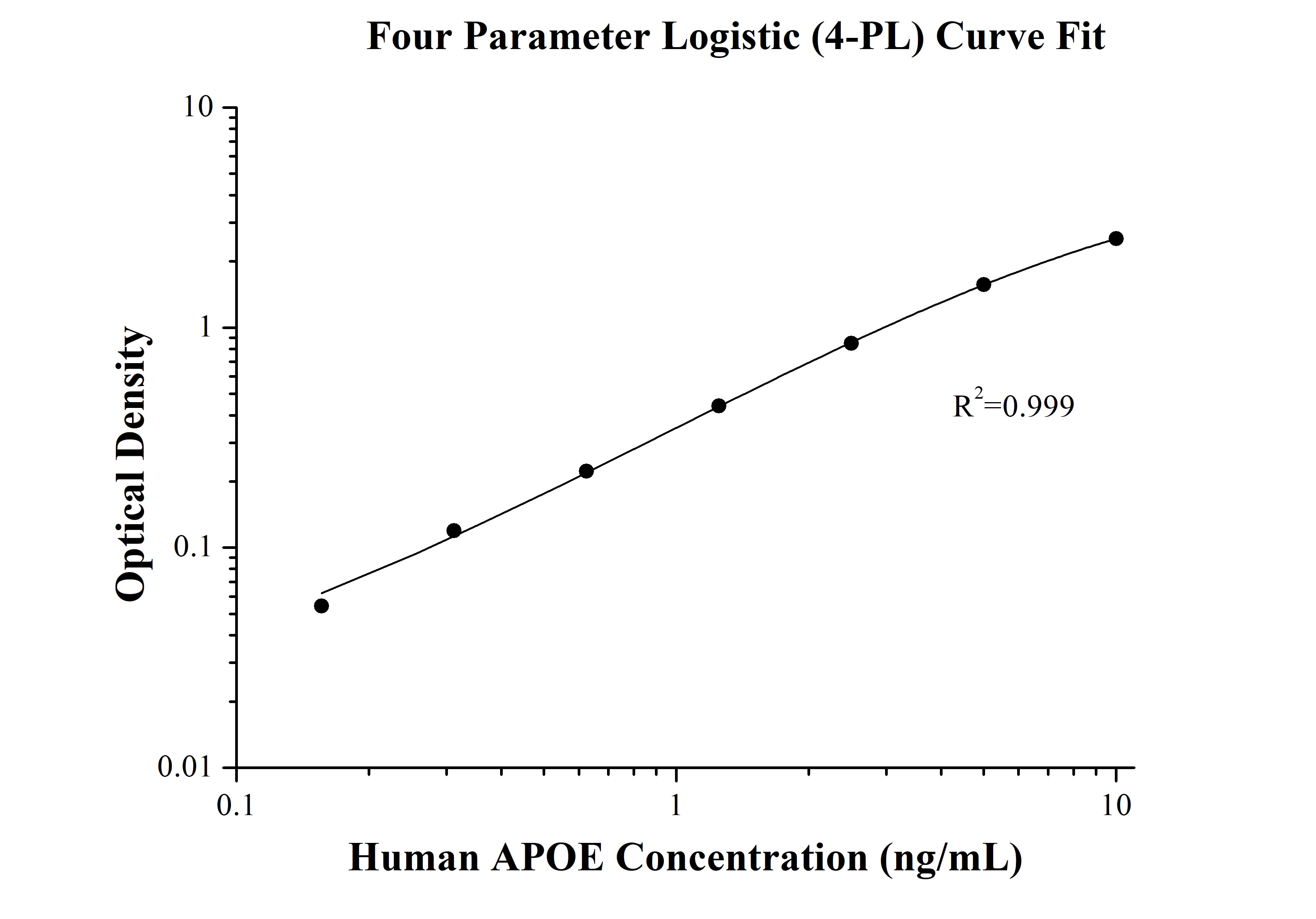
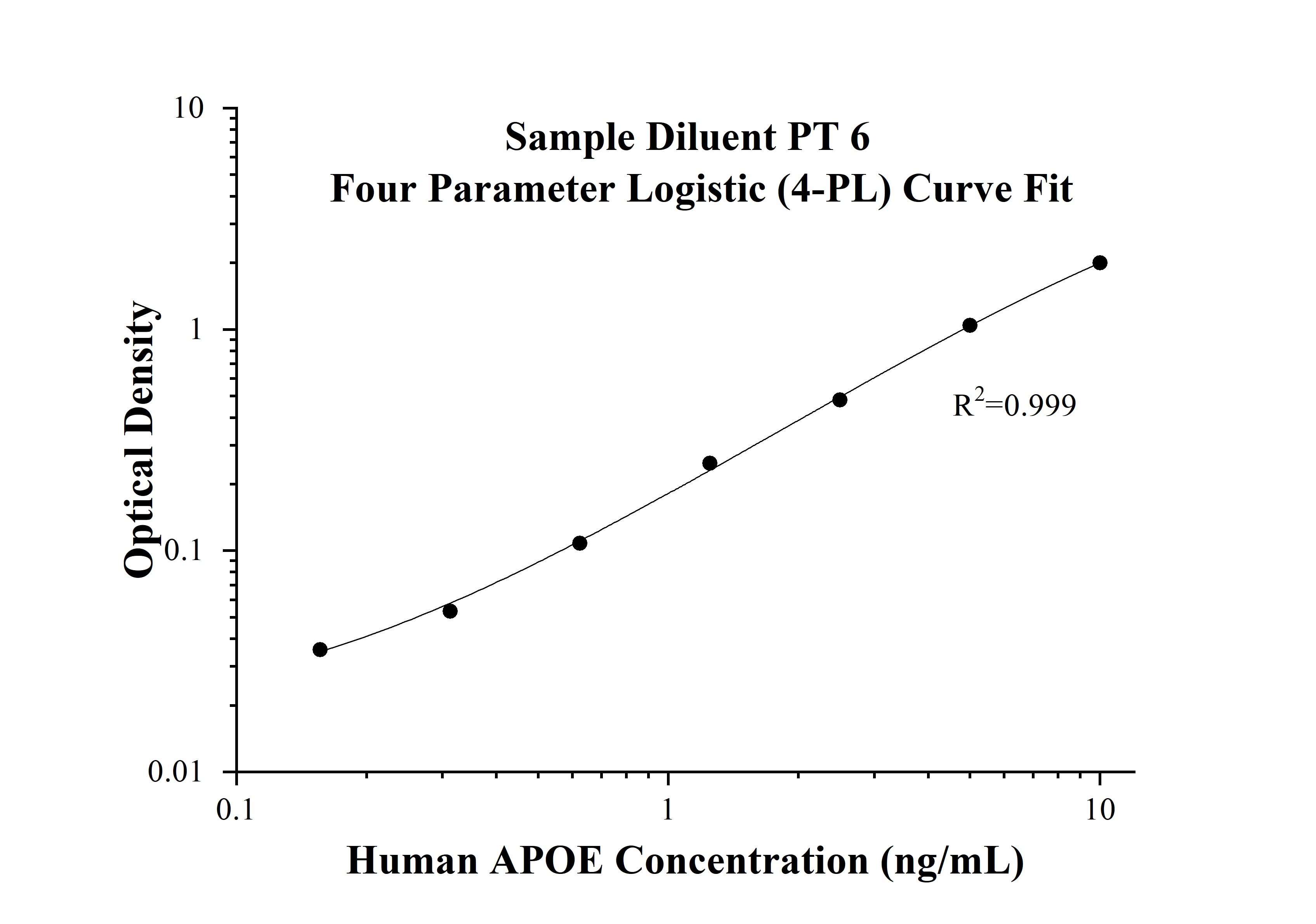
Product Information
| Product name | Speedy™ Human APOE One-Step ELISA Kit |
| Tests | 1 X 96 well plate |
| Sample type | Serum,Plasma,Urine,Saliva,Cerebrospinal fluid |
| Assay type | Sandwich |
| Sensitivity | 0.01 ng/mL |
| Range | 0.156-10 ng/mL |
| Reactivity | Human |
| Tested applications | Sandwich ELISA |
| Gene ID (NCBI) | 348 |
Recovery
| Sample Type | Average | Range |
|---|---|---|
| Human plasma | 98% | 93%-102% |
| Saliva | 120% | 115%-128% |
| Urine | 112% | 107%-116% |
| CSF | 116% | 99%-126% |
| Cell culture supernatant | 98% | 83%-112% |
IntraAssay
| Sample | n | mean ( ng/mL) | SD | CV% |
|---|---|---|---|---|
| 1 | 8 | 5.39 | 0.44 | 8.16 |
| 2 | 8 | 1.34 | 0.04 | 2.99 |
| 3 | 8 | 0.39 | 0.01 | 2.56 |
InterAssay
| Sample | n | mean ( ng/mL) | SD | CV% |
|---|---|---|---|---|
| 1 | 16 | 5.37 | 0.40 | 7.45 |
| 2 | 16 | 1.34 | 0.08 | 5.97 |
| 3 | 16 | 0.40 | 0.02 | 5.00 |
Background Information
APOE (apolipoprotein E) is a plasma protein implicated in lipid metabolism. It is produced predominantly by hepatocytes, macrophages, and neural cells. In the CNS, APOE is the major extracellular lipid carrier and plays a key role in neuronal protection and repair after injury. APOE is polymorphic, with three major alleles: APOE2 (cys112, cys158), APOE3 (cys112, arg158), and APOE4 (arg112, arg158). APOE2 plays a protective role against both Alzheimer's (AD) and heart disease. APOE4 confers a higher risk for atherosclerosis and Alzheimer's disease. Analysis of cerebrospinal fluid (CSF) and plasma APOE protein levels in AD patients had been performed to examine its association with AD pathology. In old age, high plasma APOE levels precede an increase of circulating CRP and strongly associates with cardiovascular mortality.
Properties
| Storage Instructions | All the reagents are stored at 2-8℃ for 6 months or -20℃ for 12 months. Refer to the protocol for further storage instructions. |
| Synonyms | Apo E, Apo-E, apoe4, apolipoprotein E, ApolipoproteinE |
FAQ
1、I have limited sample diluent. How should I handle samples requiring high dilution factors?
Answer: We recommend performing a serial dilution. For example, if human serum requires a 1,000,000-fold dilution, you can use a three-step 100× dilution method as follows:
Step 1: Take 2 uL of human serum and add it to 198 uL of sample diluent, mix thoroughly to obtain a 100-fold diluted sample.
Step 2: Take 2 uL of the 100-fold diluted sample and add it to 198 uL of sample diluent, mix thoroughly to obtain a 10,000-fold diluted sample.
Step 3: Take 2 uL of the 10,000-fold diluted sample and add it to 198 uL of sample diluent, mix thoroughly to obtain a 1,000,000-fold diluted sample.
If further dilution is required, additional serial steps can be used. We do not recommend using any other solutions or water for dilution, except for the sample diluent we suggest. If your sample diluent is still insufficient, please contact our customer service for more sample diluent.
2、If thermostatic shaker is not available, will it affect the duration of my experiment and the experimental data?
Answer: If thermostatic shaker is not available, it may take 2.5 hours to complete this experiment. After adding the antibody cocktail, we suggest you incubate the plate at 37℃ for 2 hours. After adding TMB, you only need to incubate the plate at 37℃ for 15 minutes. Through comparative experiments, our R&D personnel have confirmed that you can still obtain valid experimental data, although the signal will be slightly reduced.