
Recombinant Human APOH protein (mFc Tag)(HPLC verified)
Species
Human
Purity
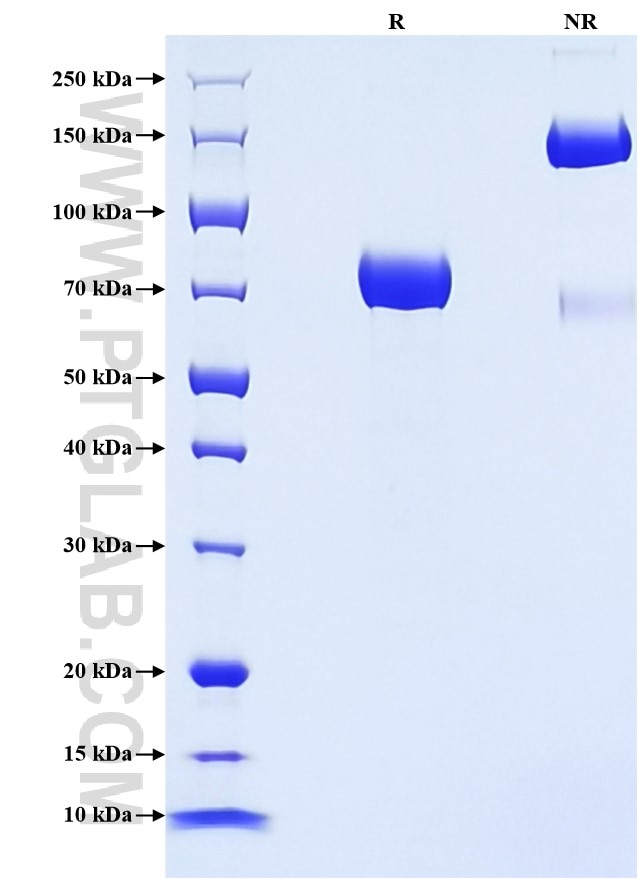
>90 %, SDS-PAGE
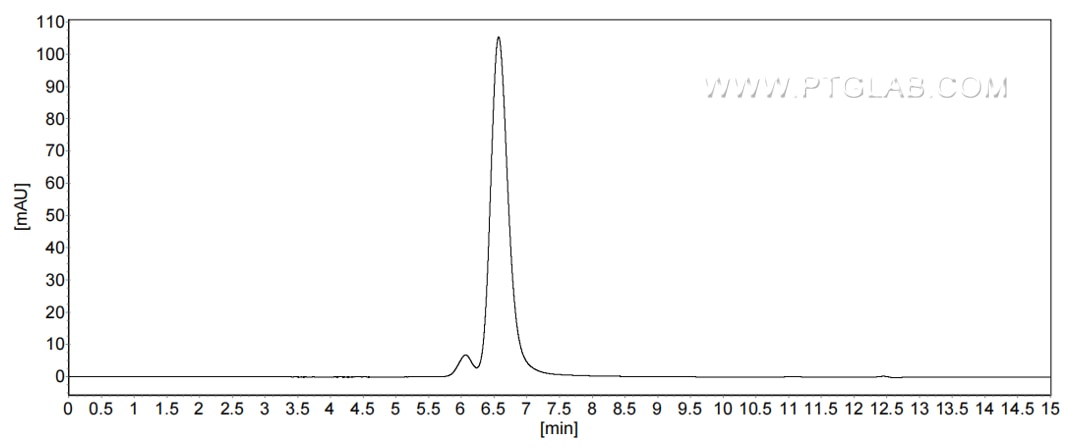
>90 %, SEC-HPLC
Tag
mFc Tag
Activity
not tested
Cat no : Eg3622
Validation Data Gallery
Product Information
| Purity | >90 %, SDS-PAGE >90 %, SEC-HPLC |
| Endotoxin | <0.1 EU/μg protein, LAL method |
| Activity |
Not tested |
| Expression | HEK293-derived Human APOH protein Gly20-Cys345 (Accession# P02749) with a mouse IgG Fc tag at the C-terminus. |
| GeneID | 350 |
| Accession | P02749 |
| PredictedSize | 62.9 kDa |
| SDS-PAGE | 68-85 kDa, reducing (R) conditions |
| Formulation | Lyophilized from 0.22 μm filtered solution in PBS, pH 7.4. Normally 5% trehalose and 5% mannitol are added as protectants before lyophilization. |
| Reconstitution | Briefly centrifuge the tube before opening. Reconstitute at 0.1-0.5 mg/mL in sterile water. |
| Storage Conditions |
It is recommended that the protein be aliquoted for optimal storage. Avoid repeated freeze-thaw cycles.
|
| Shipping | The product is shipped at ambient temperature. Upon receipt, store it immediately at the recommended temperature. |
Background
Apolipoprotein H (ApoH), also known as beta2-glycoprotein I (B2-GPI), is a plasma glycoprotein, primarily synthesized in the liver. It has an important function in blood coagulation and clearance of apoptotic bodies from the circulation. ApoH is also an important actor of host innate immune response through its capacity to bind with high affinity to a large panel of pathogens or their proteins. APOH is classified within the candidate cardiovascular disease genes and is localized to the Golgi apparatus and is secreted into the blood.
References:
1. Castro A, et al. (2010). Atherosclerosis. Mar;209(1):201-5.
2. Tan Y, et al. (2021). Front Immunol. May 4;12:604222.
3. Hasstedt, S. J., et al. (2016). Hum Genet. Feb;135(2):201-207.