
Recombinant Human APP protein (rFc Tag)
Species
Human
Purity
>80 %, SDS-PAGE
Tag
rFc Tag
Activity
not tested
Cat no : Eg3070
Validation Data Gallery
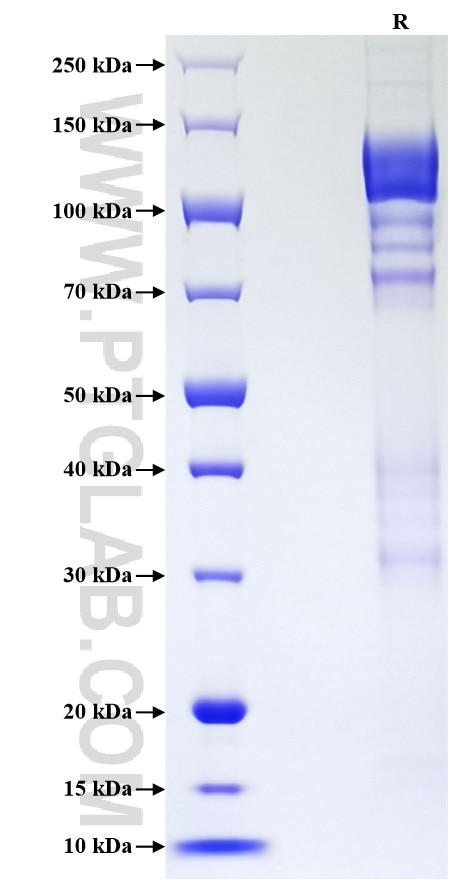
Product Information
| Purity | >80 %, SDS-PAGE |
| Endotoxin | <0.1 EU/μg protein, LAL method |
| Activity |
Not tested |
| Expression | HEK293-derived Human APP protein Leu18-Lys687 (Accession# P05067-1) with a rabbit IgG Fc tag at the C-terminus. |
| GeneID | 351 |
| Accession | P05067-1 |
| PredictedSize | 102.0 kDa |
| SDS-PAGE | 100-140 kDa, reducing (R) conditions |
| Formulation | Lyophilized from 0.22 μm filtered solution in PBS, pH 7.4. Normally 5% trehalose and 5% mannitol are added as protectants before lyophilization. |
| Reconstitution | Briefly centrifuge the tube before opening. Reconstitute at 0.1-0.5 mg/mL in sterile water. |
| Storage Conditions |
It is recommended that the protein be aliquoted for optimal storage. Avoid repeated freeze-thaw cycles.
|
| Shipping | The product is shipped at ambient temperature. Upon receipt, store it immediately at the recommended temperature. |
Background
Aβ derives from APP via proteolytic cleavage by proteases called α-, β- and γ-secretase. The α-secretase cleavage precludes the formation of Aβ, while the β- and γ-cleavages generate APP components with amyloidogenic features. Amyloid beta A4 precursor protein(APP), encoded by APP gene which locate on human chromosome 21q, is a cell surface receptor and performs physiological functions on the surface of neurons relevant to neurite growth, neuronal adhesion and axonogenesis. APP expressed in all fetal tissues and is pronounced in brain, kidney, heart and spleen, but weak in liver. Defects in APP are the cause of Alzheimer disease type 1 (AD1).
References:
1.Nguyen, Khue Vu. Biomolecular concepts vol. 6,1 (2015): 11-32.
2.Baumkötter, Frederik et al. The Journal of neuroscience : the official journal of the Society for Neuroscience vol. 34,33 (2014): 11159-72.
3.Mullan, M et al. Nature genetics vol. 1,5 (1992): 345-7.