
Recombinant Human CSN3 protein (rFc Tag)
Species
Human
Purity
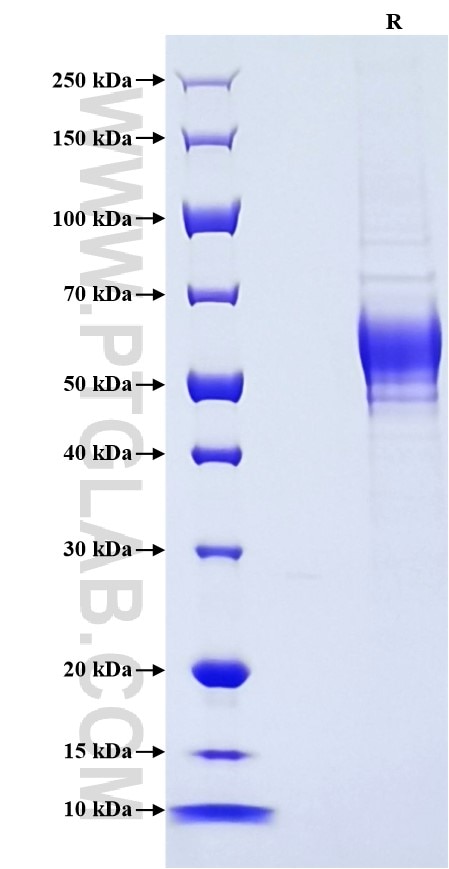
>90 %, SDS-PAGE
Tag
rFc Tag
Activity
not tested
Cat no : Eg3048
Validation Data Gallery
Product Information
| Purity | >90 %, SDS-PAGE |
| Endotoxin | <0.1 EU/μg protein, LAL method |
| Activity |
Not tested |
| Expression | HEK293-derived Human CSN3 protein Glu21-Ala182 (Accession# P07498) with a rabbit IgG Fc tag at the C-terminus. |
| GeneID | 1448 |
| Accession | P07498 |
| PredictedSize | 44.2 kDa |
| SDS-PAGE | 48-65 kDa, reducing (R) conditions |
| Formulation | Lyophilized from 0.22 μm filtered solution in PBS, pH 7.4. Normally 5% trehalose and 5% mannitol are added as protectants before lyophilization. |
| Reconstitution | Briefly centrifuge the tube before opening. Reconstitute at 0.1-0.5 mg/mL in sterile water. |
| Storage Conditions |
It is recommended that the protein be aliquoted for optimal storage. Avoid repeated freeze-thaw cycles.
|
| Shipping | The product is shipped at ambient temperature. Upon receipt, store it immediately at the recommended temperature. |
Background
κ-Casein (CSN3) is the major protein component of milk micelles in most mammalian species. CSN3, which is mainly located at the surface of the micelles, is known to play an essential role in controlling the stability of the micelles. CSN3 from bovine milk possesses molecular chaperone activity and functioned to prevent precipitation of the target protein.
References:
1. Niu J, Yan T, et al. (2022) Autophagy. 19(6):1693-1710.
2. Amalfitano N, Macedo Mota LF, et al. (2022) J Dairy Sci. 105(7):6001-6020.
3. Boro M, Govatati S, et al. (2021) Cell Death Differ. 28(2):780-798.
4. Rozen S, Füzesi-Levi MG, et al. (2015) Cell Rep. 13(3):585-598.