
Recombinant Human COL23A1 protein (rFc Tag)
Species
Human
Purity
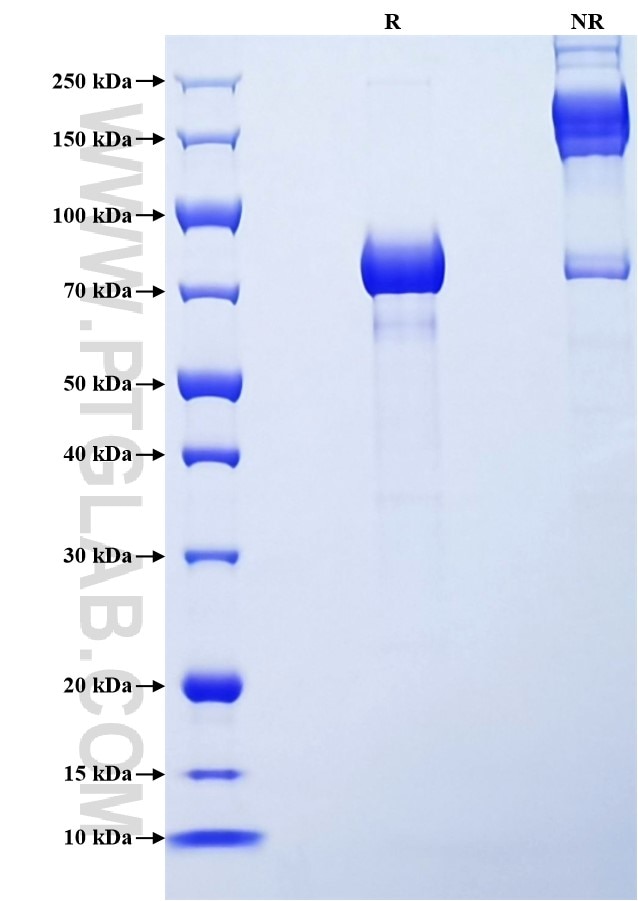
>90 %, SDS-PAGE
Tag
rFc Tag
Activity
not tested
Cat no : Eg4453
Validation Data Gallery
Product Information
| Purity | >90 %, SDS-PAGE |
| Endotoxin | <0.1 EU/μg protein, LAL method |
| Activity |
Not tested |
| Expression | HEK293-derived Human COL23A1 protein Gln57-Lys540 (Accession# Q86Y22-1) with a rabbit IgG Fc tag at the C-terminus. |
| GeneID | 91522 |
| Accession | Q86Y22-1 |
| PredictedSize | 73.4 kDa |
| SDS-PAGE | 73-85 kDa, reducing (R) conditions |
| Formulation | Lyophilized from 0.22 μm filtered solution in PBS, pH 7.4. Normally 5% trehalose and 5% mannitol are added as protectants before lyophilization. |
| Reconstitution | Briefly centrifuge the tube before opening. Reconstitute at 0.1-0.5 mg/mL in sterile water. |
| Storage Conditions |
It is recommended that the protein be aliquoted for optimal storage. Avoid repeated freeze-thaw cycles.
|
| Shipping | The product is shipped at ambient temperature. Upon receipt, store it immediately at the recommended temperature. |
Background
COL23A1, or Collagen Type XXIII Alpha 1 Chain, is a protein-coding gene that belongs to the transmembrane collagens, a subfamily of nonfibrillar collagens characterized by the presence of a single hydrophobic transmembrane domain. This protein plays a role in the structure and function of collagen and extracellular matrix proteins. COL23A1 has been implicated in various diseases, including Paraurethral Gland Cancer, and has been shown to be an independent prognostic factor in certain malignancies, such as clear cell renal cell carcinoma. The protein is expressed in various human tissues with biased expression in the thyroid and heart. It is involved in cellular processes such as proliferation, cell cycle progression, and cell adhesion.
References:
1.Banyard J. et al. (2003) J Biol Chem. 278(23):20989-94.
2.Xu F. et al. (2017) Erratum in: Sci Rep. 8(1):6001.
3.Banyard J. et al. (2007) Clin Cancer Res. 13(9):2634-42.