
Recombinant Human EPHA3 protein (rFc Tag) (HPLC verified)
Species
Human
Purity
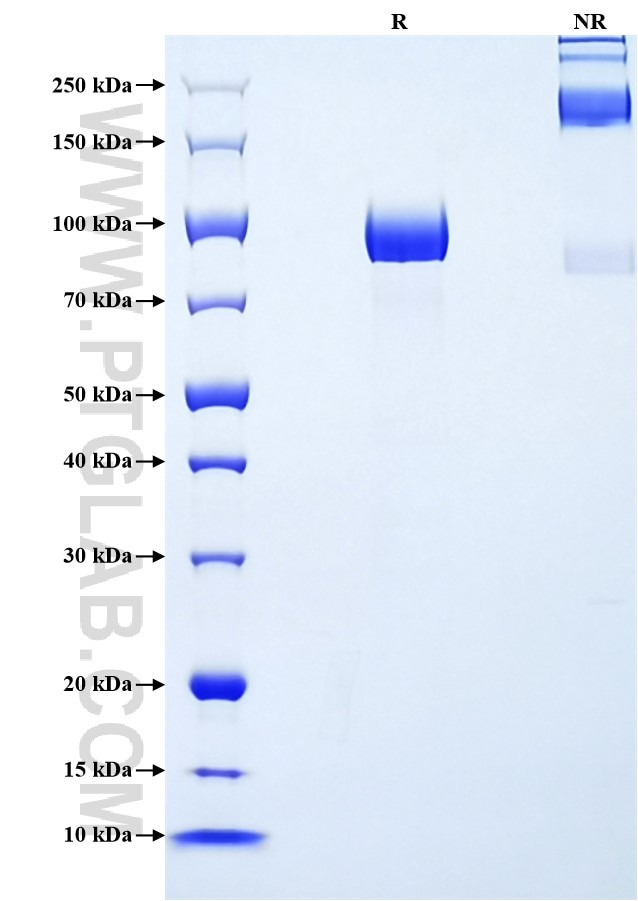
>90 %, SDS-PAGE
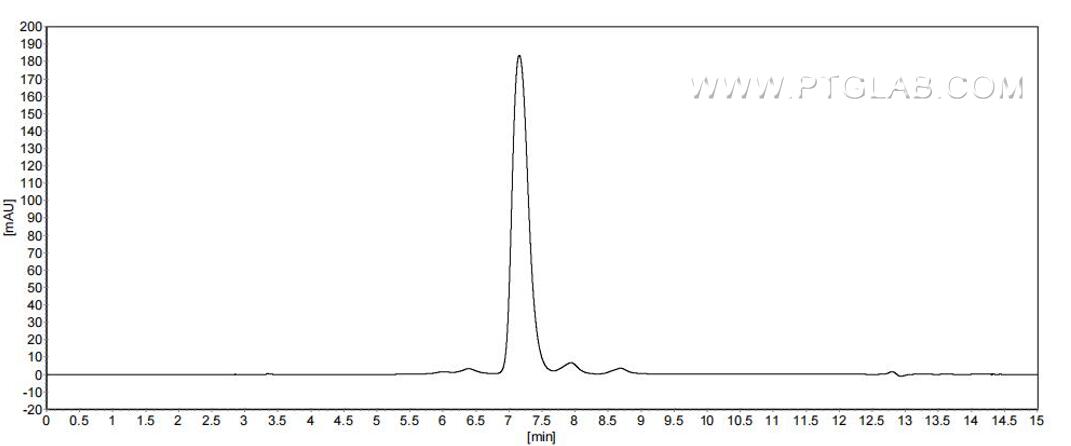
>90 %, SEC-HPLC
Tag
rFc Tag
Activity
not tested
Cat no : Eg2951
Validation Data Gallery
Product Information
| Purity | >90 %, SDS-PAGE >90 %, SEC-HPLC |
| Endotoxin | <0.1 EU/μg protein, LAL method |
| Activity |
Not tested |
| Expression | HEK293-derived Human EPHA3 protein Glu21-Gln541 (Accession# P29320-1) with a rabbit IgG Fc tag at the C-terminus. |
| GeneID | 2042 |
| Accession | P29320-1 |
| PredictedSize | 84.9 kDa |
| SDS-PAGE | 85-110 kDa, reducing (R) conditions |
| Formulation | Lyophilized from 0.22 μm filtered solution in PBS, pH 7.4. Normally 5% trehalose and 5% mannitol are added as protectants before lyophilization. |
| Reconstitution | Briefly centrifuge the tube before opening. Reconstitute at 0.1-0.5 mg/mL in sterile water. |
| Storage Conditions |
It is recommended that the protein be aliquoted for optimal storage. Avoid repeated freeze-thaw cycles.
|
| Shipping | The product is shipped at ambient temperature. Upon receipt, store it immediately at the recommended temperature. |
Background
Ephrin type-A receptor 3 (EPHA3) is a member of the EPH receptor family of tyrosine kinases. These receptors play a crucial role in developmental processes, particularly in the nervous system, and are involved in cell adhesion, migration, and signaling. EPHA3 binds promiscuously membrane-bound ephrin family ligands on adjacent cells, leading to contact-dependent bidirectional signaling into neighboring cells. It has been correlated with various human malignancies, including hematologic disorders, gastric cancer, glioblastoma multiforme, colorectal cancer, etc.
References:
1.Lawrenson ID. et al. (2002). J Cell Sci. 115(Pt 5):1059-1072.
2.London M. et al. (2020). Mol Biol Rep. 47(7):5523-5533.