
Recombinant Human CD89 protein (rFc Tag) (HPLC verified)
Species
Human
Purity
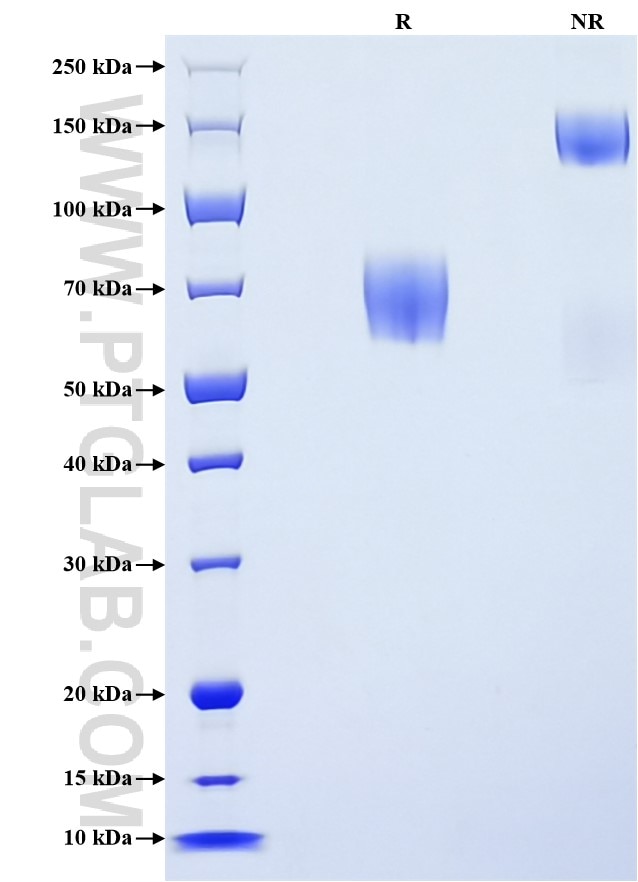
>90 %, SDS-PAGE
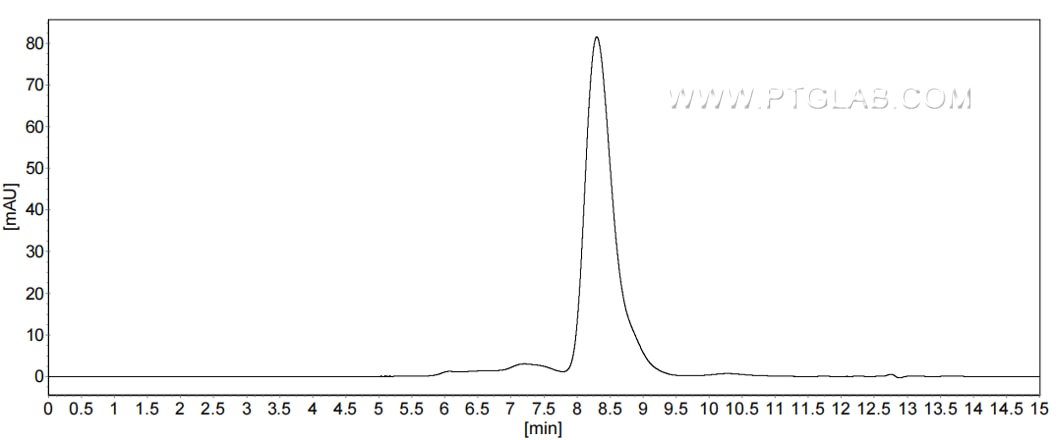
>90 %, SEC-HPLC
Tag
rFc Tag
Activity
not tested
Cat no : Eg1734
Validation Data Gallery
Product Information
| Purity | >90 %, SDS-PAGE >90 %, SEC-HPLC |
| Endotoxin | <0.1 EU/μg protein, LAL method |
| Activity |
Not tested |
| Expression | HEK293-derived Human CD89 protein Gln22-Asn227 (Accession# P24071-1) with a rabbit IgG Fc tag at the C-terminus. |
| GeneID | 2204 |
| Accession | P24071-1 |
| PredictedSize | 49.8 kDa |
| SDS-PAGE | 55-85 kDa, reducing (R) conditions |
| Formulation | Lyophilized from 0.22 μm filtered solution in PBS, pH 7.4. Normally 5% trehalose and 5% mannitol are added as protectants before lyophilization. |
| Reconstitution | Briefly centrifuge the tube before opening. Reconstitute at 0.1-0.5 mg/mL in sterile water. |
| Storage Conditions |
It is recommended that the protein be aliquoted for optimal storage. Avoid repeated freeze-thaw cycles.
|
| Shipping | The product is shipped at ambient temperature. Upon receipt, store it immediately at the recommended temperature. |
Background
FcαRI (CD89) is a member of the Fc receptor immunoglobulin superfamily, constitutively expressed on cells of the myeloid lineage like neutrophils, eosinophils, monocytes macrophages, and platelets. CD89 expression and activation are increased in human blood phagocytes following bacterial infection, together with increased expression and association of FcRγ with CD89. CD89 binds both subclasses of IgA (IgA1 and IgA2) with moderate affinity, but also binds other molecules such as TfR1, C-reactive protein and bacterial ligands. CD89 represents an effective target molecule for immunotherapy mediated by bispecific antibodies.
References:
1. Cambier A, et al. (2022). Kidney Int. Feb;101(2):274-287.
2. de Tymowski C, et al. (2019). Cell Rep. Apr 16;;27(3):762-775.e5.
3. Lua WH, et al. (2017). Cell Cycle. Mar 4;16(5):457-467.
4. van Delft MAM, et al. (2023). Front Immunol. Apr 4;14:1118539.