
Recombinant Human GP2 protein (mFc Tag)
Species
Human
Purity
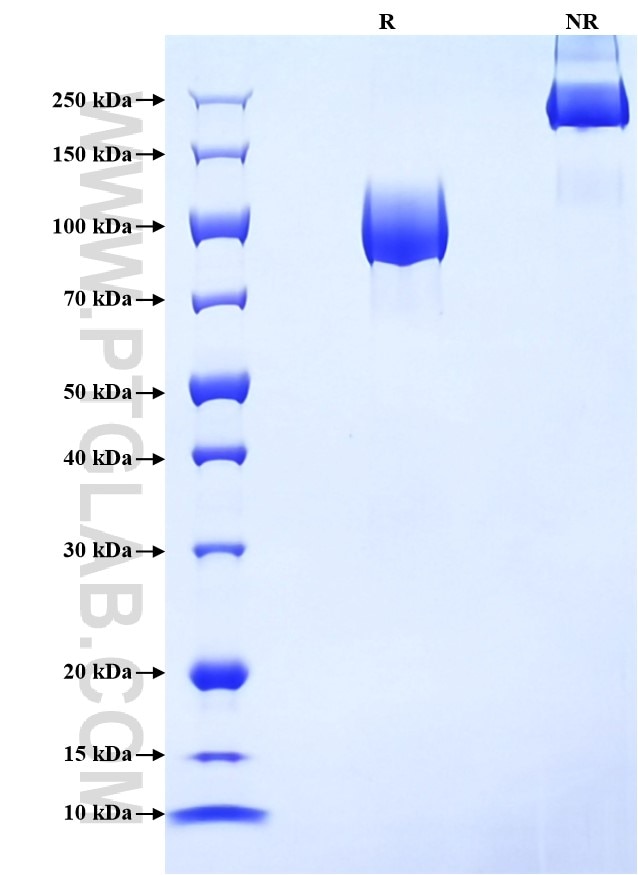
>90 %, SDS-PAGE
Tag
mFc Tag
Activity
not tested
Cat no : Eg2447
Validation Data Gallery
Product Information
| Purity | >90 %, SDS-PAGE |
| Endotoxin | <0.1 EU/μg protein, LAL method |
| Activity |
Not tested |
| Expression | HEK293-derived Human GP2 protein Val29-Asn512 (Accession# P55259-1) with a mouse IgG Fc tag at the C-terminus. |
| GeneID | 2813 |
| Accession | P55259-1 |
| PredictedSize | 80.4 kDa |
| SDS-PAGE | 80-120 kDa, reducing (R) conditions |
| Formulation | Lyophilized from 0.22 μm filtered solution in PBS, pH 7.4. Normally 5% trehalose and 5% mannitol are added as protectants before lyophilization. |
| Reconstitution | Briefly centrifuge the tube before opening. Reconstitute at 0.1-0.5 mg/mL in sterile water. |
| Storage Conditions |
It is recommended that the protein be aliquoted for optimal storage. Avoid repeated freeze-thaw cycles.
|
| Shipping | The product is shipped at ambient temperature. Upon receipt, store it immediately at the recommended temperature. |
Background
Pancreatic secretory granule membrane major glycoprotein (GP2) is the most abundant membrane component of zymogen granules secreted by pancreatic acinar cells. GP2 associates with the plasma membrane via glycosylphosphatidylinositol (GPI) linkage. It is released from the membrane of mature zymogen granules by an enzymatic mechanism. GP2 plays a role in defense against adhesive and invasive commensal bacteria during intestinal inflammation. GP2 is preferentially expressed in acinar cell carcinomas of the pancreas but the glycoprotein can rarely also be expressed in a variety of other tumor entities.
References:
1. G A Scheele, et al. (1994) Pancreas. 9(2):139-49.
2. S Fukuoka, et al. (1991) Proc Natl Acad Sci U S A. 88(7):2898-902.
3. Yosuke Kurashima, et al. (2021) Nat Commun. 12(1):1067.
4. Ria Uhlig, et al. (2022) Pathol Res Pract. 238:154123.