
Recombinant Human IFNA17 protein (rFc Tag)(HPLC verified)
Species
Human
Purity
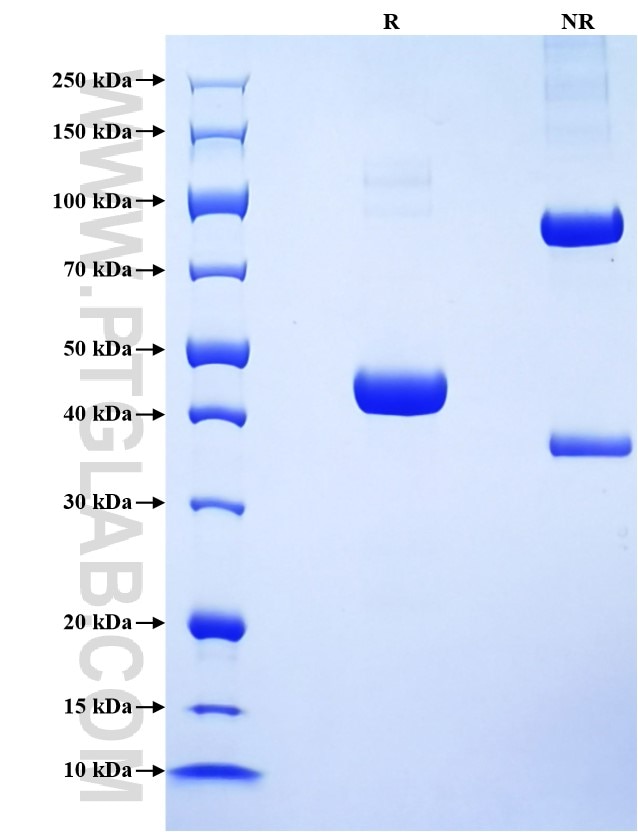
>90 %, SDS-PAGE
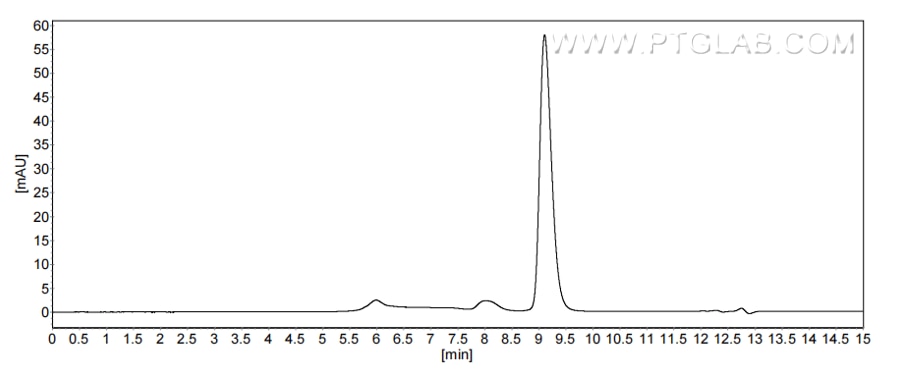
>90 %, SEC-HPLC
Tag
rFc Tag
Activity
not tested
Cat no : Eg3088
Validation Data Gallery
Product Information
| Purity | >90 %, SDS-PAGE >90 %, SEC-HPLC |
| Endotoxin | <0.1 EU/μg protein, LAL method |
| Activity |
Not tested |
| Expression | HEK293-derived Human IFNA17 protein Cys24-Asp189 (Accession# P01571) with a rabbit IgG Fc tag at the C-terminus. |
| GeneID | 3451 |
| Accession | P01571 |
| PredictedSize | 45.3 kDa |
| SDS-PAGE | 40-47 kDa, reducing (R) conditions |
| Formulation | Lyophilized from 0.22 μm filtered solution in PBS, pH 7.4. Normally 5% trehalose and 5% mannitol are added as protectants before lyophilization. |
| Reconstitution | Briefly centrifuge the tube before opening. Reconstitute at 0.1-0.5 mg/mL in sterile water. |
| Storage Conditions |
It is recommended that the protein be aliquoted for optimal storage. Avoid repeated freeze-thaw cycles.
|
| Shipping | The product is shipped at ambient temperature. Upon receipt, store it immediately at the recommended temperature. |
Background
Interferons (IFNs) are a family of cytokines with potent antiviral, antiproliferative, and immunomodulatory properties. There is no mouse homolog for IFNA17, but mature human IFNA17 shares 58% amino acid sequence identity with chimpanzee IFNA17. Type I IFNs bind to the interferon alpha receptor (IFNAR), which consists of two subunits: IFNAR1 (alpha-subunit) and IFNAR2 (beta-subunit). Individual IFNA subtypes are known to display unique efficacies to viral protection. IFNA17 has been shown to be potent against HIV-1 activity. Human IFNA17 is the only IFNA subtype identified with antiviral activity but a reduced ability to activate NK cells. A mutation in IFNA17, Ile184Arg, is associated with an increased risk for cervical cancer.In summary, IFNA17 is a type I interferon with unique antiviral and immunomodulatory properties. It plays a significant role in the immune response and has been implicated in the pathogenesis of certain diseases, including prostate cancer and cervical cancer.
References:
1.	Pestka S, et al. (1987) Annu Rev Biochem. 56:727.
2.	Goeddel, D.V. et al. (1980) Nature 287:411.
3.	Ortaldo, J.R. et al. (1984) PNAS 81:4926.
4.	Kim, J.W. et al. (2003) Cancer Lett. 189:183.