
Recombinant Human KIR2DS2 protein (rFc Tag) (HPLC verified)
Species
Human
Purity
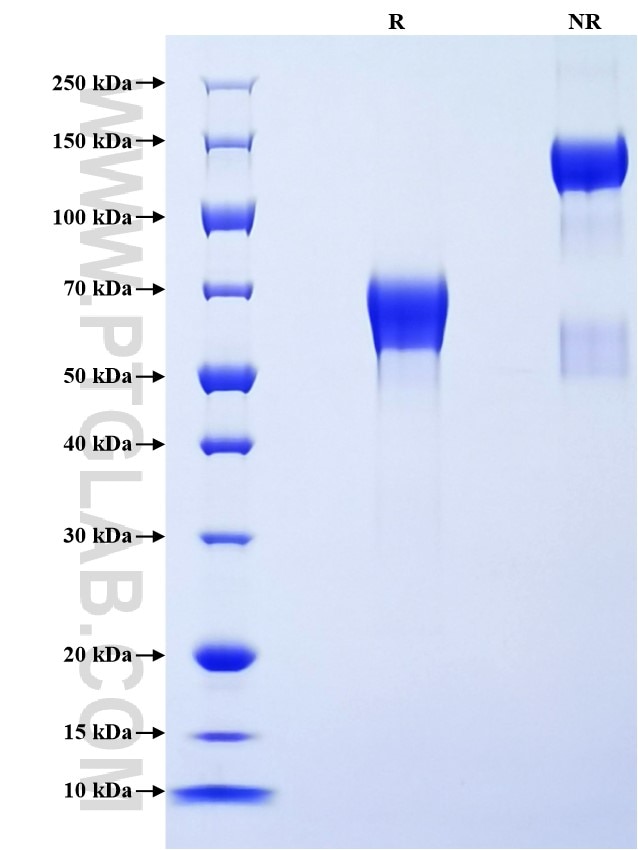
>90 %, SDS-PAGE
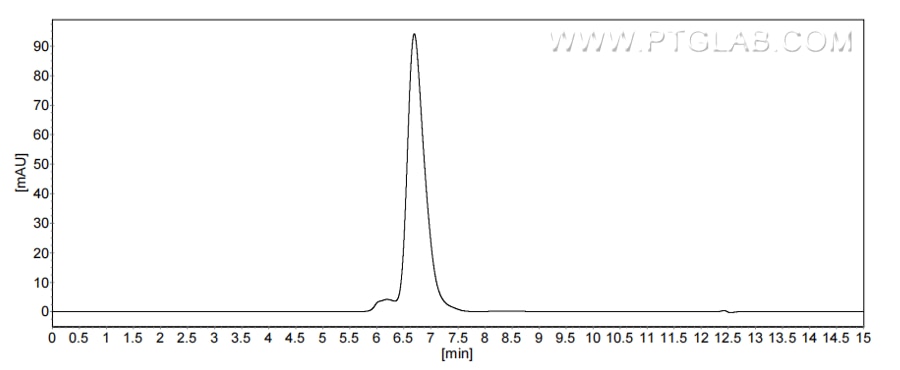
>90%, SEC-HPLC
Tag
rFc Tag
Activity
not tested
Cat no : Eg3746
Validation Data Gallery
Product Information
| Purity | >90 %, SDS-PAGE >90%, SEC-HPLC |
| Endotoxin | <0.1 EU/μg protein, LAL method |
| Activity |
Not tested |
| Expression | HEK293-derived Human KIR2DS2 protein His22-His245 (Accession# P43631) with a rabbit IgG Fc tag at the C-terminus. |
| GeneID | 100132285 |
| Accession | P43631 |
| PredictedSize | 50.9 kDa |
| SDS-PAGE | 55-70 kDa, reducing (R) conditions |
| Formulation | Lyophilized from 0.22 μm filtered solution in PBS, pH 7.4. Normally 5% trehalose and 5% mannitol are added as protectants before lyophilization. |
| Reconstitution | Briefly centrifuge the tube before opening. Reconstitute at 0.1-0.5 mg/mL in sterile water. |
| Storage Conditions |
It is recommended that the protein be aliquoted for optimal storage. Avoid repeated freeze-thaw cycles.
|
| Shipping | The product is shipped at ambient temperature. Upon receipt, store it immediately at the recommended temperature. |
Background
KIR2DS2 is associated with reduced post-transplant recurrence and improved prognosis in solid tumors of hematologic malignancies and is an attractive target for NK-based therapeutic strategies. Furthermore, KIR2DS2 is associated with increased activation of anti-glioblastoma cells and improved clinical responses in breast, colorectal, non-small cell lung and hepatocellular carcinomas. (PMID: 35768150) Currently KIR2DS2 has been shown to directly recognize viral deconjugating peptides in the context of HLA-C and is protective against chronic hepatitis C virus infection. The high sequence homology between KIR2DS2 and inhibitory KIRs (KIR2DL2 and KIR2DL3) has made it difficult to develop an antibody that specifically detects KIR2DS2.
References:
1. Blunt MD, et al. J Immunol. 2022;209(2):379-390.
2. Graham LV, et al. Front Oncol. 2024;14:1404051.
3. Blunt MD, et al. HLA. 2019;93(1):32-35.