
Recombinant Human KLK11 protein (rFc Tag)
Species
Human
Purity
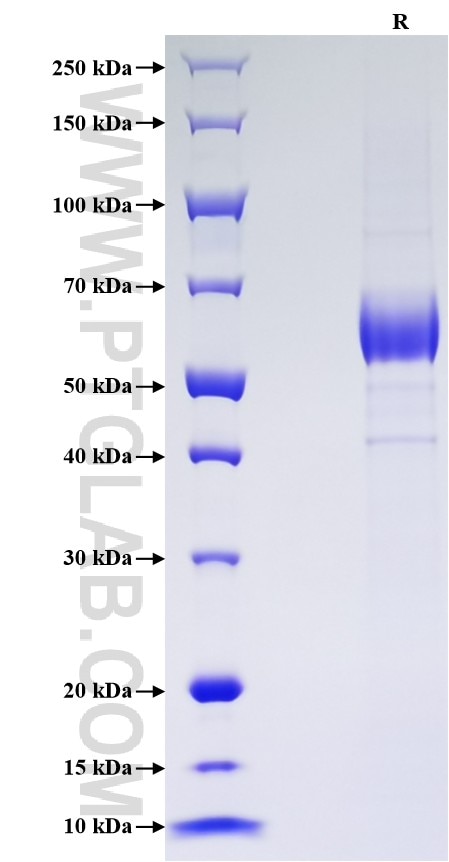
>90 %, SDS-PAGE
Tag
rFc Tag
Activity
not tested
Cat no : Eg2890
Validation Data Gallery
Product Information
| Purity | >90 %, SDS-PAGE |
| Endotoxin | <0.1 EU/μg protein, LAL method |
| Activity |
Not tested |
| Expression | HEK293-derived Human KLK11 protein Ala19-Ser250 (Accession# Q9UBX7-2) with a rabbit IgG Fc tag at the C-terminus. |
| GeneID | 11012 |
| Accession | Q9UBX7-2 |
| PredictedSize | 51.1 kDa |
| SDS-PAGE | 55-68 kDa, reducing (R) conditions |
| Formulation | Lyophilized from 0.22 μm filtered solution in PBS, pH 7.4. Normally 5% trehalose and 5% mannitol are added as protectants before lyophilization. |
| Reconstitution | Briefly centrifuge the tube before opening. Reconstitute at 0.1-0.5 mg/mL in sterile water. |
| Storage Conditions |
It is recommended that the protein be aliquoted for optimal storage. Avoid repeated freeze-thaw cycles.
|
| Shipping | The product is shipped at ambient temperature. Upon receipt, store it immediately at the recommended temperature. |
Background
KLK11 is a member of the human kallikrein gene family. KLK11 was originally identified in the human hippocampus; later studies documented that KLK11 is widely expressed in a number of tissues. KLK11 is an arresting cancer-related gene that is implicated in various physiological and pathological processes. For instance, KLK11 suppresses esophageal squamous cell carcinoma by inhibiting cellular proliferation via inhibition of the Wnt/β-catenin signaling pathway. Evidence suggests its involvement in carcinogenesis, and it is recognized as a potential novel biomarker for cancers such as ovarian and prostate cancer.
References:
1.Wang, Yi et al. BMC cardiovascular disorders vol. 21,1 (2021): 266.
2.He, Xin et al. American journal of cancer research vol. 9,10 (2019): 2264-2277.
3.Zhao, Ruimin et al. Journal of bioenergetics and biomembranes vol. 53,1 (2021): 85-96.
4.Paliouras, Miltiadis et al. Cancer letters vol. 249,1 (2007): 61-79.