
Recombinant Human MIA protein (rFc Tag)
Species
Human
Purity
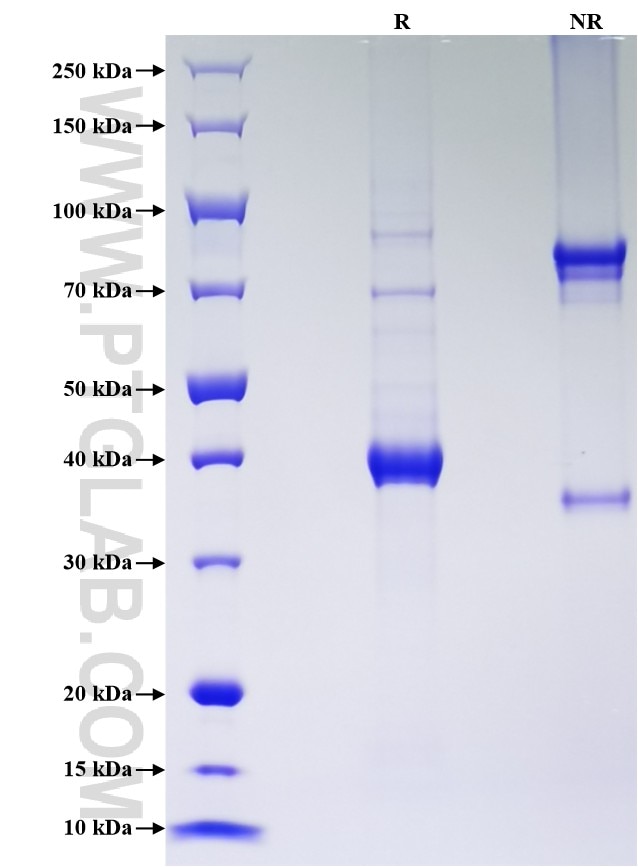
>85 %, SDS-PAGE
Tag
rFc Tag
Activity
not tested
Cat no : Eg2876
Validation Data Gallery
Product Information
| Purity | >85 %, SDS-PAGE |
| Endotoxin | <0.1 EU/μg protein, LAL method |
| Activity |
Not tested |
| Expression | HEK293-derived Human MIA protein Gly25-Gln131 (Accession# Q16674-1) with a rabbit IgG Fc tag at the C-terminus. |
| GeneID | 8190 |
| Accession | Q16674-1 |
| PredictedSize | 38.1 kDa |
| SDS-PAGE | 37-42 kDa, reducing (R) conditions |
| Formulation | Lyophilized from 0.22 μm filtered solution in PBS, pH 7.4. Normally 5% trehalose and 5% mannitol are added as protectants before lyophilization. |
| Reconstitution | Briefly centrifuge the tube before opening. Reconstitute at 0.1-0.5 mg/mL in sterile water. |
| Storage Conditions |
It is recommended that the protein be aliquoted for optimal storage. Avoid repeated freeze-thaw cycles.
|
| Shipping | The product is shipped at ambient temperature. Upon receipt, store it immediately at the recommended temperature. |
Background
Melanoma Inhibitory Activity (MIA) is a small secreted protein that interacts with extracellular matrix proteins. Initially identified as an inhibitor of in vitro growth of malignant melanoma cells, it has been found to play a role in the metastatic behavior of various cancers, including melanoma and pancreatic cancer. MIA is overexpressed in these cancers and can promote tumor cell invasiveness. It adopts an SH3 domain-like fold and interacts with fibronectin, potentially detaching cells from the extracellular matrix. MIA is also a clinically valuable serum marker for malignant melanoma.
References:
1.Schmidt, Jennifer, and Anja-Katrin Bosserhoff. International journal of cancer vol. 125,7 (2009): 1587-94.
2.El Fitori, Jamael et al. Cancer cell international vol. 5,1 (2005): 3.
3.Schmidt, Jennifer et al. Histology and histopathology vol. 28,4 (2013): 421-6.
4.Bosserhoff, Anja-Katrin. Pigment cell research vol. 18,6 (2005): 411-6.