
Recombinant Human PSG2 protein (rFc Tag)
Species
Human
Purity
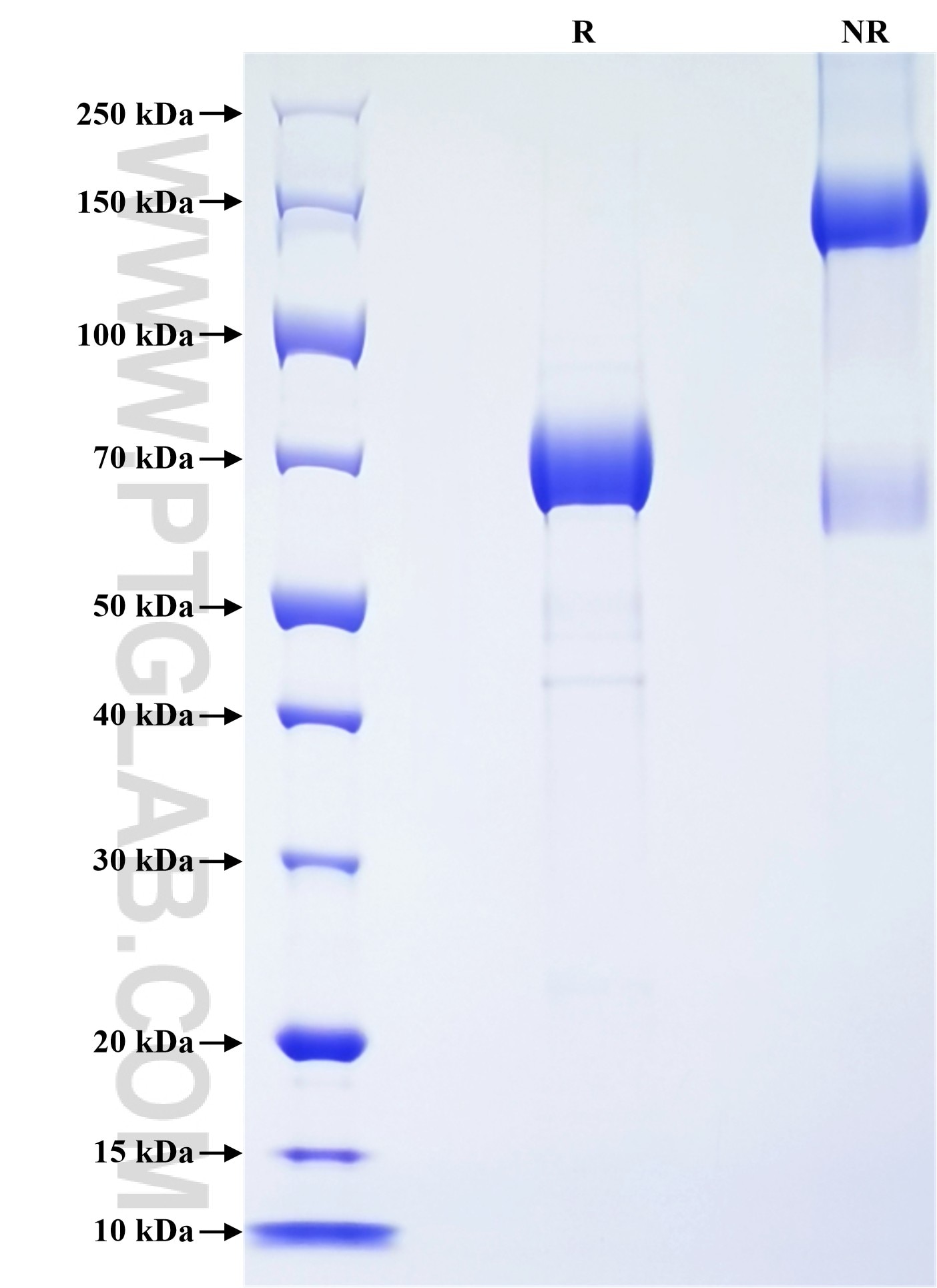
>90 %, SDS-PAGE
Tag
rFc Tag
Activity
not tested
Cat no : Eg8789
Validation Data Gallery
Product Information
| Purity | >90 %, SDS-PAGE |
| Endotoxin | <0.1 EU/μg protein, LAL method |
| Activity |
Not tested |
| Expression | HEK293-derived Human PSG2 protein Gln35-Thr335 (Accession# P11465) with a rabbit IgG Fc tag at the C-terminus. |
| GeneID | 5670 |
| Accession | P11465 |
| PredictedSize | 59.1 kDa |
| SDS-PAGE | 63-80 kDa, reducing (R) conditions |
| Formulation | Lyophilized from 0.22 μm filtered solution in PBS, pH 7.4. Normally 5% trehalose and 5% mannitol are added as protectants before lyophilization. |
| Reconstitution | Briefly centrifuge the tube before opening. Reconstitute at 0.1-0.5 mg/mL in sterile water. |
| Storage Conditions |
It is recommended that the protein be aliquoted for optimal storage. Avoid repeated freeze-thaw cycles.
|
| Shipping | The product is shipped at ambient temperature. Upon receipt, store it immediately at the recommended temperature. |
Background
Pregnancy-specific β1-glycoproteins (PSGs) are predominant proteins synthesized during gestation in humans, primates and rodents. In humans, PSGs are mainly secreted by syncytiotrophoblasts, while in rodents they derive from trophoblast giant cells and spongiotrophoblasts. Moreover, PSGs can serve as indicators for blastocyst quality and embryonic viability.
References:
1. Zhou, G Q, and S Hammarström. Biology of reproduction vol. 64,1 (2001): 90-9.
2. Zhou, G Q et al. Placenta vol. 18,7 (1997): 491-501.
3. Sinosich, M J et al. Annals of the New York Academy of Sciences vol. 442 (1985): 440-4.