
Recombinant Human TNFRSF21/DR6 protein (rFc Tag)(HPLC verified)
Species
Human
Purity
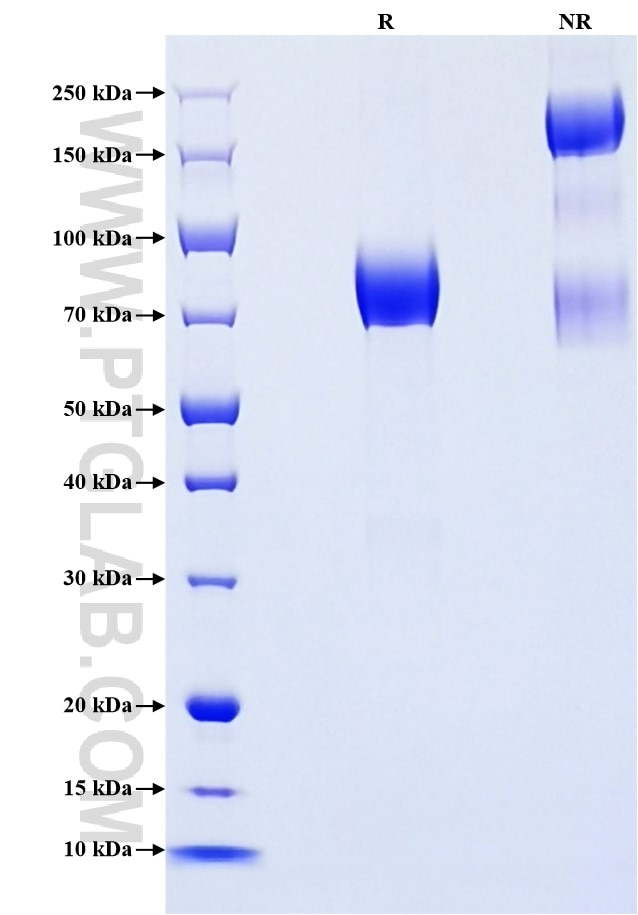
>90 %, SDS-PAGE
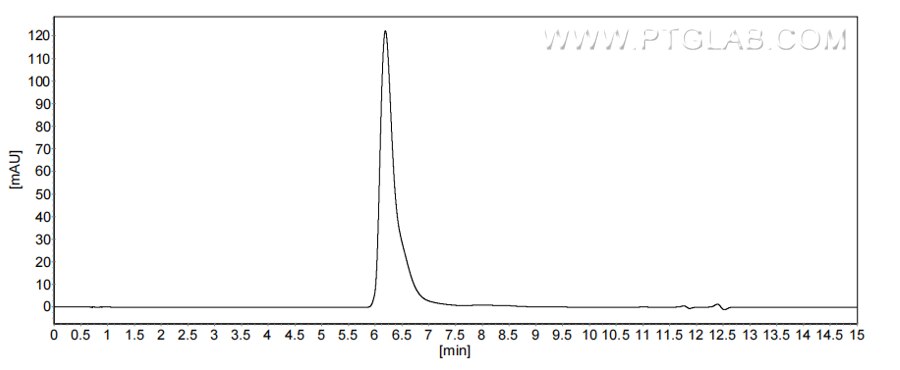
>90 %, SEC-HPLC
Tag
rFc Tag
Activity
not tested
Cat no : Eg2718
Validation Data Gallery
Product Information
| Purity | >90 %, SDS-PAGE >90 %, SEC-HPLC |
| Endotoxin | <0.1 EU/μg protein, LAL method |
| Activity |
Not tested |
| Expression | HEK293-derived Human TNFRSF21 protein Gln42-His349 (Accession# O75509) with a rabbit IgG Fc tag at the C-terminus. |
| GeneID | 27242 |
| Accession | O75509 |
| PredictedSize | 59.5 kDa |
| SDS-PAGE | 68-95 kDa, reducing (R) conditions |
| Formulation | Lyophilized from 0.22 μm filtered solution in PBS, pH 7.4. Normally 5% trehalose and 5% mannitol are added as protectants before lyophilization. |
| Reconstitution | Briefly centrifuge the tube before opening. Reconstitute at 0.1-0.5 mg/mL in sterile water. |
| Storage Conditions |
It is recommended that the protein be aliquoted for optimal storage. Avoid repeated freeze-thaw cycles.
|
| Shipping | The product is shipped at ambient temperature. Upon receipt, store it immediately at the recommended temperature. |
Background
DR6 (also known as TNFRSF21 or CD358) is an orphan receptor of the tumor necrosis factor (TNF) receptor superfamily. It controls cell death and differentiation in a cell-autonomous manner in different cell types including neurons, oligodendrocytes, endothelial cells, and immune cells. DR6 has been shown to activate NF-κB and JNK, and induce cell apoptosis. DR6 interacts with TRADD, which is known to mediate signal transduction of TNF receptors. It has been reported that APP binds DR6 to trigger axon pruning and neuron death via distinct caspases, indicating that DR6 might be involved in Alzheimer's disease.
References:
1. Colombo A, et al. (2018) EMBO J. 37(7):e97390.
2. Pan G, et al. (1998) FEBS Lett. 431(3):351-6.
3. Nikolaev A, et al. (2009) Nature. 457(7232):981-9.