
Recombinant Human TREM-1/CD354 protein (rFc Tag)
Species
Human
Purity
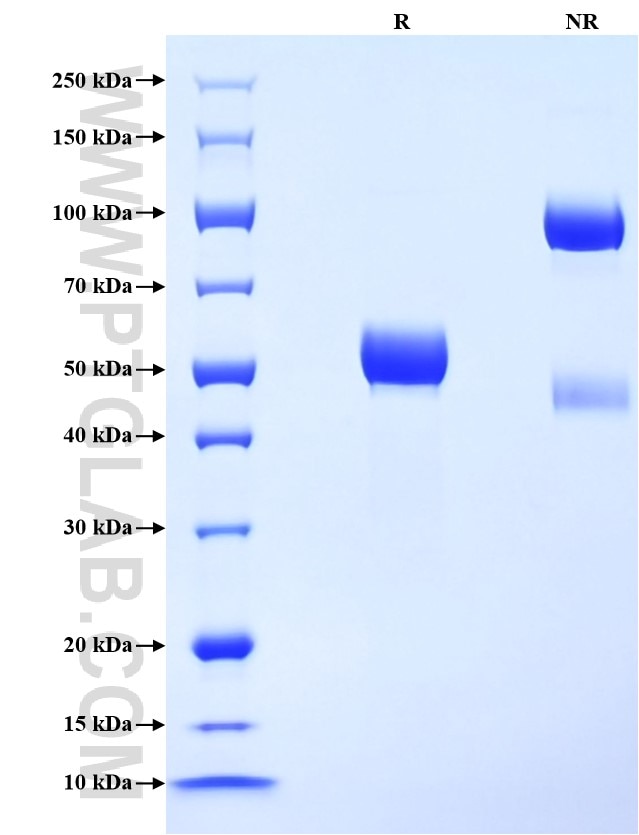
>90 %, SDS-PAGE
Tag
rFc Tag
Activity
not tested
Cat no : Eg1439
Validation Data Gallery
Product Information
| Purity | >90 %, SDS-PAGE |
| Endotoxin | <0.1 EU/μg protein, LAL method |
| Activity |
Not tested |
| Expression | HEK293-derived Human TREM-1 protein Ala21-Arg200 (Accession# Q9NP99-1) with a rabbit IgG Fc tag at the C-terminus. |
| GeneID | 54210 |
| Accession | Q9NP99-1 |
| PredictedSize | 46.5 kDa |
| SDS-PAGE | 48-60 kDa, reducing (R) conditions |
| Formulation | Lyophilized from 0.22 μm filtered solution in PBS, pH 7.4. Normally 5% trehalose and 5% mannitol are added as protectants before lyophilization. |
| Reconstitution | Briefly centrifuge the tube before opening. Reconstitute at 0.1-0.5 mg/mL in sterile water. |
| Storage Conditions |
It is recommended that the protein be aliquoted for optimal storage. Avoid repeated freeze-thaw cycles.
|
| Shipping | The product is shipped at ambient temperature. Upon receipt, store it immediately at the recommended temperature. |
Background
Triggering receptor expressed on myeloid cells 1 (TREM1, also known as CD354) is a member of the immunoglobulin superfamily, which is expressed on neutrophils and monocytes. TREM1 plays a role in the innate immune system. TREM1 amplifies neutrophil and monocyte-mediated inflammatory responses triggered by bacterial and fungal infections by stimulating release of pro-inflammatory chemokines and cytokines, as well as increased surface expression of cell activation markers. TREM1 can also exist as a soluble form (sTREM1). Increased plasma level of sTREM1 have been reported in specific diseases including Alzheimer's disease, systemic sepsis, acute myocardial infarction and subarachnoid hemorrhage.
References:
1. Bouchon A. et al. (2000). J Immunol. 164(10):4991-4995.
2. Gibot S. et al. (2004). Ann Intern Med. 141(1):9-15.
3. Palazzo SJ. et al. (2012). Dimens Crit Care Nurs. 31(1):1-6.
4. Jiang T. et al. (2019). Aging Clin Exp Res. 31(12):1801-1805.