

Tested Applications
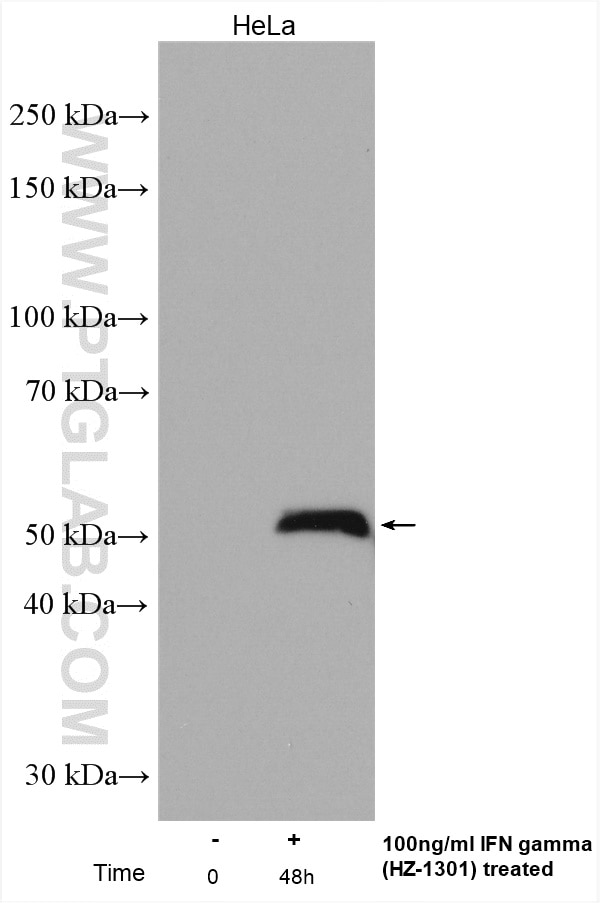
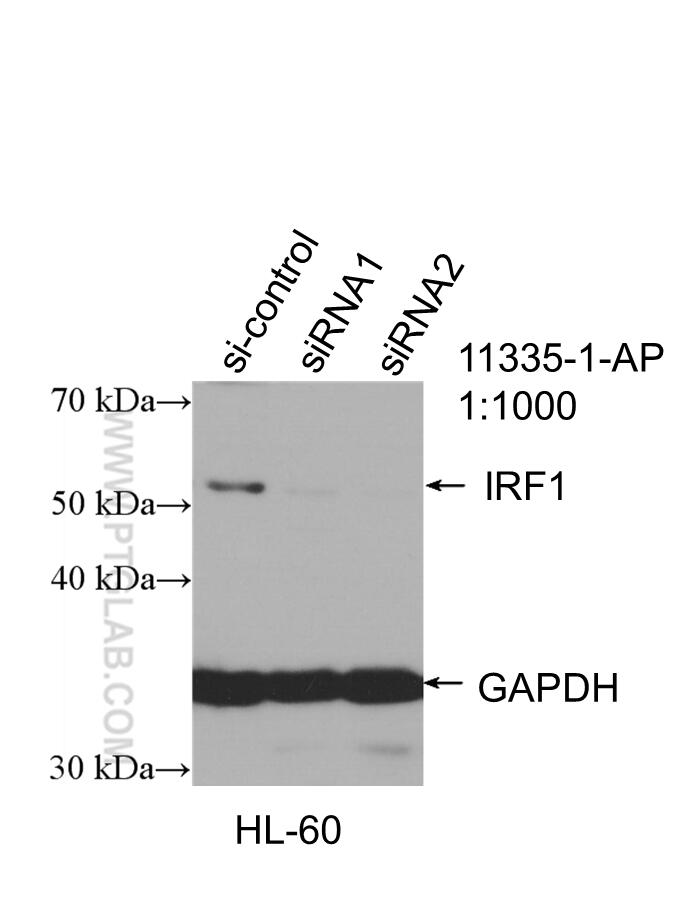
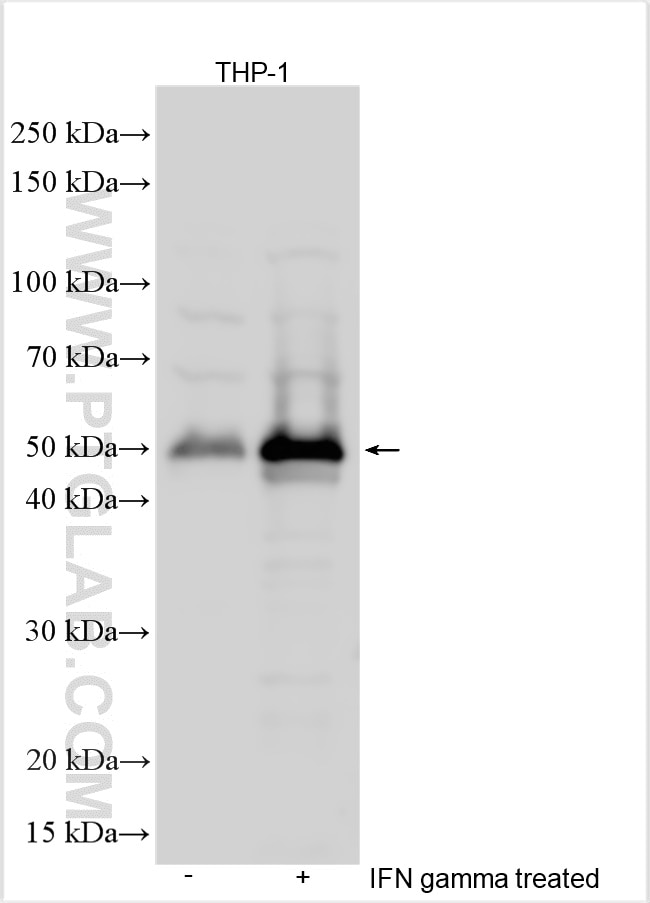
| Positive WB detected in | IFN gamma treated HeLa cells, HL-60 cells, IFN gamma treated THP-1 cells |
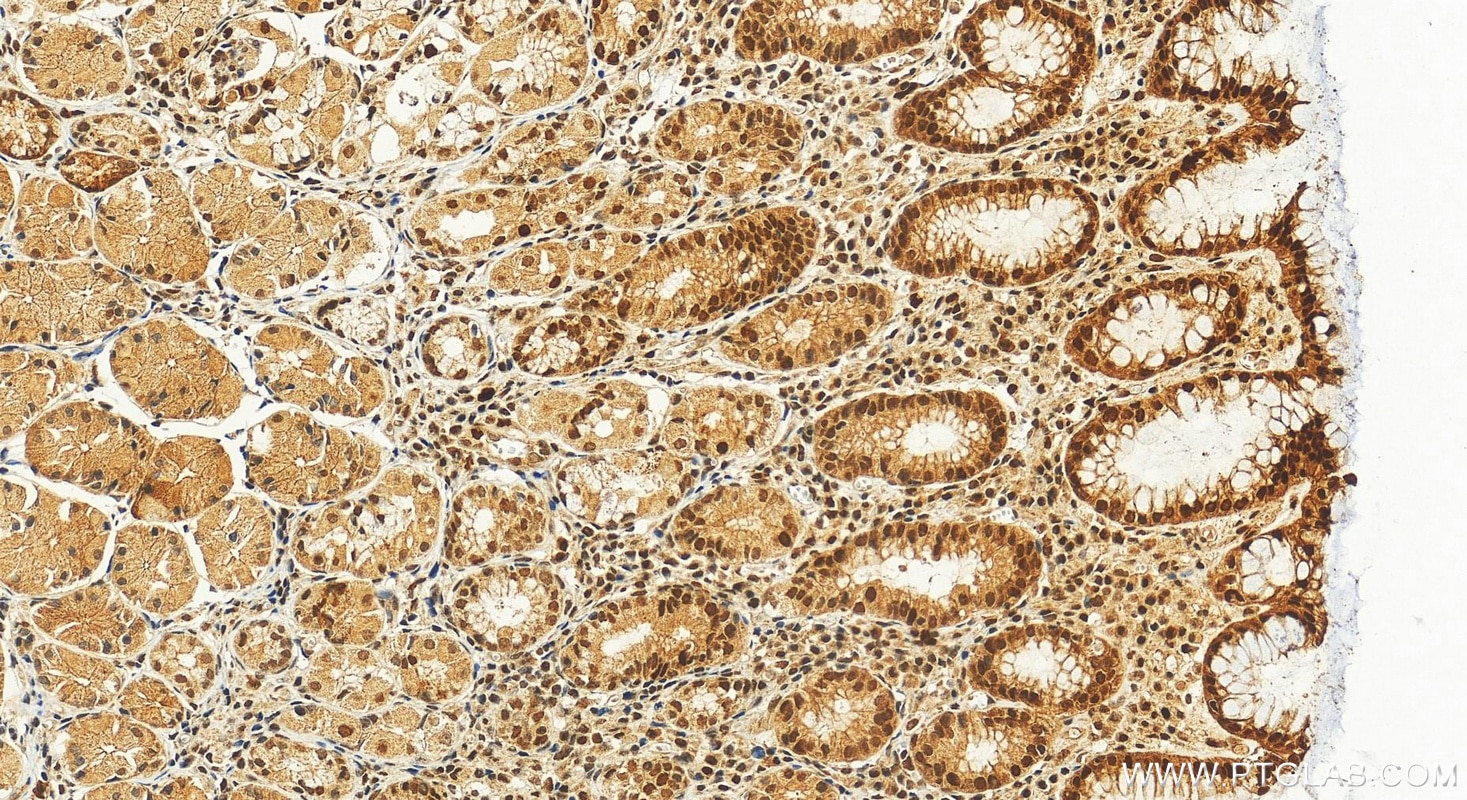
| Positive IHC detected in | human stomach tissue Note: suggested antigen retrieval with TE buffer pH 9.0; (*) Alternatively, antigen retrieval may be performed with citrate buffer pH 6.0 |
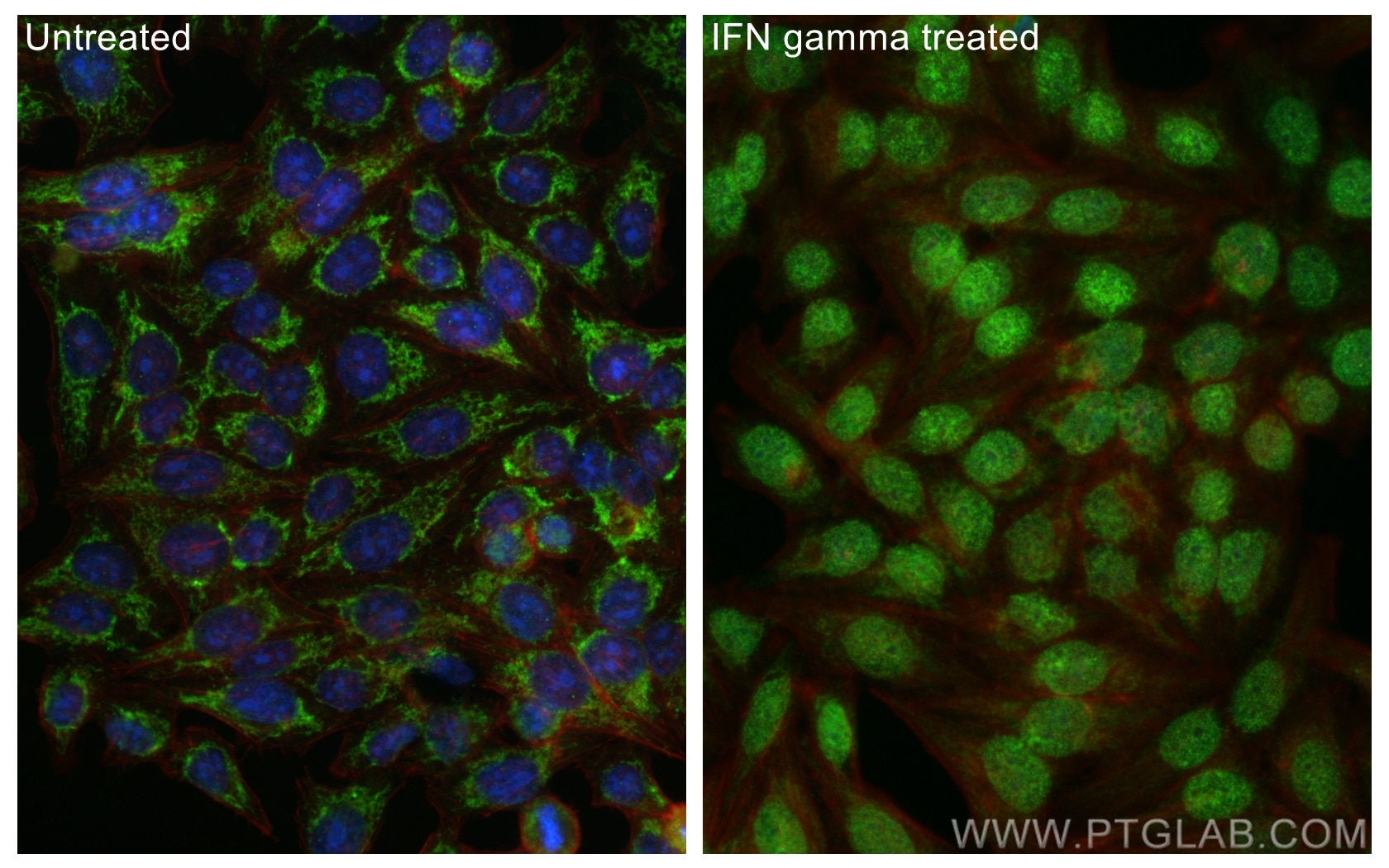
| Positive IF/ICC detected in | IFN gamma treated HepG2 cells |
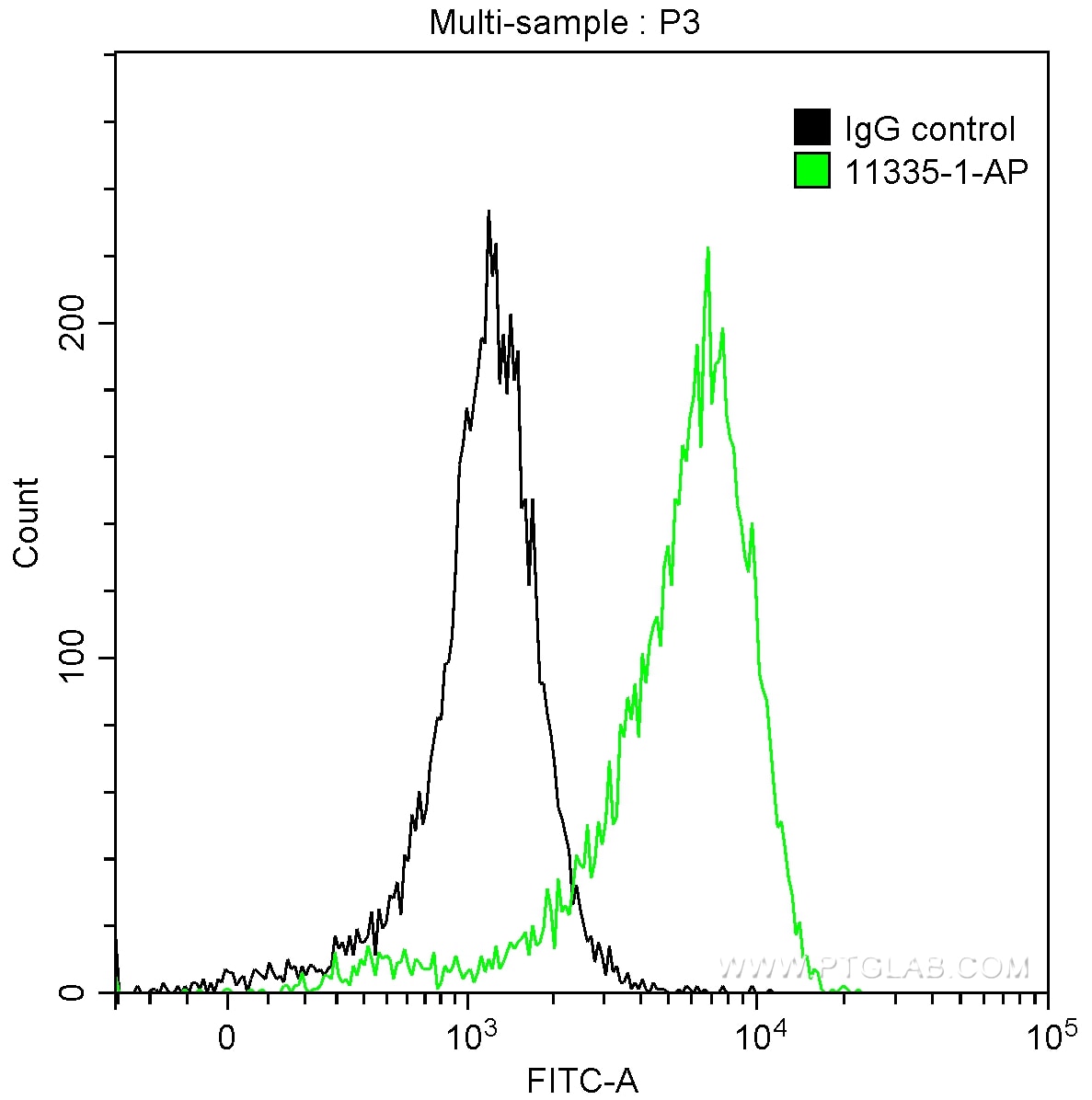
| Positive FC (Intra) detected in | Jurkat cells |
Recommended dilution
| Application | Dilution |
|---|---|
| Western Blot (WB) | WB : 1:500-1:1000 |
| Immunohistochemistry (IHC) | IHC : 1:500-1:2000 |
| Immunofluorescence (IF)/ICC | IF/ICC : 1:50-1:500 |
| Flow Cytometry (FC) (INTRA) | FC (INTRA) : 0.50 ug per 10^6 cells in a 100 µl suspension |
| It is recommended that this reagent should be titrated in each testing system to obtain optimal results. | |
| Sample-dependent, Check data in validation data gallery. | |
Product Information
11335-1-AP targets IRF1 in WB, IHC, IF/ICC, FC (Intra), IP, CoIP, ChIP, ELISA applications and shows reactivity with human samples.
| Tested Reactivity | human |
| Cited Reactivity | human, mouse, rat, pig, rabbit, monkey, goat |
| Host / Isotype | Rabbit / IgG |
| Class | Polyclonal |
| Type | Antibody |
| Immunogen |
CatNo: Ag1879 Product name: Recombinant human IRF1 protein Source: e coli.-derived, PGEX-4T Tag: GST Domain: 1-325 aa of BC009483 Sequence: MPITRMRMRPWLEMQINSNQIPGLIWINKEEMIFQIPWKHAAKHGWDINKDACLFRSWAIHTGRYKAGEKEPDPKTWKANFRCAMNSLPDIEEVKDQSRNKGSSAVRVYRMLPPLTKNQRKERKSKSSRDAKSKAKRKSCGDSSPDTFSDGLSSSTLPDDHSSYTVPGYMQDLEVEQALTPALSPCAVSSTLPDWHIPVEVVPDSTSDLYNFQVSPMPSTSEATTDEDEEGKLPEDIMKLLEQSEWQPTNVDGKGYLLNEPGVQPTSVYGDFSCKEEPEIDSPGGDIGLSLQRVFTDLKNMDATWLDSLLTPVRLPSIQAIPCAP Predict reactive species |
| Full Name | IRF 1 |
| Calculated Molecular Weight | 325 aa, 37 kDa |
| Observed Molecular Weight | 45-50 kDa |
| GenBank Accession Number | BC009483 |
| Gene Symbol | IRF1 |
| Gene ID (NCBI) | 3659 |
| RRID | AB_2877759 |
| Conjugate | Unconjugated |
| Form | Liquid |
| Purification Method | Antigen affinity purification |
| UNIPROT ID | P10914 |
| Storage Buffer | PBS with 0.02% sodium azide and 50% glycerol, pH 7.3. |
| Storage Conditions | Store at -20°C. Stable for one year after shipment. Aliquoting is unnecessary for -20oC storage. 20ul sizes contain 0.1% BSA. |
Background Information
IRF1, also named as IFN regulatory factor 1, is a 325 amino acid protein, which belongs to the IRF family. IRF1 as a transcriptional regulator which displays a remarkable functional diversity in the regulation of cellular responses. The calculated molecular weight of IRF1 is 37 kDa, but the modified IRF1 protein is about 45-50 kDa.
Protocols
| Product Specific Protocols | |
|---|---|
| FC protocol for IRF1 antibody 11335-1-AP | Download protocol |
| IF protocol for IRF1 antibody 11335-1-AP | Download protocol |
| IHC protocol for IRF1 antibody 11335-1-AP | Download protocol |
| WB protocol for IRF1 antibody 11335-1-AP | Download protocol |
| Standard Protocols | |
|---|---|
| Click here to view our Standard Protocols |
Publications
What published studies show
The IRF1 polyclonal antibody (Cat# 11335-1-AP) has 65 citations published across 50+ journals including Nature Cell Biology, Cancer Cell, Cell, Gastroenterology, Nature Cancer, Journal of Clinical Investigation, and Frontiers in Immunology. Research fields span oncology and tumor immunotherapy, ferroptosis and cell death, neuroinflammation, viral infections, hepatic injury, pulmonary disease, bone metabolism, and renal pathology.
| Species | Application | Title |
|---|---|---|
Cancer Cell Targeting the immune privilege of tumor-initiating cells to enhance cancer immunotherapy | ||
Gastroenterology Stromal Stiffness-Regulated IGF2BP2 in Pancreatic Cancer Drives Immune Evasion via Sphingomyelin Metabolism | ||
Cancer Commun (Lond) MAGE-C3 promotes cancer metastasis by inducing epithelial-mesenchymal transition and immunosuppression in esophageal squamous cell carcinoma. | ||
Cancer Commun (Lond) Targeting autophagy overcomes cancer-intrinsic resistance to CAR-T immunotherapy in B-cell malignancies | ||
Nat Cancer A micropeptide encoded by the lncRNA USP30-AS1 promotes tumor growth by attenuating cGAS-STING-type I IFN signaling in macrophages |







