

Tested Applications
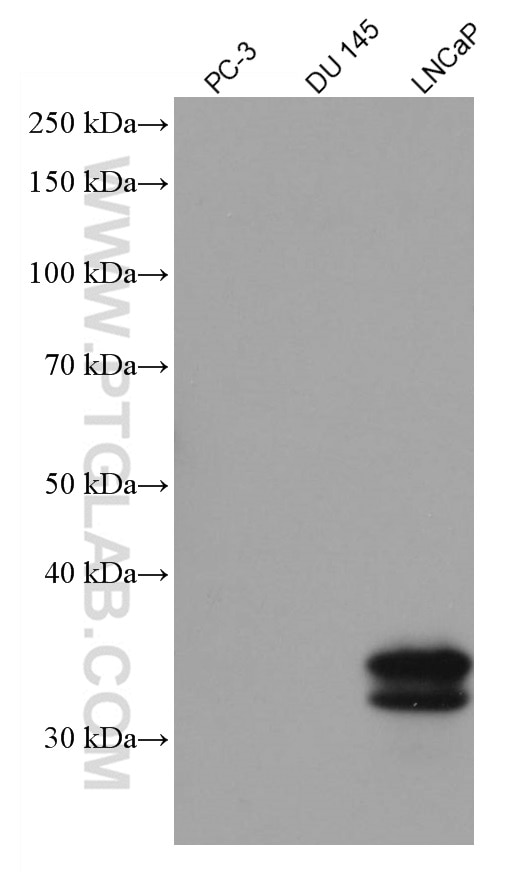
| Positive WB detected in | LNCaP cells |
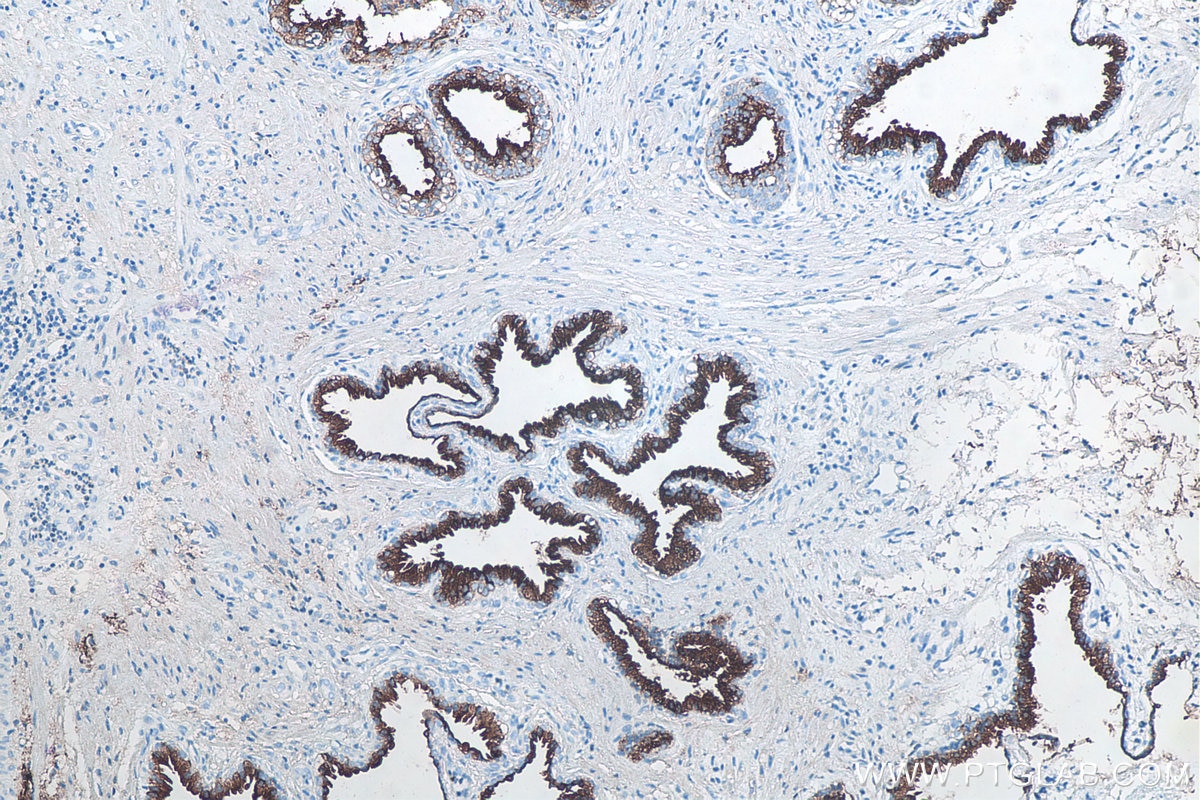
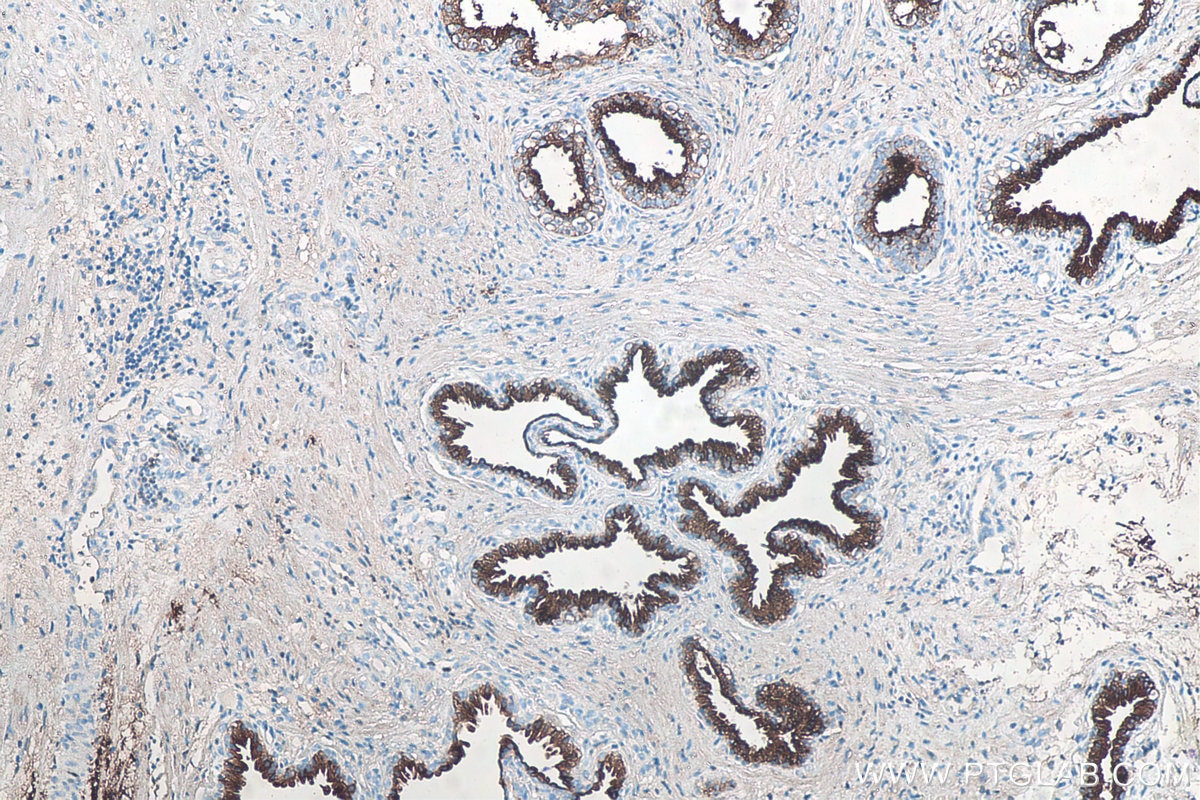
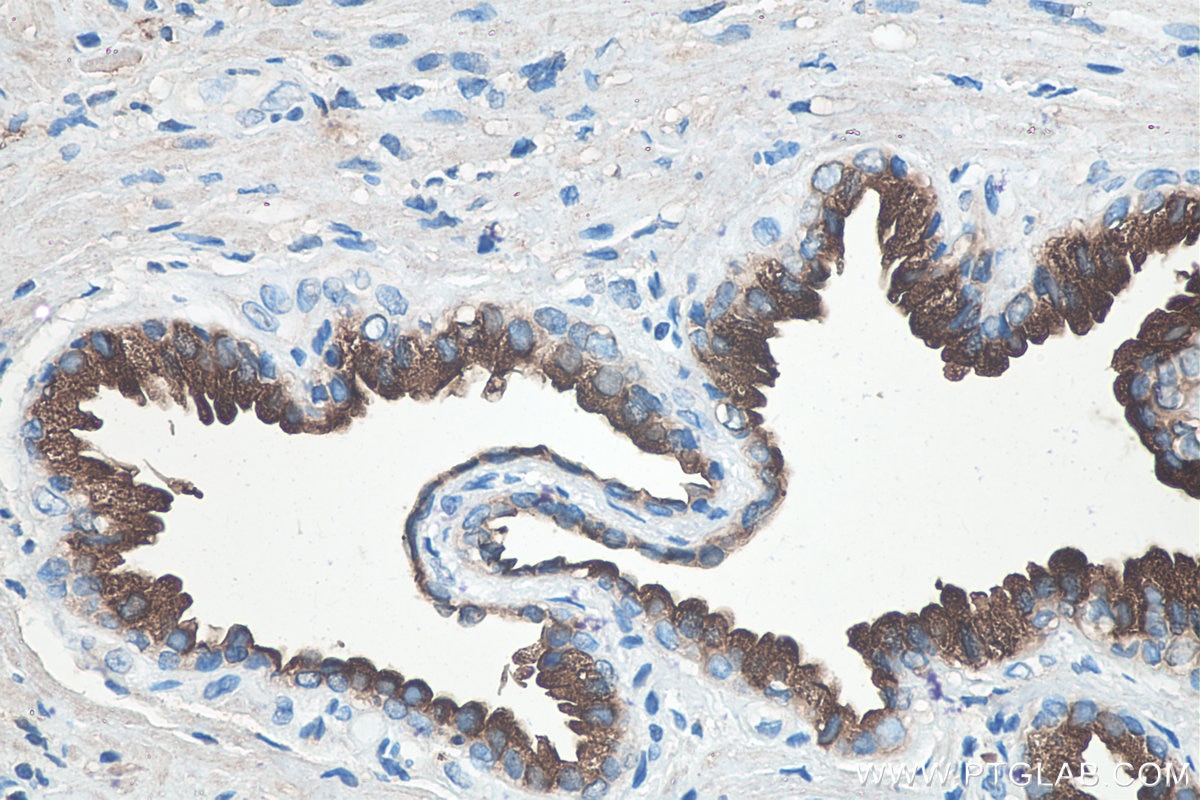
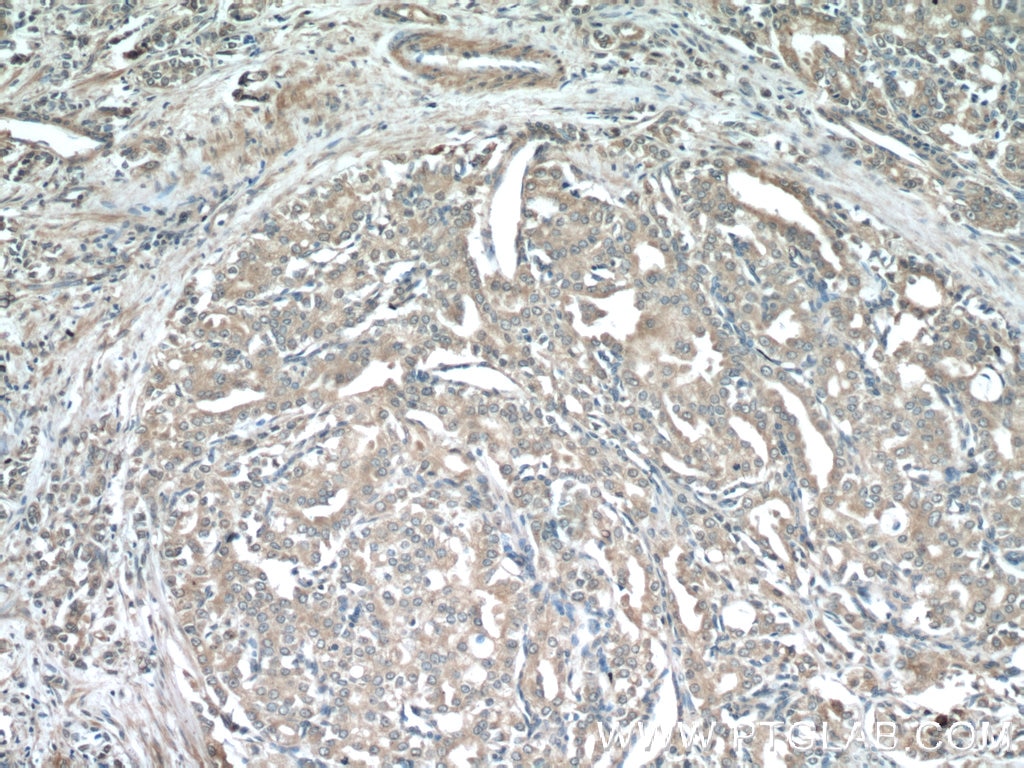
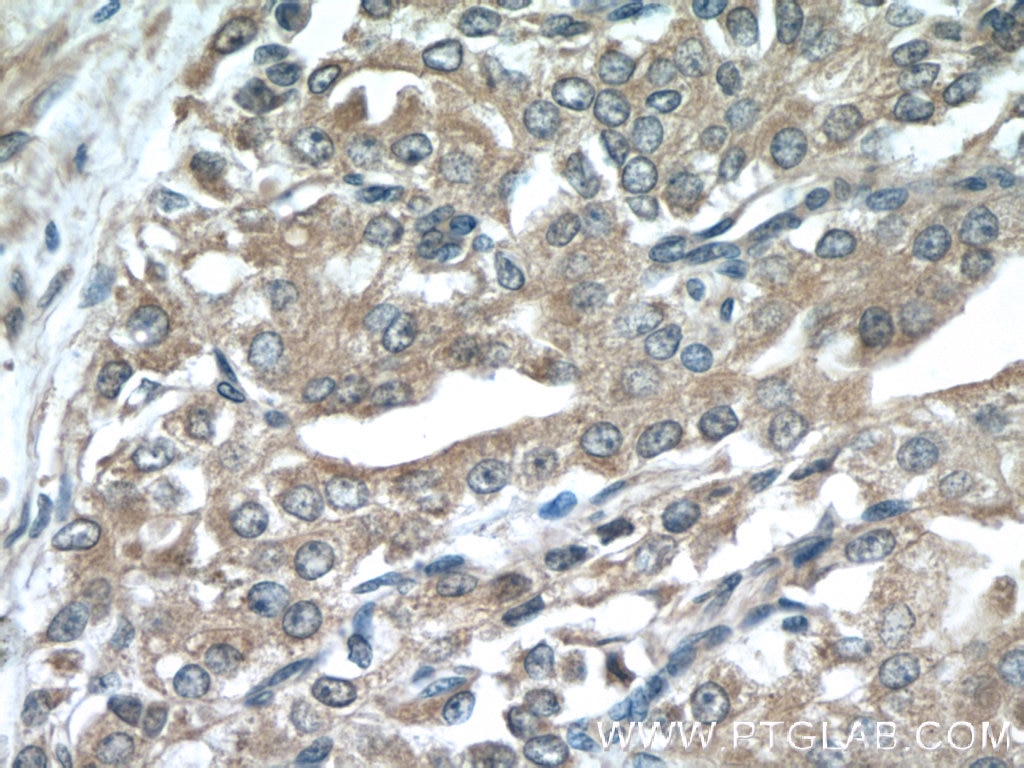
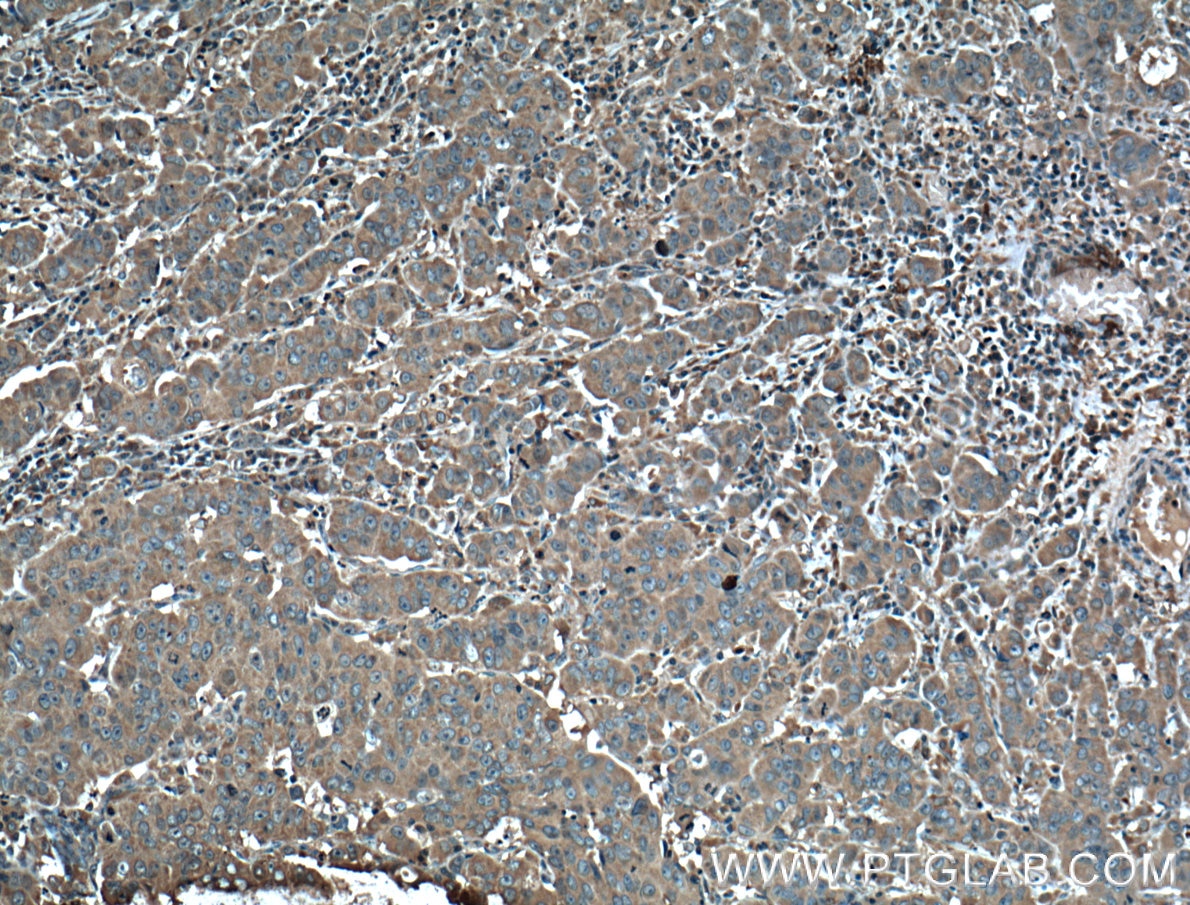
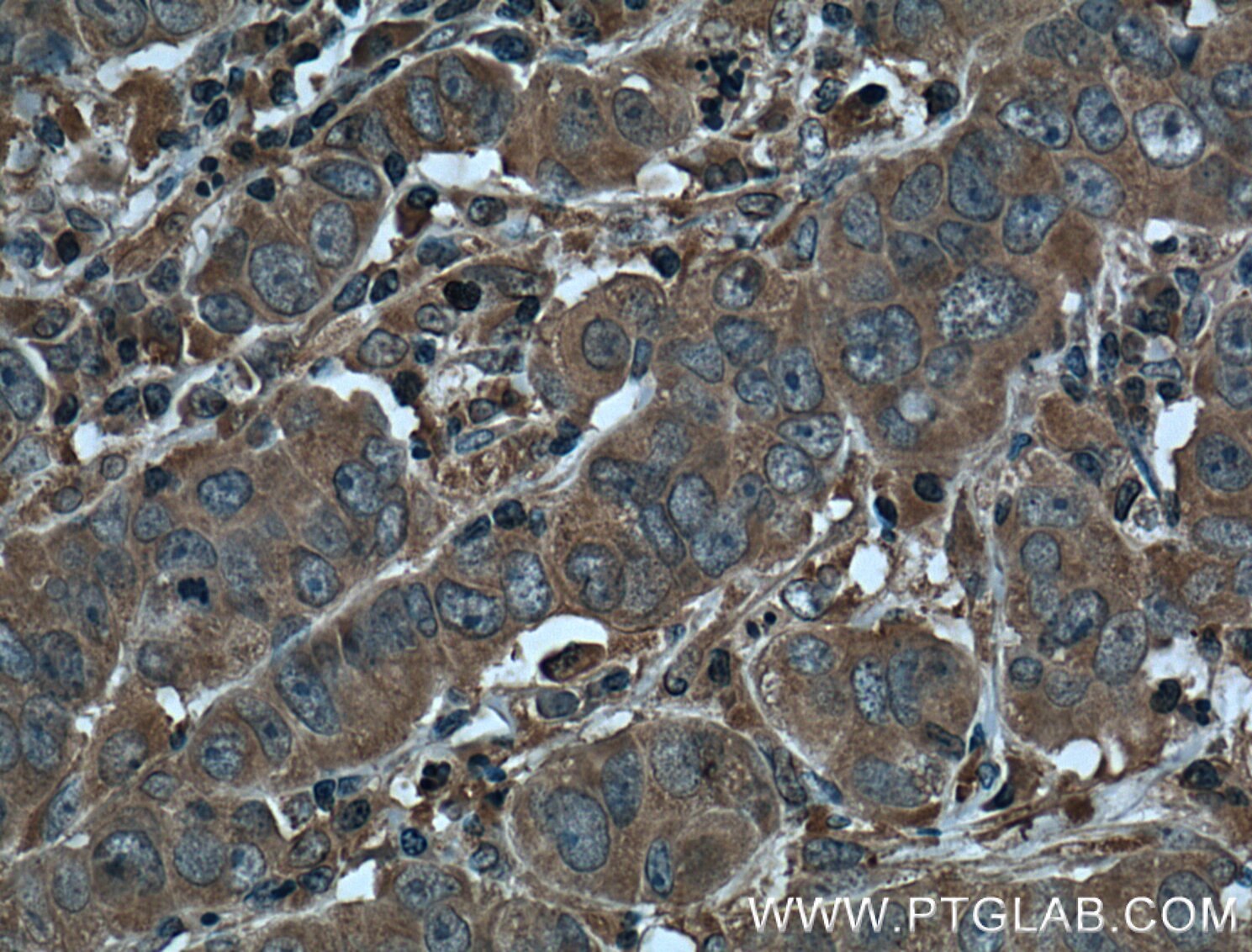
| Positive IHC detected in | human prostate cancer tissue Note: suggested antigen retrieval with TE buffer pH 9.0; (*) Alternatively, antigen retrieval may be performed with citrate buffer pH 6.0 |
Recommended dilution
| Application | Dilution |
|---|---|
| Western Blot (WB) | WB : 1:1000-1:4000 |
| Immunohistochemistry (IHC) | IHC : 1:5000-1:20000 |
| It is recommended that this reagent should be titrated in each testing system to obtain optimal results. | |
| Sample-dependent, Check data in validation data gallery. | |
Product Information
60338-1-Ig targets KLK3/PSA in WB, IHC, ELISA applications and shows reactivity with human samples.
| Tested Reactivity | human |
| Cited Reactivity | human |
| Host / Isotype | Mouse / IgG1 |
| Class | Monoclonal |
| Type | Antibody |
| Immunogen |
CatNo: Ag1060 Product name: Recombinant human KLK3,PSA protein Source: e coli.-derived, PGEX-4T Tag: GST Domain: 1-261 aa of BC005307 Sequence: MWVPVVFLTLSVTWIGAAPLILSRIVGGWECEKHSQPWQVLVASRGRAVCGGVLVHPQWVLTAAHCIRNKSVILLGRHSLFHPEDTGQVFQVSHSFPHPLYDMSLLKNRFLRPGDDSSHDLMLLRLSEPAELTDAVKVMDLPTQEPALGTTCYASGWGSIEPEEFLTPKKLQCVDLHVISNDVCAQVHPQKVTKFMLCAGRWTGGKSTCSGDSGGPLVCNGVLQGITSWGSEPCALPERPSLYTKVVHYRKWIKDTIVANP Predict reactive species |
| Full Name | kallikrein-related peptidase 3 |
| Calculated Molecular Weight | 29 kDa |
| Observed Molecular Weight | 30-34 kDa |
| GenBank Accession Number | BC005307 |
| Gene Symbol | KLK3 |
| Gene ID (NCBI) | 354 |
| RRID | AB_2881447 |
| Conjugate | Unconjugated |
| Form | Liquid |
| Purification Method | Protein G purification |
| UNIPROT ID | P07288 |
| Storage Buffer | PBS with 0.02% sodium azide and 50% glycerol, pH 7.3. |
| Storage Conditions | Store at -20°C. Stable for one year after shipment. Aliquoting is unnecessary for -20oC storage. 20ul sizes contain 0.1% BSA. |
Background Information
KLK3 also known as Prostate-Specific Antigen (PSA), is a 33 kDa glycoprotein primarily synthesized by the epithelial cells of the prostate gland. Its main physiological function is to cleave seminogelins I and II in semen, leading to the liquefaction of the seminal coagulum and the release of motile sperm. It is under tight regulation by androgens via the androgen receptor (AR). Serum PSA levels are elevated in prostate cancer due to disruption of the glandular architecture, allowing more PSA to enter the bloodstream. It is used alongside digital rectal exam (DRE) for early detection. Although termed "prostate-specific," PSA is not exclusively produced by the prostate. Very low levels can be produced in periurethral glands, breast tissue, and some other tissues. Its expression is highly abundant in prostatic tissue and seminal fluid.
Protocols
| Product Specific Protocols | |
|---|---|
| IHC protocol for KLK3/PSA antibody 60338-1-Ig | Download protocol |
| WB protocol for KLK3/PSA antibody 60338-1-Ig | Download protocol |
| Standard Protocols | |
|---|---|
| Click here to view our Standard Protocols |
Publications
What published studies show
The KLK3/PSA Monoclonal antibody (4A1E2), catalog number 60338-1-Ig, has 9 total citations. These appear in journals including Cancer Research, Cell Death & Disease, Biosensors and Bioelectronics, ACS Applied Materials & Interfaces, Cell Signaling, Journal of Cellular Communication and Signaling, Journal of Natural Medicine, and bioRxiv. The research fields span prostate cancer progression, androgen receptor signaling, ERAD regulation, lipogenesis, biomarker detection, and anticancer therapy strategies.
| Species | Application | Title |
|---|---|---|
Cancer Res Malonyl-CoA Promotes Prostate Cancer Progression and Castration Resistance by Enhancing Lipogenesis and Ran Activation. | ||
Cell Death Dis N-glycosylation of GDF15 abolishes its inhibitory effect on EGFR in AR inhibitor-resistant prostate cancer cells | ||
Biosens Bioelectron Self-reporting plasmonic nanoflowers enable magnetically enriched SERS immunoassay for ultrasensitive prostate cancer biomarker detection | ||
ACS Appl Mater Interfaces Two-in-One Polymeric NO-Donor Prodrugs Mediate Precision and Synergistic Prostate Cancer Treatment | ||
Cell Signal 1,25(OH)2 D3 induced vitamin D receptor signaling negatively regulates endoplasmic reticulum-associated degradation (ERAD) and androgen receptor signaling in human prostate cancer cells | ||
Cell Signal Triiodothyronine positively regulates endoplasmic reticulum-associated degradation (ERAD) and promotes androgenic signaling in androgen-dependent prostate cancer cells |









