
Product Information
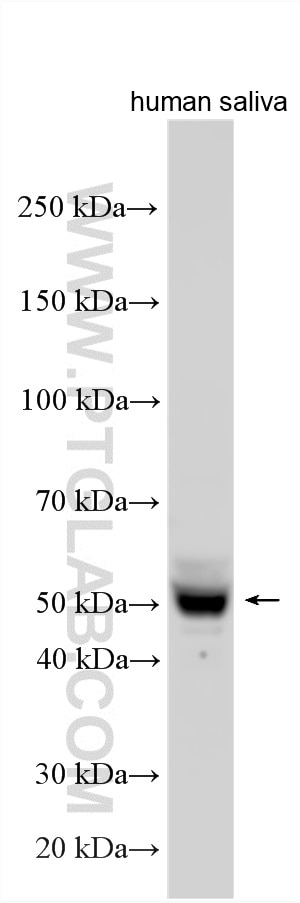
24699-1-PBS targets LPLUNC1 in WB, ELISA applications and shows reactivity with human samples.
| Tested Reactivity | human |
| Host / Isotype | Rabbit / IgG |
| Class | Polyclonal |
| Type | Antibody |
| Immunogen |
CatNo: Ag20056 Product name: Recombinant human C20orf114 protein Source: e coli.-derived, PGEX-4T Tag: GST Domain: 225-325 aa of BC008429 Sequence: LSIDRLEFDLLYPAIKGDTIQLYLGAKLLDSQGKVTKWFNNSAASLTMPTLDNIPFSLIVSQDVVKAAVAAVLSPEEFMVLLDSVLPESAHRLKSSIGLIN Predict reactive species |
| Full Name | chromosome 20 open reading frame 114 |
| Calculated Molecular Weight | 484 aa, 52 kDa |
| Observed Molecular Weight | 50 kDa |
| GenBank Accession Number | BC008429 |
| Gene Symbol | C20orf114 |
| Gene ID (NCBI) | 92747 |
| RRID | AB_3742122 |
| Conjugate | Unconjugated |
| Form | Liquid |
| Purification Method | Antigen affinity purification |
| UNIPROT ID | Q8TDL5 |
| Storage Buffer | PBS only, pH 7.3. |
| Storage Conditions | Store at -80°C. |
Background Information
LPLUNC1 (Long Palate, Lung and Nasal Epithelium Carcinoma-Associated Protein 1) is a member of the PLUNC protein family and is a secretory protein primarily expressed in the mucosal epithelium of the respiratory tract. As a key component of innate immunity, LPLUNC1 exhibits antimicrobial activity by directly binding to lipopolysaccharides and inhibiting bacterial growth. Recent studies have revealed that LPLUNC1 expression is significantly downregulated in various tumors, including nasopharyngeal carcinoma and lung cancer. It exerts tumor-suppressive effects by regulating signaling pathways such as NF-κB and STAT3, thereby inhibiting tumor cell proliferation and promoting apoptosis. Its expression level is closely associated with tumor stage and prognosis, making it a potential diagnostic biomarker and therapeutic target for cancer.


