

Tested Applications
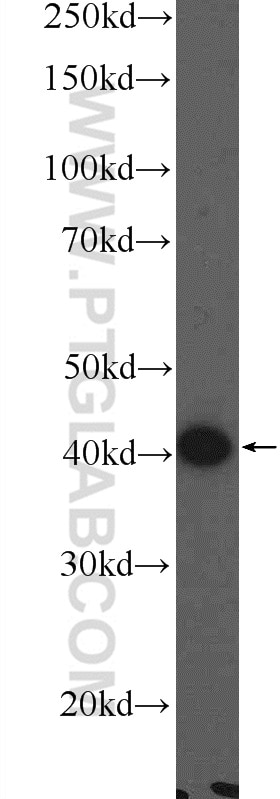
| Positive WB detected in | COLO 320 cells |
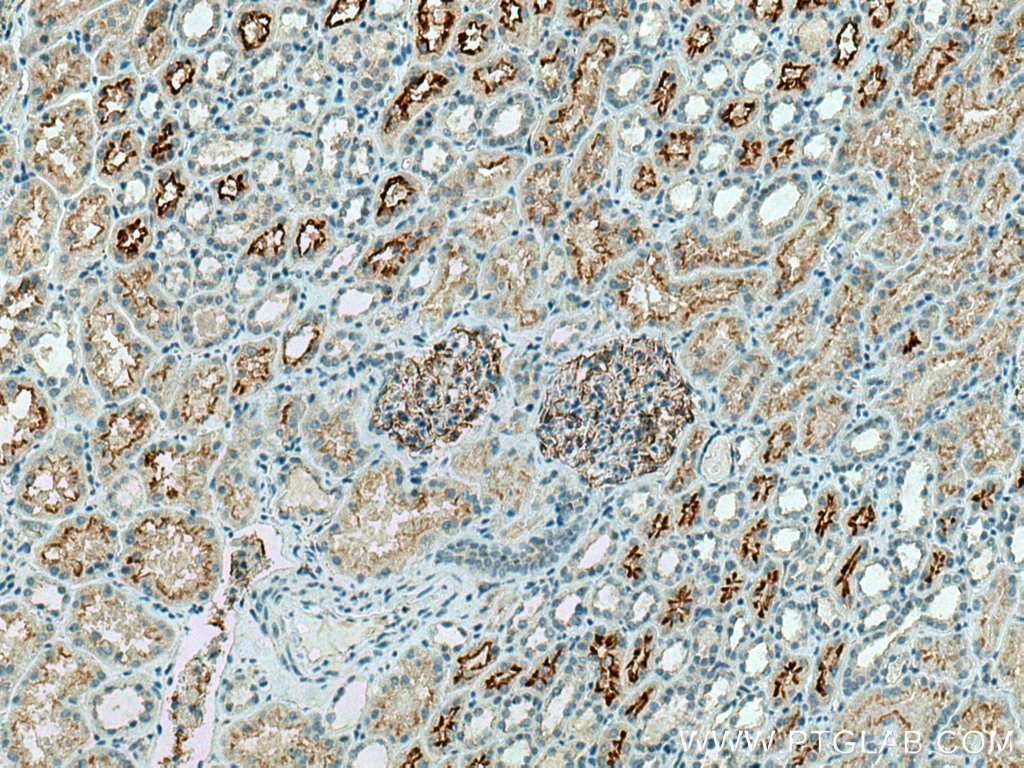
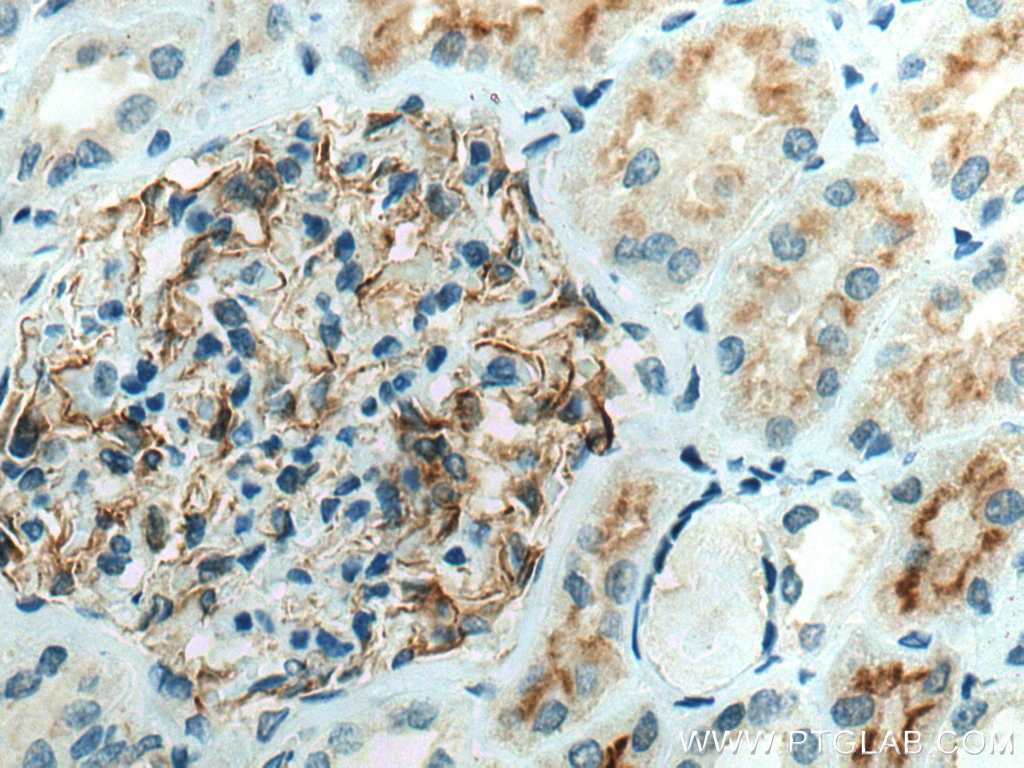
| Positive IHC detected in | human kidney tissue Note: suggested antigen retrieval with TE buffer pH 9.0; (*) Alternatively, antigen retrieval may be performed with citrate buffer pH 6.0 |
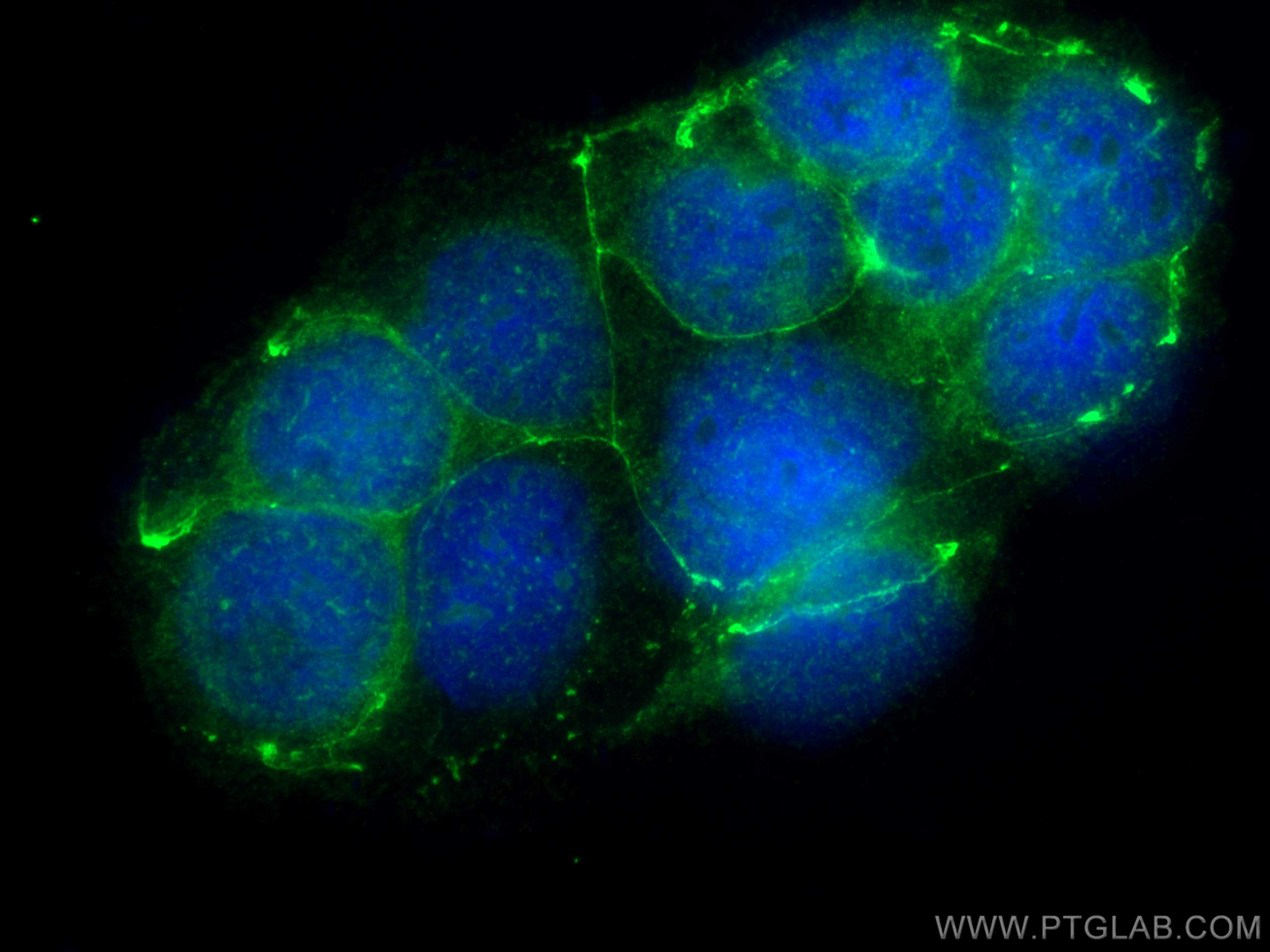
| Positive IF/ICC detected in | Caco-2 cells |
Recommended dilution
| Application | Dilution |
|---|---|
| Western Blot (WB) | WB : 1:500-1:2000 |
| Immunohistochemistry (IHC) | IHC : 1:500-1:2000 |
| Immunofluorescence (IF)/ICC | IF/ICC : 1:50-1:500 |
| It is recommended that this reagent should be titrated in each testing system to obtain optimal results. | |
| Sample-dependent, Check data in validation data gallery. | |
Product Information
25667-1-AP targets MARVELD3 in WB, IHC, IF/ICC, CoIP, ELISA applications and shows reactivity with human samples.
| Tested Reactivity | human |
| Cited Reactivity | human |
| Host / Isotype | Rabbit / IgG |
| Class | Polyclonal |
| Type | Antibody |
| Immunogen |
CatNo: Ag22492 Product name: Recombinant human MARVELD3 protein Source: e coli.-derived, PGEX-4T Tag: GST Domain: 1-189 aa of BC013376 Sequence: MEDPSGAREPRARPRERDPGRRPHPDQGRTHDRPRDRPGDPRRKRSSDGNRRRDGDRDPKRDQERDGNRDRNRDRERERERERDPDRGPRRDTHRDAGPRAGEHGVWEKPRQSRTRDGARGLTWDAAAPPGPAPWEAPEPPQPQRKGDPGRRRPESEPPSERYLPSTPRPGREEVEYYQSEAEGLLECH Predict reactive species |
| Full Name | MARVEL domain containing 3 |
| Calculated Molecular Weight | 401 aa, 45 kDa |
| Observed Molecular Weight | 40 kDa |
| GenBank Accession Number | BC013376 |
| Gene Symbol | MARVELD3 |
| Gene ID (NCBI) | 91862 |
| RRID | AB_2880184 |
| Conjugate | Unconjugated |
| Form | Liquid |
| Purification Method | Antigen affinity purification |
| UNIPROT ID | Q96A59 |
| Storage Buffer | PBS with 0.02% sodium azide and 50% glycerol, pH 7.3. |
| Storage Conditions | Store at -20°C. Stable for one year after shipment. Aliquoting is unnecessary for -20oC storage. 20ul sizes contain 0.1% BSA. |
Background Information
MARVELD3 (MARVEL domain-containing protein 3), a four-span transmembrane protein of about 40 kDa, is a tight junction-associated transmembrane protein of the occludin family (PMID: 20028514). MARVELD3 functions as a determinant of epithelial paracellular permeability properties. It has been reported that MARVELD3 couples tight junctions to the MEKK1-JNK pathway to regulate cell behavior and survival (PMID: 24567356).
Protocols
| Product Specific Protocols | |
|---|---|
| IF protocol for MARVELD3 antibody 25667-1-AP | Download protocol |
| IHC protocol for MARVELD3 antibody 25667-1-AP | Download protocol |
| WB protocol for MARVELD3 antibody 25667-1-AP | Download protocol |
| Standard Protocols | |
|---|---|
| Click here to view our Standard Protocols |
Publications
What published studies show
25667-1-AP (MARVELD3 Polyclonal antibody) has 8 citations. It appears in journals including International Journal of Biological Macromolecules, Molecular Medicine, ACS Omega, Bioorganic Chemistry, Cellular Signalling, Food and Chemical Toxicology, PLOS ONE, and FEBS Open Bio. Research areas span tight junction/oral-intestinal epithelial barrier biology, cancer biology (ferroptosis and radiosensitivity in skin and esophageal squamous cell carcinoma, oral squamous cell carcinoma malignant progression via MARVELD3), and epifluid barrier research, mainly using western blot, IHC, IF, and CoIP in human samples.
| Species | Application | Title |
|---|---|---|
Int J Biol Macromol Molecular weight-dependent hyaluronic acid permeability and tight junction modulation in human buccal TR146 cell monolayers | ||
Mol Med Upregulation of PRRX2 by silencing Marveld3 as a protective mechanism against radiation-induced ferroptosis in skin cells | ||
ACS Omega Physicochemical Attributes of Solid Hyaluronic Acid Technology Platform-Based Film Drive Rapid Oral Permeation and Barrier Enhancement via LKB1/CaMKKβ-AMPK Signaling. | ||
Bioorg Chem R-loop accumulation promotes OSCC malignant progression by upregulating MARVELD3 expression. | ||
Cell Signal MarvelD3 regulates the radiosensitivity of Esophageal squamous cell carcinoma via the MYB/IFI6 axis.
| ||
Food Chem Toxicol Polystyrene nanoplastics compromise oral epithelial barrier integrity and alter tight junction-related protein organization in TR146 human buccal epithelial cells. |





