
Product Information
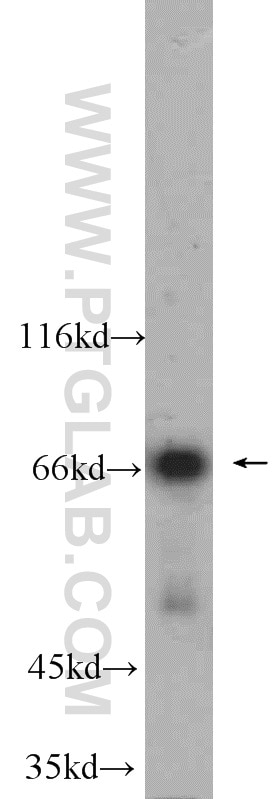
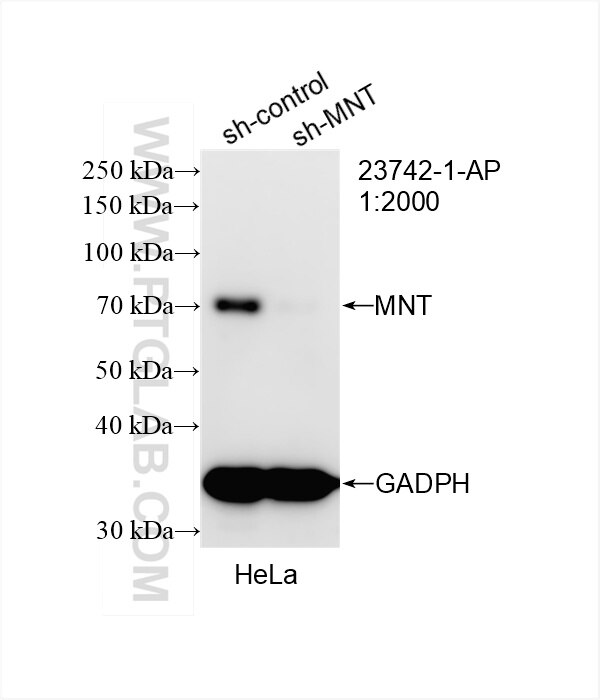
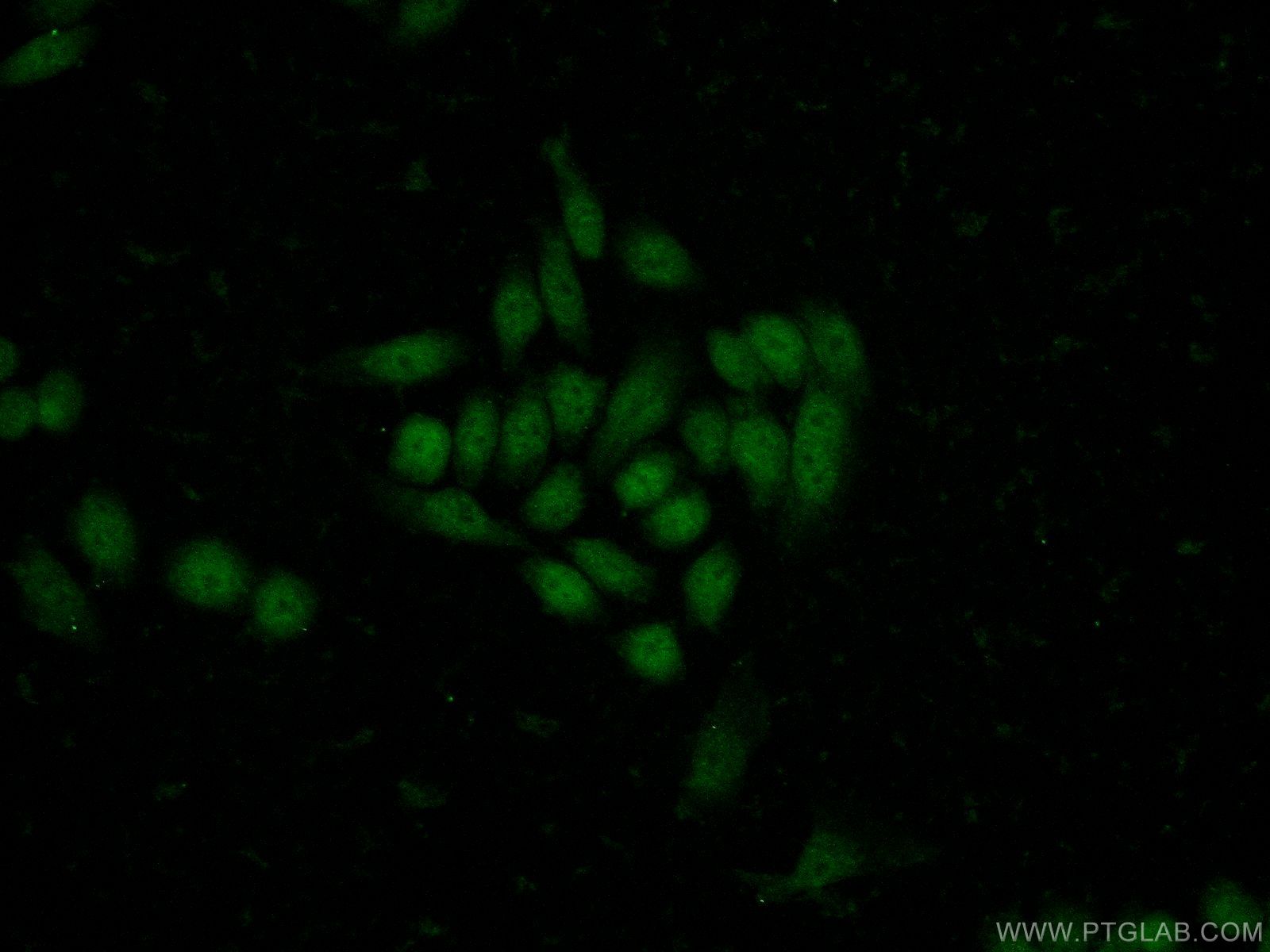
23742-1-PBS targets MNT in WB, IF/ICC, Indirect ELISA applications and shows reactivity with human samples.
| Tested Reactivity | human |
| Host / Isotype | Rabbit / IgG |
| Class | Polyclonal |
| Type | Antibody |
| Immunogen |
CatNo: Ag20666 Product name: Recombinant human MNT protein Source: e coli.-derived, PGEX-4T Tag: GST Domain: 233-582 aa of BC117563 Sequence: RAHLKECFETLKRNIPNVDDKKTSNLSVLRTALRYIQSLKRKEKEYEHEMERLAREKIATQQRLAELKHELSQWMDVLEIDRVLRQTGQPEDDQASTSTASEGEDNIDEDMEEDRAGLGPPKLSHRPQPELLKSTLPPPSTTPAPLPPHPHPHPHSVALPPAHLPVQQQQPQQKTPLPAPPPPPAAPAQTLVPAPAHLVATAGGGSTVIAHTATTHASVIQTVNHVLQGPGGKHIAHIAPSAPSPAVQLAPATPPIGHITVHPATLNHVAHLGSQLPLYPQPVAVSHIAHTLSHQQVNGTAGLGPPATVMAKPAVGAQVVHHPQLVGQTVLNPVTMVTMPSFPVSTLKLA Predict reactive species |
| Full Name | MAX binding protein |
| Calculated Molecular Weight | 582 aa, 62 kDa |
| Observed Molecular Weight | 70 kDa |
| GenBank Accession Number | BC117563 |
| Gene Symbol | MNT |
| Gene ID (NCBI) | 4335 |
| RRID | AB_2879314 |
| Conjugate | Unconjugated |
| Form | Liquid |
| Purification Method | Antigen Affinity purified |
| UNIPROT ID | Q99583 |
| Storage Buffer | PBS only, pH 7.3. |
| Storage Conditions | Store at -80°C. |
Background Information
Mnt (Max binding protein), also known as MAD6, ROX, bHLHd3 (class D basic helix-loop-helix protein 3) or MXD6, is a 582 amino acid nuclear protein that forms a complex with Max (Myc-associated factor X) to repress transcription. Mnt contains one basic helix-loop-helix (bHLH) domain and is encoded by a gene that maps to human chromosome 17p13.3. Chromosome 17 comprises over 2.5% of the human genome and encodes over 1,200 genes. Two key tumor suppressor genes are associated with chromosome 17, namely, p53 and BRCA1. Tumor suppressor p53 is necessary for maintenance of cellular genetic integrity by moderating cell fate through DNA repair versus cell death. Like p53, BRCA1 is directly involved in DNA repair, though specifically it is recognized as a genetic determinant of early onset breast cancer and predisposition to cancers of the ovary, colon, prostate gland and fallopian tubes.




