
Recombinant Mouse CD200 protein (hFc Tag)(HPLC verified)
Species
Mouse
Purity
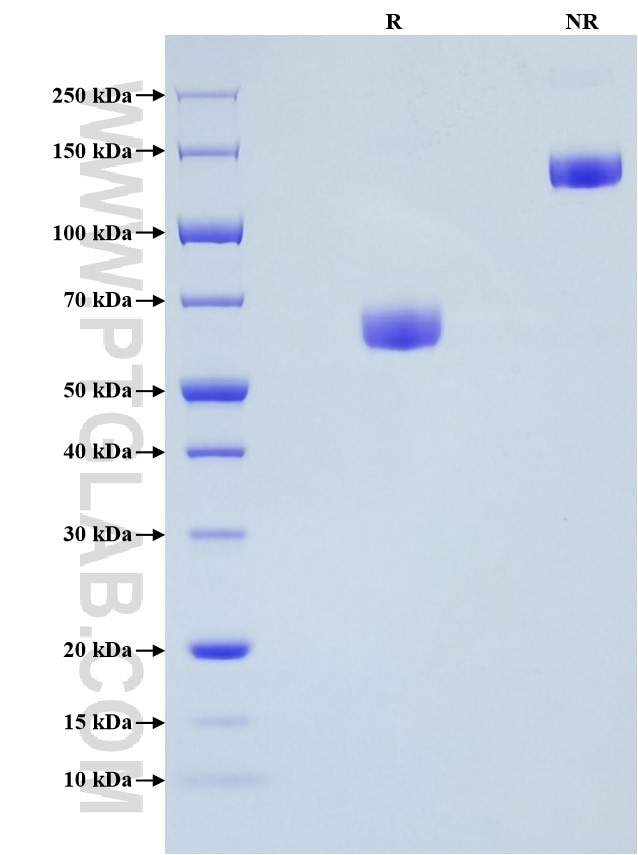
>95 %, SDS-PAGE
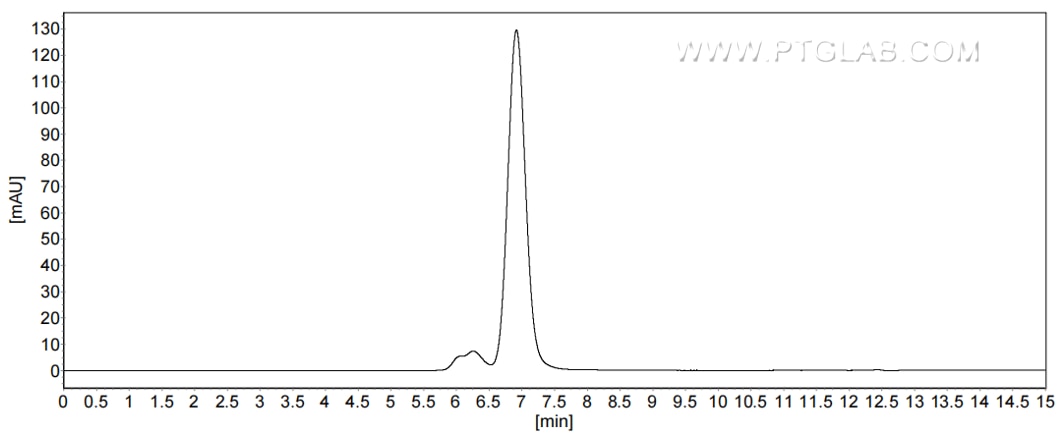
>90 %, SEC-HPLC
Tag
hFc Tag
Activity
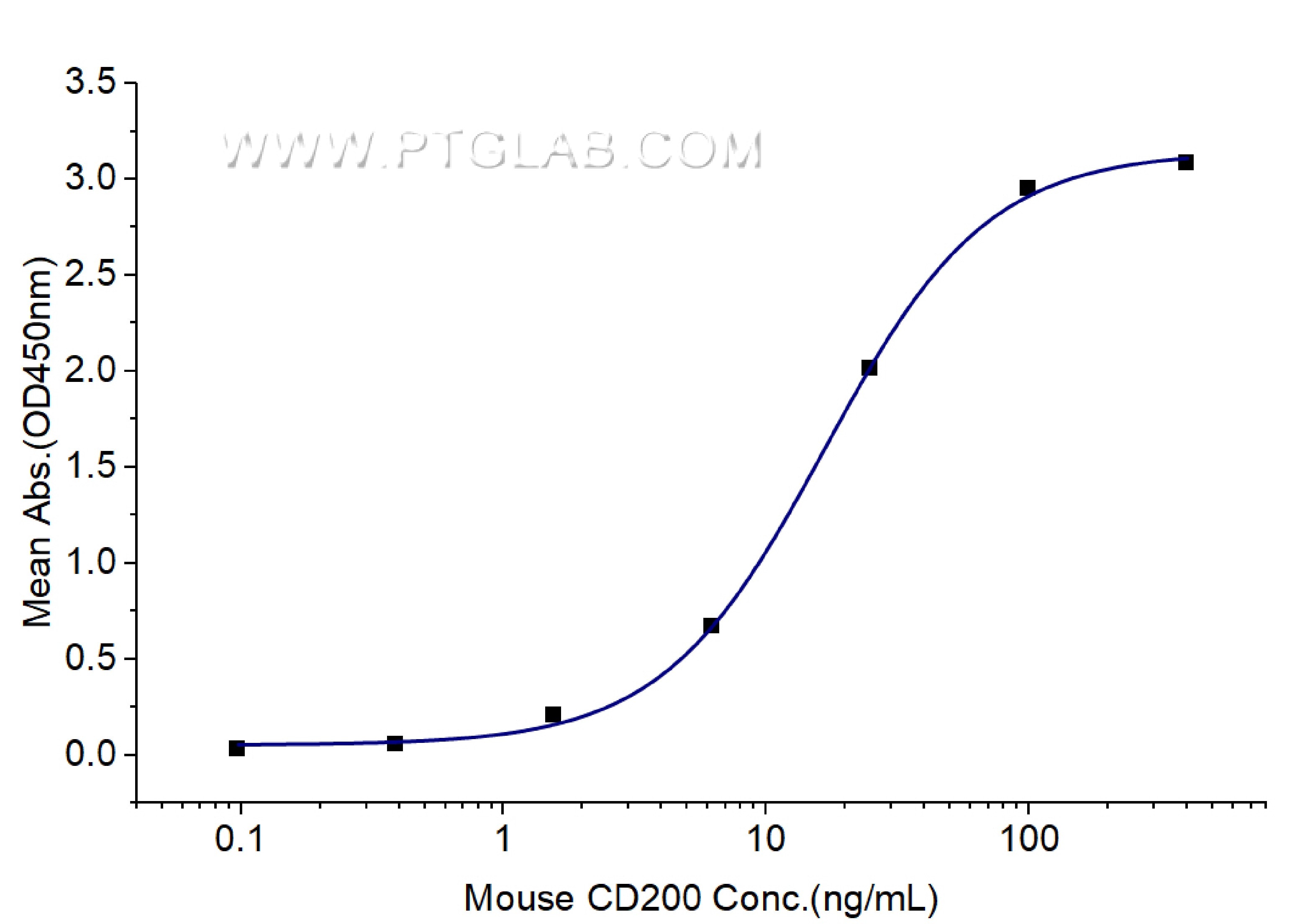
EC50: 8-32 ng/mL
Cat no : Eg0919
Validation Data Gallery
Product Information
| Purity | >95 %, SDS-PAGE >90 %, SEC-HPLC |
| Endotoxin | <0.1 EU/μg protein, LAL method |
| Activity |
Immobilized Mouse CD200R1 (His tag) at 1 μg/mL (100 μL/well) can bind Mouse CD200 (hFc tag) with a linear range of 8-32 ng/mL. |
| Expression | HEK293-derived Mouse CD200 protein Gln31-Gly232 (Accession# O54901) with a human IgG1 Fc tag at the C-terminus. |
| GeneID | 17470 |
| Accession | O54901 |
| PredictedSize | 48.5 kDa |
| SDS-PAGE | 60-68 kDa, reducing (R) conditions |
| Formulation | Lyophilized from 0.22 μm filtered solution in PBS, pH 7.4. Normally 5% trehalose and 5% mannitol are added as protectants before lyophilization. |
| Reconstitution | Briefly centrifuge the tube before opening. Reconstitute at 0.1-0.5 mg/mL in sterile water. |
| Storage Conditions |
It is recommended that the protein be aliquoted for optimal storage. Avoid repeated freeze-thaw cycles.
|
| Shipping | The product is shipped at ambient temperature. Upon receipt, store it immediately at the recommended temperature. |
Background
CD200, also known as OX2, is a type I transmembrane glycoprotein that belongs to the immunoglobulin superfamily. It contains two extracellular immunoglobulin domains, a transmembrane and a cytoplasmic domain. CD200 is expressed on a variety of cell types, including thymocytes, B lymphocytes, a subset of T lymphocytes, follicular dendritic cells, neurons, and endothelial cells. CD200 binds to its receptor, CD200R, which is primarily expressed by myeloid and T cell lineage. The CD200-CD200R interaction plays a role in immunosuppression and suppression of anti-tumor immune responses.
References:
1.G W McCaughan, et al. (1987) Immunogenetics. 25(5):329-35.
2.G J Wright, et al. (2000) Immunity. 13(2):233-42.
3.Reginald Gorczynski, et al. (2004) J Immunol. 172(12):7744-9.
4.T P Rygiel, et al. (2012) Oncogene. 31(24):2979-88.