
Recombinant Mouse CD39/ENTPD1 protein (rFc Tag)
Species
Mouse
Purity
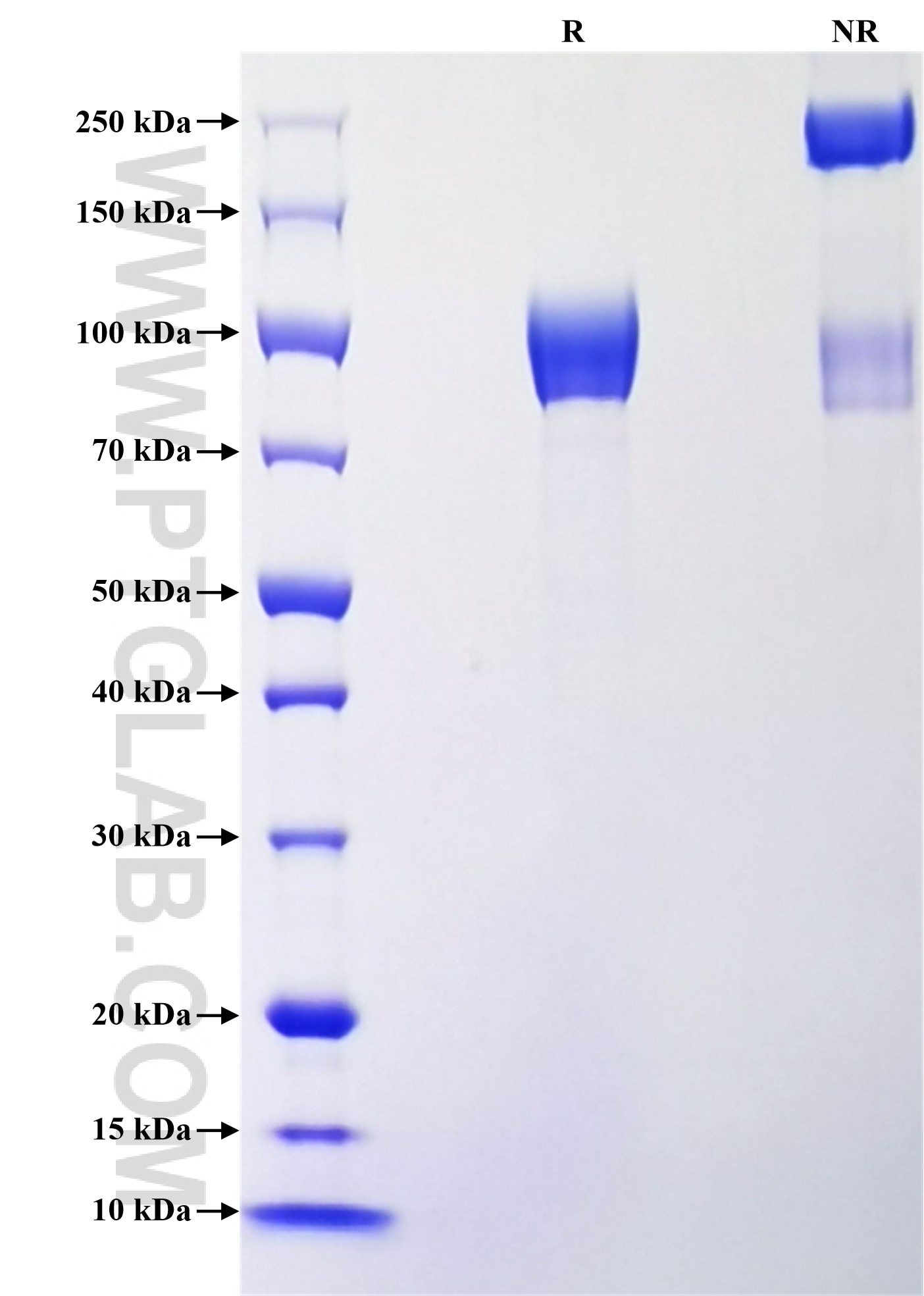
>90 %, SDS-PAGE
Tag
rFc Tag
Activity
not tested
Cat no : Eg3483
Validation Data Gallery
Product Information
| Purity | >90 %, SDS-PAGE |
| Endotoxin | <0.1 EU/μg protein, LAL method |
| Activity |
Not tested |
| Expression | HEK293-derived Mouse CD39 protein Thr38-Ile478 (Accession# P55772) with a rabbit IgG Fc tag at the C-terminus. |
| GeneID | 12495 |
| Accession | P55772 |
| PredictedSize | 75.7 kDa |
| SDS-PAGE | 85-120 kDa, reducing (R) conditions |
| Formulation | Lyophilized from 0.22 μm filtered solution in PBS, pH 7.4. Normally 5% trehalose and 5% mannitol are added as protectants before lyophilization. |
| Reconstitution | Briefly centrifuge the tube before opening. Reconstitute at 0.1-0.5 mg/mL in sterile water. |
| Storage Conditions |
It is recommended that the protein be aliquoted for optimal storage. Avoid repeated freeze-thaw cycles.
|
| Shipping | The product is shipped at ambient temperature. Upon receipt, store it immediately at the recommended temperature. |
Background
CD39/ENTPD1 is a rate-limiting extracellular nucleotidase that hydrolyzes ATP/ADP into AMP, which, in coordination with CD73, generates adenosine. This process converts pro-inflammatory "danger signals" into an immunosuppressive microenvironment. CD39 is highly expressed on regulatory T cells, tumor-associated cells, and endothelial cells, playing a critical role in maintaining immune homeostasis, suppressing inflammation, and regulating thrombosis by establishing an adenosine-rich microenvironment. This molecule has emerged as an important therapeutic target in tumor immunotherapy and autoimmune diseases, with its specific inhibitors already entering clinical research stages.
References:
1. Xia, Chenglai et al. Molecular cancer vol. 22,1 (2023): 44.
2. Moesta, Achim K et al. Nature reviews. Immunology vol. 20,12 (2020): 739-755.
3. Shen, Jie et al. Molecular biomedicine vol. 6,1 (2025): 97.
4. Savio, Luiz Eduardo Baggio et al. Journal of hepatology vol. 67,4 (2017): 716-726.