
Recombinant Mouse CD69 protein (rFc Tag) (HPLC verified)
Species
Mouse
Purity
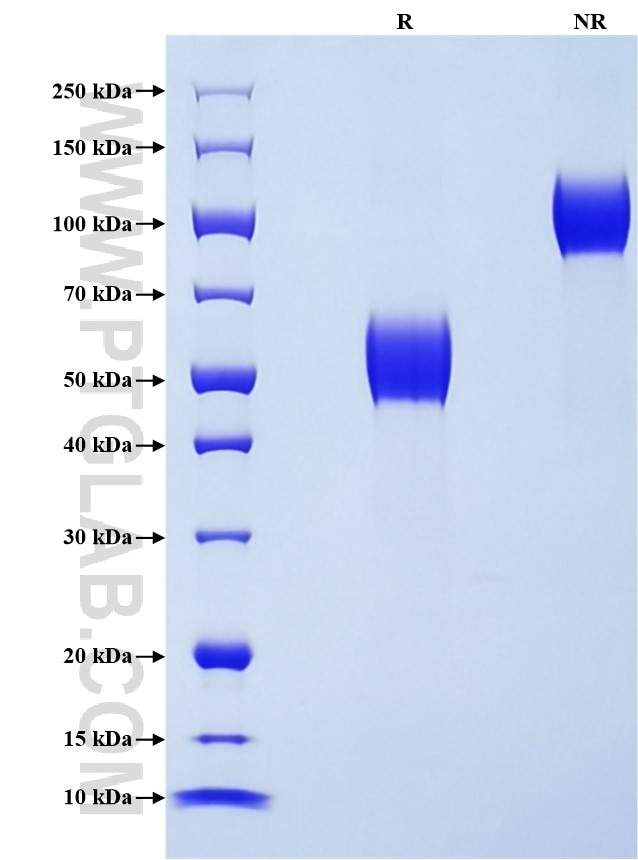
>90 %, SDS-PAGE
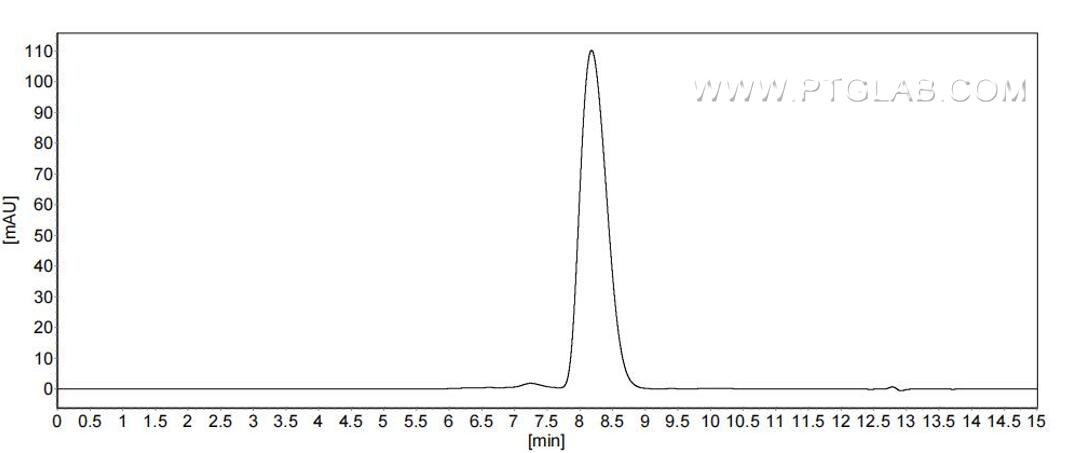
>90 %, SEC-HPLC
Tag
rFc Tag
Activity
not tested
Cat no : Eg3835
Validation Data Gallery
Product Information
| Purity | >90 %, SDS-PAGE >90 %, SEC-HPLC |
| Endotoxin | <0.1 EU/μg protein, LAL method |
| Activity |
Not tested |
| Expression | HEK293-derived Mouse CD69 protein Asn62-Arg199 (Accession# P37217) with a rabbit IgG Fc tag at the N-terminus. |
| GeneID | 12515 |
| Accession | P37217 |
| PredictedSize | 43.0 kDa |
| SDS-PAGE | 48-60 kDa, reducing (R) conditions |
| Formulation | Lyophilized from 0.22 μm filtered solution in PBS, pH 7.4. Normally 5% trehalose and 5% mannitol are added as protectants before lyophilization. |
| Reconstitution | Briefly centrifuge the tube before opening. Reconstitute at 0.1-0.5 mg/mL in sterile water. |
| Storage Conditions |
It is recommended that the protein be aliquoted for optimal storage. Avoid repeated freeze-thaw cycles.
|
| Shipping | The product is shipped at ambient temperature. Upon receipt, store it immediately at the recommended temperature. |
Background
CD69 is a C-type lectin whose gene is encoded within the NK cell gene complex on chromosome 6 in mice and chromosome 12 in humans. CD69 promotes immune homeostasis by regulating the differentiation and function of Tregs. On the basis of CD69 expression, Tregs are classified into 2 subtypes: CD69+ and CD69– Tregs. CD69+ Tregs express higher levels of suppression markers such as CTLA-4, ICOS, CD38, and GITR than to CD69– or Cd69–/– Tregs, resulting in enhanced effector T cell suppression and tolerance.
References:
1. Cortes JR, et al. J Autoimmun. 2014;55:51–62.
2. Sanchez-Diaz R, et al. Mol Cell Biol. 2017;37(9):e00341.