
Recombinant Mouse IFN-alpha 11/IFNA11 protein (rFc Tag)
Species
Mouse
Purity
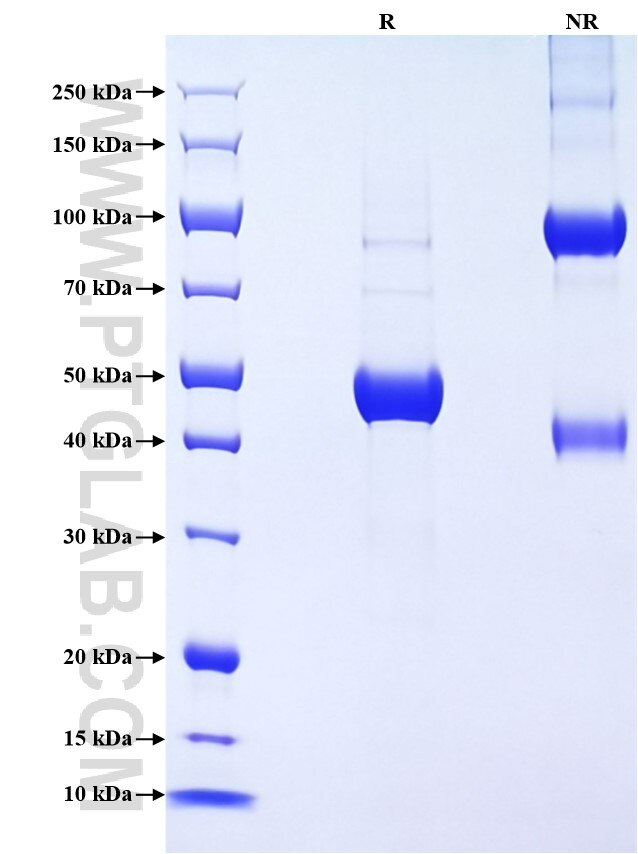
>90 %, SDS-PAGE
Tag
rFc Tag
Activity
not tested
Cat no : Eg2862
Validation Data Gallery
Product Information
| Purity | >90 %, SDS-PAGE |
| Endotoxin | <0.1 EU/μg protein, LAL method |
| Activity |
Not tested |
| Expression | HEK293-derived Mouse IFN-alpha 11 protein Cys24-Ala190 (Accession# Q61716) with a rabbit IgG Fc tag at the C-terminus. |
| GeneID | 15964 |
| Accession | Q61716 |
| PredictedSize | 45.2 kDa |
| SDS-PAGE | 46-50 kDa, reducing (R) conditions |
| Formulation | Lyophilized from 0.22 μm filtered solution in PBS, pH 7.4. Normally 5% trehalose and 5% mannitol are added as protectants before lyophilization. |
| Reconstitution | Briefly centrifuge the tube before opening. Reconstitute at 0.1-0.5 mg/mL in sterile water. |
| Storage Conditions |
It is recommended that the protein be aliquoted for optimal storage. Avoid repeated freeze-thaw cycles.
|
| Shipping | The product is shipped at ambient temperature. Upon receipt, store it immediately at the recommended temperature. |
Background
IFN-alpha 11 (Interferon-alpha Subtype 11) is a member of the type I interferon family, which includes multiple IFN-alpha subtypes and a single IFN-beta.All type I IFN subtypes are genetically highly conserved and bind to the same receptor (IFN-alpha/beta receptor, IFNAR), but they differ in their biological activity. IFN-α11 is induced to be expressed in response to viral infection, is Produced by macrophages and stimulating the production of protein kinases and oligoadenylate synthetases, it has antiviral and immunomodulatory functions. During viral infection, IFN-α11 stimulates natural killer (NK) cells to regulate antiviral effects and control retroviral infection.
References:
1. Gibbert K, et al. PLoS Pathog. (2012);8(8):e1002868.
2. Fung MC, et al. J Immunol Methods. (2004); 284(1-2):177-86.
3. van Pesch V, et al. J Virol. (2004) ;78(15):8219-28.