
Recombinant Mouse LBP protein (rFc Tag)
Species
Mouse
Purity
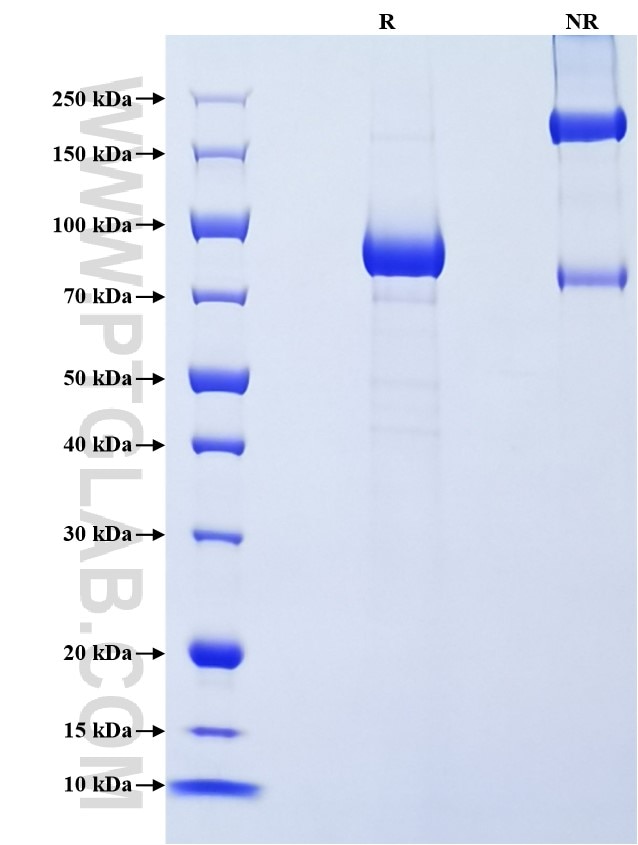
>90 %, SDS-PAGE
Tag
rFc Tag
Activity
not tested
Cat no : Eg3163
Validation Data Gallery
Product Information
| Purity | >90 %, SDS-PAGE |
| Endotoxin | <0.1 EU/μg protein, LAL method |
| Activity |
Not tested |
| Expression | HEK293-derived Mouse LBP protein Gly25-Val481 (Accession# Q61805) with a rabbit IgG Fc tag at the C-terminus. |
| GeneID | 16803 |
| Accession | Q61805 |
| PredictedSize | 76.7 kDa |
| SDS-PAGE | 80-90 kDa, reducing (R) conditions |
| Formulation | Lyophilized from 0.22 μm filtered solution in PBS, pH 7.4. Normally 5% trehalose and 5% mannitol are added as protectants before lyophilization. |
| Reconstitution | Briefly centrifuge the tube before opening. Reconstitute at 0.1-0.5 mg/mL in sterile water. |
| Storage Conditions |
It is recommended that the protein be aliquoted for optimal storage. Avoid repeated freeze-thaw cycles.
|
| Shipping | The product is shipped at ambient temperature. Upon receipt, store it immediately at the recommended temperature. |
Background
LBP (Lipopolysaccharide-binding protein) is a 65 kDa type I acute response protein found in high concentrations in the blood and known to be of hepatic origin with antioxidant properties. It acts as an antioxidant to control lipid homeostasis and protects against oxidative stress by coupling with redox signaling and lipid metabolism. (PMID: 38615060) LBP inhibits monoamine biosynthesis by acting as an endogenous inhibitor of dopamine-β-hydroxylase (DBH) and aromatic-L-amino acid-decarboxylase (DDC), and targeting LBP may have therapeutic potential for some patients with depression.
References:
1. Zhang Q, et al. Nat Commun. 2024; 3;15(1):3213.
2. Fang M, et al. Immunity. 2023;56(3):620-634.e11.
3. Milbank E,et al. Pharmacol Res. 2023;187:106562.