
Recombinant Mouse Mup1 protein (rFc Tag) (HPLC verified)
Species
Mouse
Purity
>90 %, SDS-PAGE
>90 %, SEC-HPLC
Tag
rFc Tag
Activity
not tested
Cat no : Eg3024
Validation Data Gallery
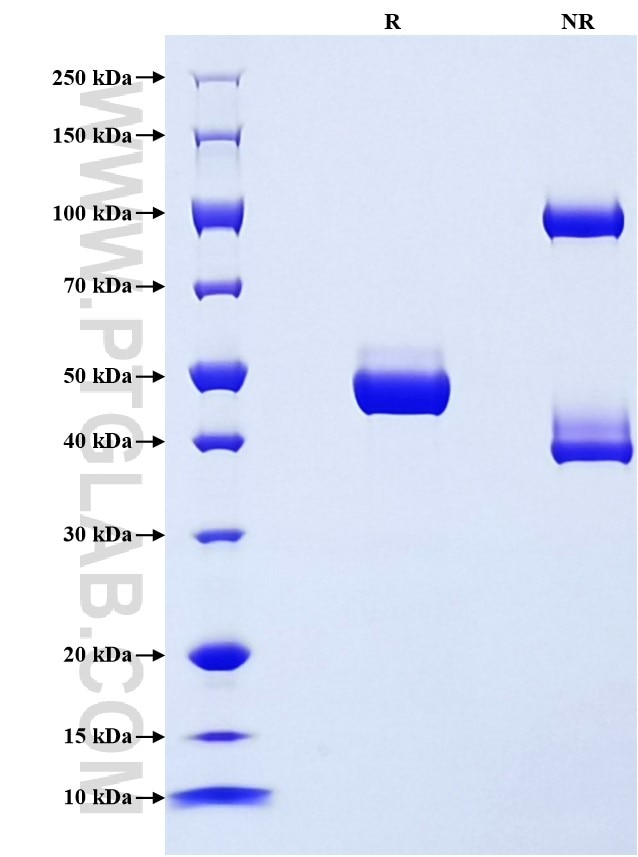
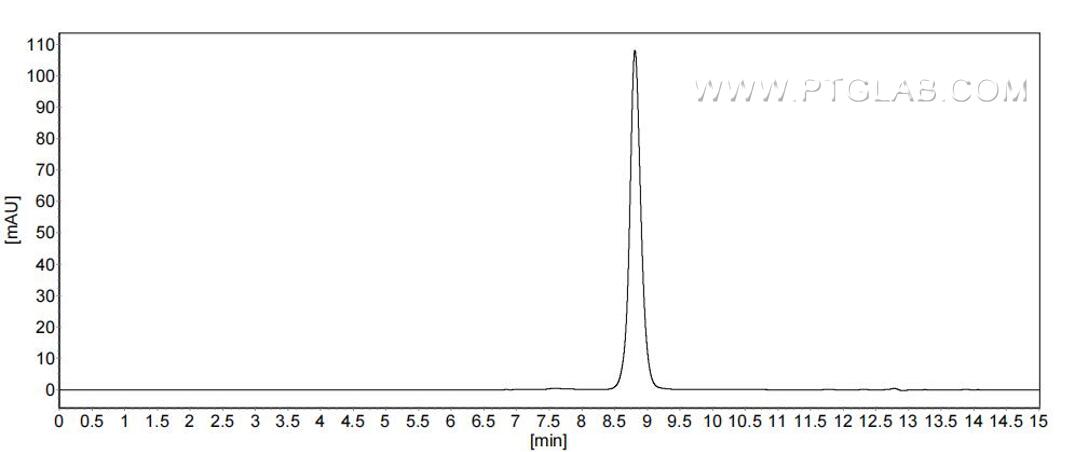
Product Information
| Purity | >90 %, SDS-PAGE >90 %, SEC-HPLC |
| Endotoxin | <0.1 EU/μg protein, LAL method |
| Activity |
Not tested |
| Expression | HEK293-derived Mouse Mup1 protein Glu19-Glu180 (Accession# P11588) with a rabbit IgG Fc tag at the C-terminus. |
| GeneID | 17840 |
| Accession | P11588 |
| PredictedSize | 44.7 kDa |
| SDS-PAGE | 45-50 kDa, reducing (R) conditions |
| Formulation | Lyophilized from 0.22 μm filtered solution in PBS, pH 7.4. Normally 5% trehalose and 5% mannitol are added as protectants before lyophilization. |
| Reconstitution | Briefly centrifuge the tube before opening. Reconstitute at 0.1-0.5 mg/mL in sterile water. |
| Storage Conditions |
It is recommended that the protein be aliquoted for optimal storage. Avoid repeated freeze-thaw cycles.
|
| Shipping | The product is shipped at ambient temperature. Upon receipt, store it immediately at the recommended temperature. |
Background
Mup1, or major urinary protein 1, is a member of the lipocalin family and is abundantly secreted into the circulation by the liver. It binds to lipophilic pheromones and is excreted in urine, mediating chemical communication in rodents. Beyond its role in chemical signaling, Mup1 has been identified as a regulator of glucose and lipid metabolism. Mup1 expression is significantly reduced in genetic and dietary fat-induced obesity and diabetes. Mup1 has been shown to suppress hepatic gluconeogenesis and promote energy expenditure in skeletal muscle by stimulating mitochondrial biogenesis and function. In chronic alcohol-induced metabolic disorders, Mup1 mediates the alleviation of hepatic endoplasmic reticulum (ER) stress and insulin resistance.
References:
1.Zhou Y. et al. (2009). J Biol Chem. 284(17):11152-11159.
2.Zhou Y. et al. (2010). Vitam Horm. 83:151-163.
3.Zhang H. et al. (2024). Gut Microbes. 16(1):2367342.