
Recombinant Mouse Oncostatin M/OSM protein (mFc Tag)(HPLC verified)
Species
Mouse
Purity
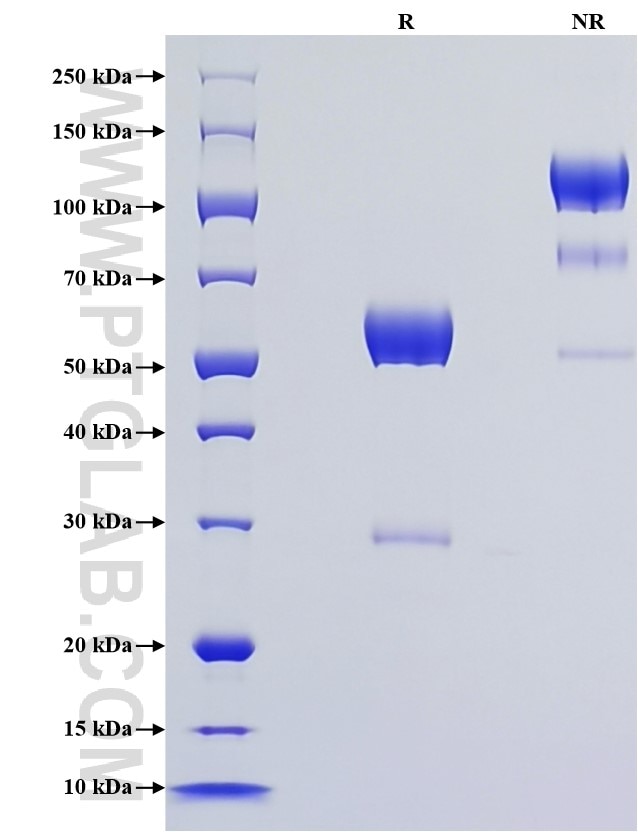
>90 %, SDS-PAGE
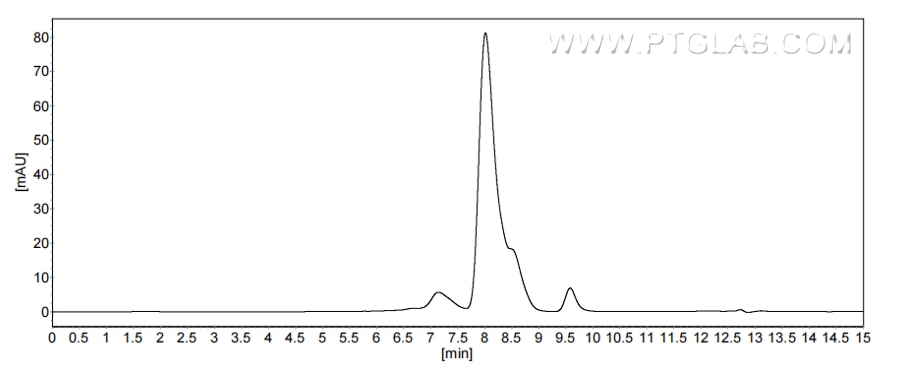
>90%, SEC-HPLC
Tag
mFc Tag
Activity
not tested
Cat no : Eg4087
Validation Data Gallery
Product Information
| Purity | >90 %, SDS-PAGE >90%, SEC-HPLC |
| Endotoxin | <0.1 EU/μg protein, LAL method |
| Activity |
Not tested |
| Expression | HEK293-derived Mouse Oncostatin M protein Asn25-Arg206 (Accession# P53347) with a mouse IgG Fc tag at the C-terminus. |
| GeneID | 18413 |
| Accession | P53347 |
| PredictedSize | 47.2 kDa |
| SDS-PAGE | 50-65 kDa, reducing (R) conditions |
| Formulation | Lyophilized from 0.22 μm filtered solution in PBS, pH 7.4. Normally 5% trehalose and 5% mannitol are added as protectants before lyophilization. |
| Reconstitution | Briefly centrifuge the tube before opening. Reconstitute at 0.1-0.5 mg/mL in sterile water. |
| Storage Conditions |
It is recommended that the protein be aliquoted for optimal storage. Avoid repeated freeze-thaw cycles.
|
| Shipping | The product is shipped at ambient temperature. Upon receipt, store it immediately at the recommended temperature. |
Background
Osm (Oncostatin M) is structurally and functionally related to a family of cytokines that includes the leukemia inhibitory factor (LIF), ciliary neurotrophic factor (CNTF), interleukin-11 (IL-11), cardiotrophin-1 (CT-1), and interleukin-6 (IL-6). Osm is produced primarily by various inflammatory cells, including neutrophils, eosinophils and macrophages, and plays an important role in the modulation of inflammatory responses. Treatment of mice with OSM induced the shift of cytokine production profiles from inflammatory to anti-inflammatory in the adipose tissue with the phenotypic change of ATMs from M1 type to M2 type.
References:
1. Yoshimura A, et al. (1996). EMBO J. 15(5):1055-1063.
2. Lindberg, R. A, et al.  (1998). Mol Cell Biol. vol. 18,6: 3357-67.
3. Komori T, et al. (2015). Diabetologia, 58(8), 1868–1876.