
Recombinant Mouse PDGF R alpha/PDGFRA protein (mFc Tag)(HPLC verified)
Species
Mouse
Purity
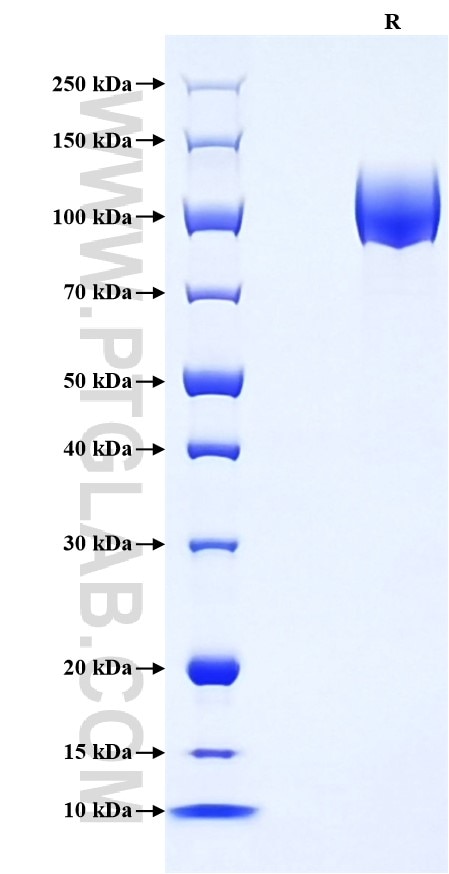
>90 %, SDS-PAGE
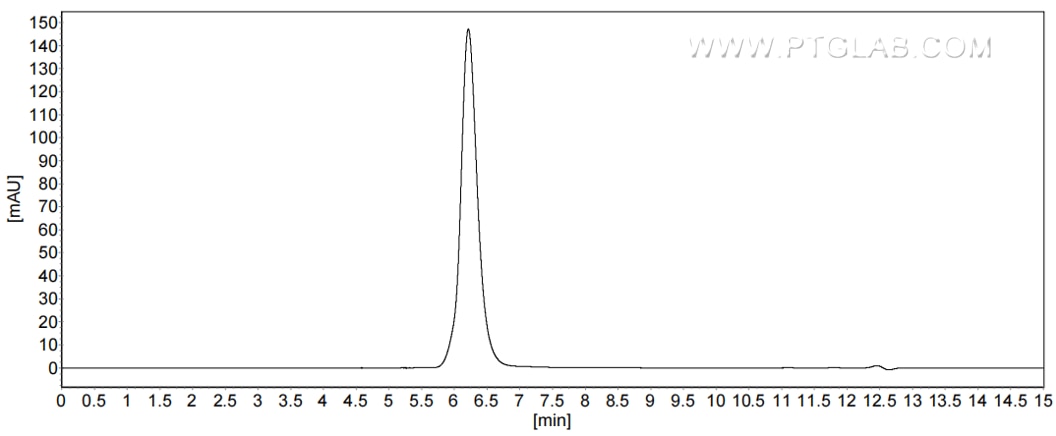
>90 %, SEC-HPLC
Tag
mFc Tag
Activity
not tested
Cat no : Eg1623
Validation Data Gallery
Product Information
| Purity | >90 %, SDS-PAGE >90 %, SEC-HPLC |
| Endotoxin | <0.1 EU/μg protein, LAL method |
| Activity |
Not tested |
| Expression | HEK293-derived Mouse PDGF R alpha protein Leu25-Ala528 (Accession# P26618-1) with a mouse IgG Fc tag at the C-terminus. |
| GeneID | 18595 |
| Accession | P26618-1 |
| PredictedSize | 83.0 kDa |
| SDS-PAGE | 85-125 kDa, reducing (R) conditions |
| Formulation | Lyophilized from 0.22 μm filtered solution in PBS, pH 7.4. Normally 5% trehalose and 5% mannitol are added as protectants before lyophilization. |
| Reconstitution | Briefly centrifuge the tube before opening. Reconstitute at 0.1-0.5 mg/mL in sterile water. |
| Storage Conditions |
It is recommended that the protein be aliquoted for optimal storage. Avoid repeated freeze-thaw cycles.
|
| Shipping | The product is shipped at ambient temperature. Upon receipt, store it immediately at the recommended temperature. |
Background
Platelet-derived growth factor receptor alpha (PDGFRA, also known as CD140a) is a cell surface tyrosine kinase receptor for members of the platelet-derived growth factor family. PDGFRA is implicated in the regulation of embryonic development, tumorigenesis, cell proliferation, survival, and chemotaxis. Mutations in the PDGFRA gene have been associated with idiopathic hypereosinophilic syndrome, somatic and familial gastrointestinal stromal tumors, and a variety of other cancers. PDGFRA and PDGFRB belong to receptor tyrosine kinase (RTK) family and function as receptors for platelet-derived growth factor (PDGF). PDGFRA is the only identified receptor to mediate PDGFA function in GBM.
References:
1.Andrae J, et al. (2008) Genes Dev. 22(10):1276-312.
2.Ricci R, et al. (2015) Mod Pathol.
3.Gai QJ, et al. (2022). Signal Transduct Target Ther. 7(1):33.