
Recombinant mouse PTPRJ/CD148 protein
Species
Mouse
Purity
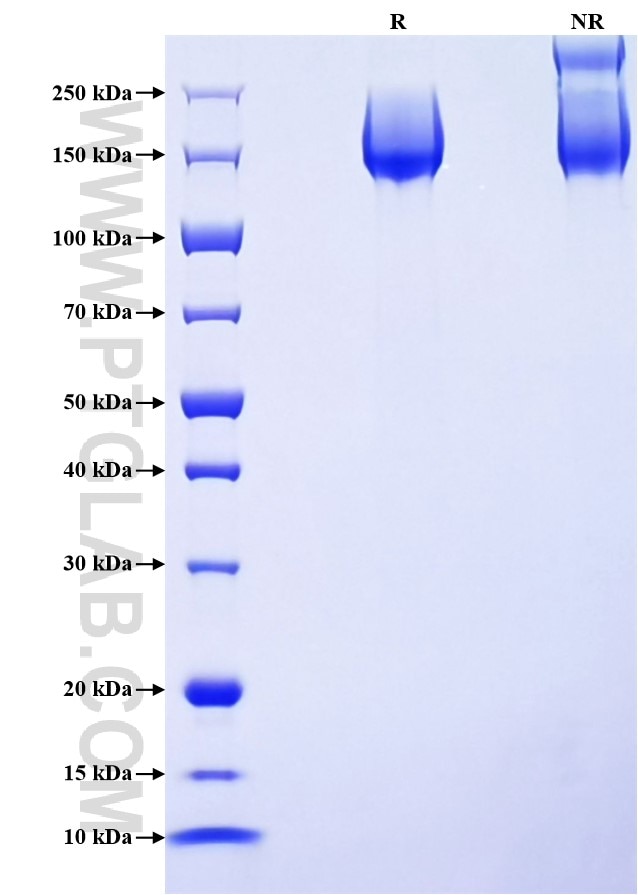
>90 %, SDS-PAGE
Tag
rFc Tag
Activity
not tested
Cat no : Eg2648
Validation Data Gallery
Product Information
| Purity | >90 %, SDS-PAGE |
| Endotoxin | <0.1 EU/μg protein, LAL method |
| Activity |
Not tested |
| Expression | HEK293-derived Mouse PTPRJ/CD148 protein Arg29-Ile874 (Accession# Q64455) with a rabbit IgG Fc tag at the C-terminus. |
| GeneID | 19271 |
| Accession | Q64455 |
| PredictedSize | 117.7 kDa |
| SDS-PAGE | 135-250 kDa, reducing (R) conditions |
| Formulation | Lyophilized from 0.22 μm filtered solution in PBS, pH 7.4. Normally 5% trehalose and 5% mannitol are added as protectants before lyophilization. |
| Reconstitution | Briefly centrifuge the tube before opening. Reconstitute at 0.1-0.5 mg/mL in sterile water. |
| Storage Conditions |
It is recommended that the protein be aliquoted for optimal storage. Avoid repeated freeze-thaw cycles.
|
| Shipping | The product is shipped at ambient temperature. Upon receipt, store it immediately at the recommended temperature. |
Background
PTPRJ (Protein Tyrosine Phosphatase Receptor Type J), also known as CD148 or density-enhanced phosphatase-1 (DEP-1), belongs to the type III receptor-type PTP (RPTP) subfamily and has been identified as a negative regulator of insulin signaling in peripheral tissues and is overexpressed in obese mice. Ptprj is the most abundant RPTP in platelets and megakaryocytes. Its structure consists of a single intracellular catalytic PTP domain, the transmembrane domain, and an extracellular domain composed of 9 fibronectin type III–like repeats. Ptprj plays critical roles in retinocollicular projections by controlling the repulsive signal by Eph and c-Abl activities.
References:
1. Shintani T, et al. (2017). Sci Rep. Sep 14;7(1):11627.
2. Yu Y, et al. (2018). J Neurosci. Sep 26;38(39):8345-8363.et al.
3. Marconi C,et al. (2019). Blood. Mar 21;133(12):1346-1357.
4. Ulke J, et al. (2024). J Neuroendocrinol. 36(12):e13446.