
Recombinant Mouse TGF-alpha protein (rFc Tag)
Species
Mouse
Purity
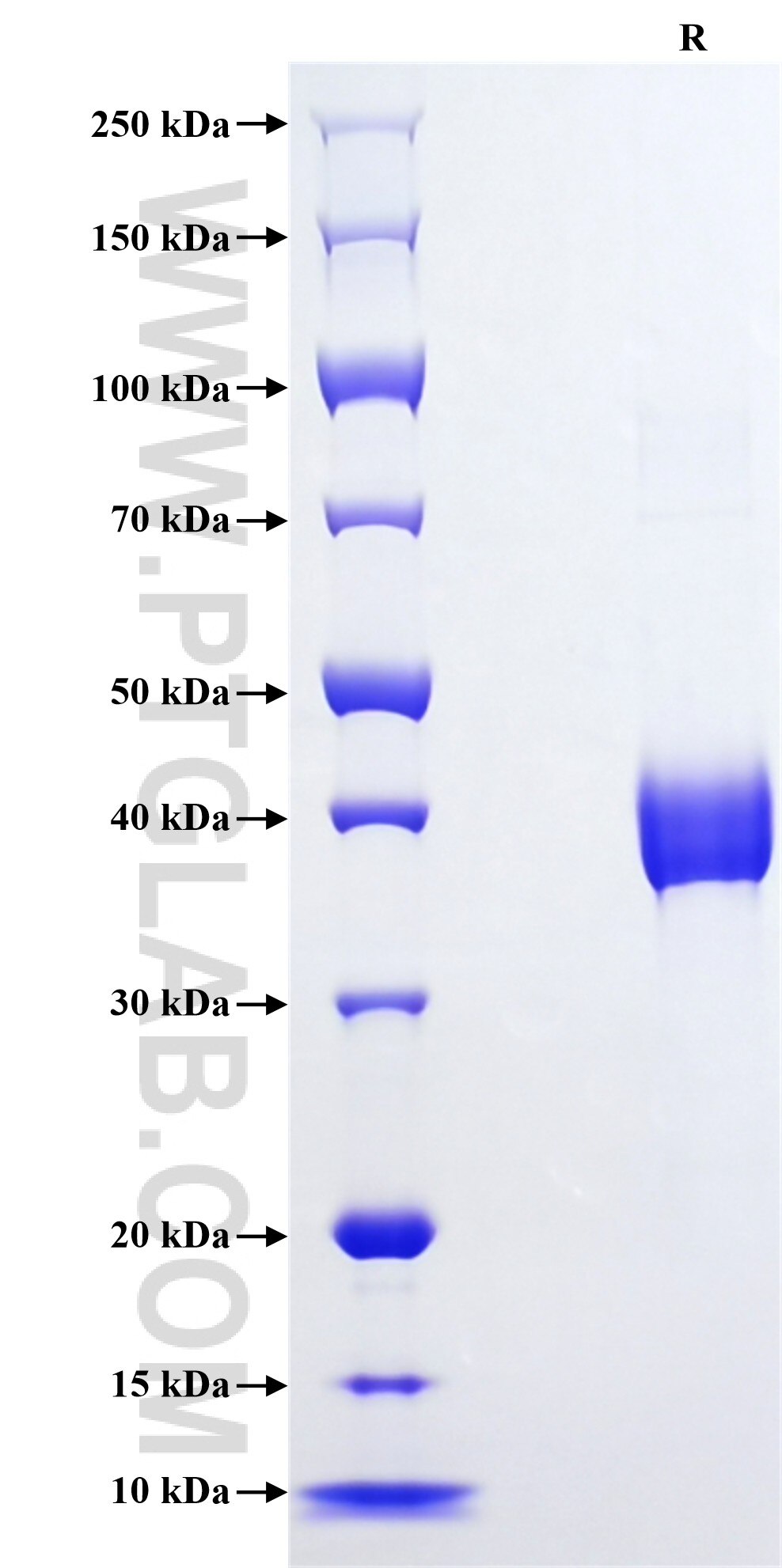
>90 %, SDS-PAGE
Tag
rFc Tag
Activity
not tested
Cat no : Eg6280
Validation Data Gallery
Product Information
| Purity | >90 %, SDS-PAGE |
| Endotoxin | <0.1 EU/μg protein, LAL method |
| Activity |
Not tested |
| Expression | HEK293-derived Mouse TGF-alpha protein Glu24-Gln97 (Accession# P48030) with a rabbit IgG Fc tag at the C-terminus. |
| GeneID | 21802 |
| Accession | P48030 |
| PredictedSize | 33.6 kDa |
| SDS-PAGE | 36-44 kDa , reducing (R) conditions |
| Formulation | Lyophilized from 0.22 μm filtered solution in PBS, pH 7.4. Normally 5% trehalose and 5% mannitol are added as protectants before lyophilization. |
| Reconstitution | Briefly centrifuge the tube before opening. Reconstitute at 0.1-0.5 mg/mL in sterile water. |
| Storage Conditions |
It is recommended that the protein be aliquoted for optimal storage. Avoid repeated freeze-thaw cycles.
|
| Shipping | The product is shipped at ambient temperature. Upon receipt, store it immediately at the recommended temperature. |
Background
Transforming growth factor alpha (TGF-alpha) is one growth factor that has been circumstantially implicated in regulating the autocrine growth of breast cancer cells. Expression of TGF alpha can be modulated by activated cellular protooncogenes such as ras and by estrogens. TGF alpha is a mitogenic polypeptide that is able to bind to the EGF receptor/EGFR and to act synergistically with TGF beta to promote anchorage-independent cell proliferation in soft agar.
References:
1.Ciardiello, F et al. Annals of oncology : official journal of the European Society for Medical Oncology vol. 2,3 (1991): 169-82.
2.Reddy, C C et al. Medical & biological engineering & computing vol. 36,4 (1998): 499-507.
3.Kumar, V et al. Cell biology international vol. 19,5 (1995): 373-88.