


Tested Applications
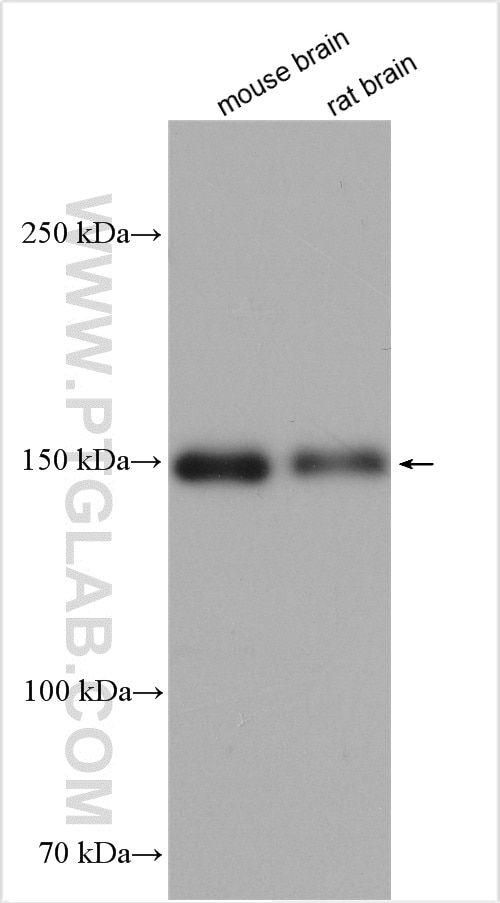
| Positive WB detected in | mouse brain tissue, rat brain tissue |
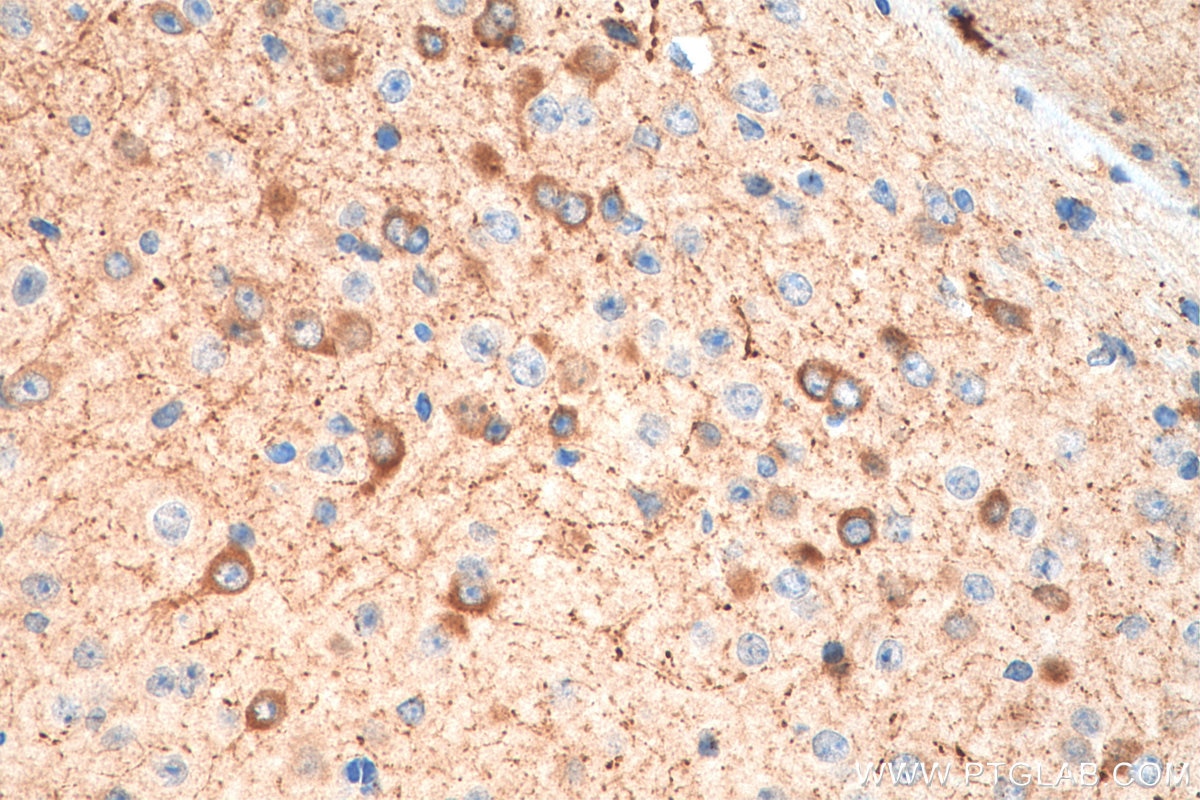
| Positive IHC detected in | mouse brain tissue Note: suggested antigen retrieval with TE buffer pH 9.0; (*) Alternatively, antigen retrieval may be performed with citrate buffer pH 6.0 |
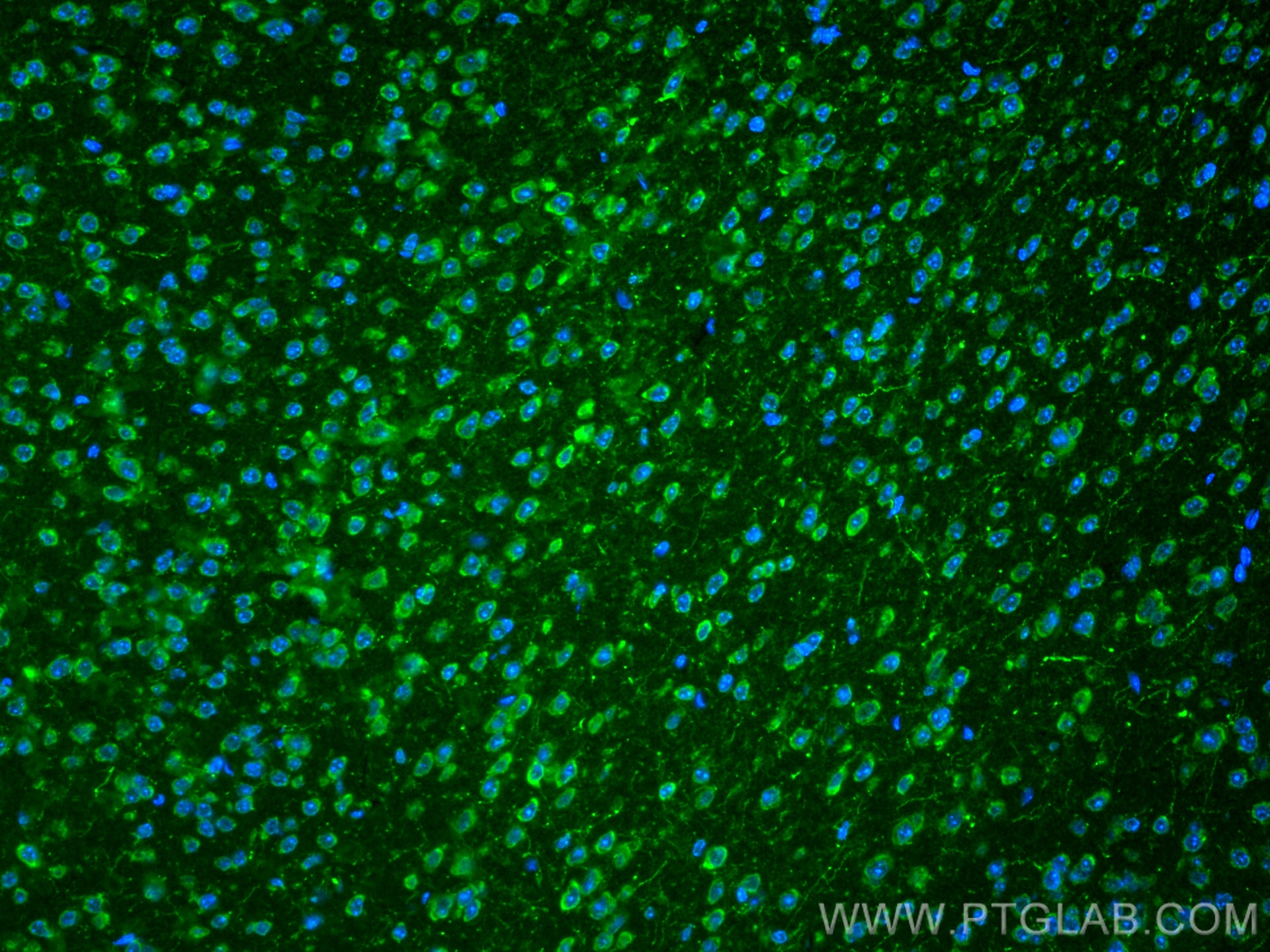
| Positive IF-P detected in | mouse brain tissue |
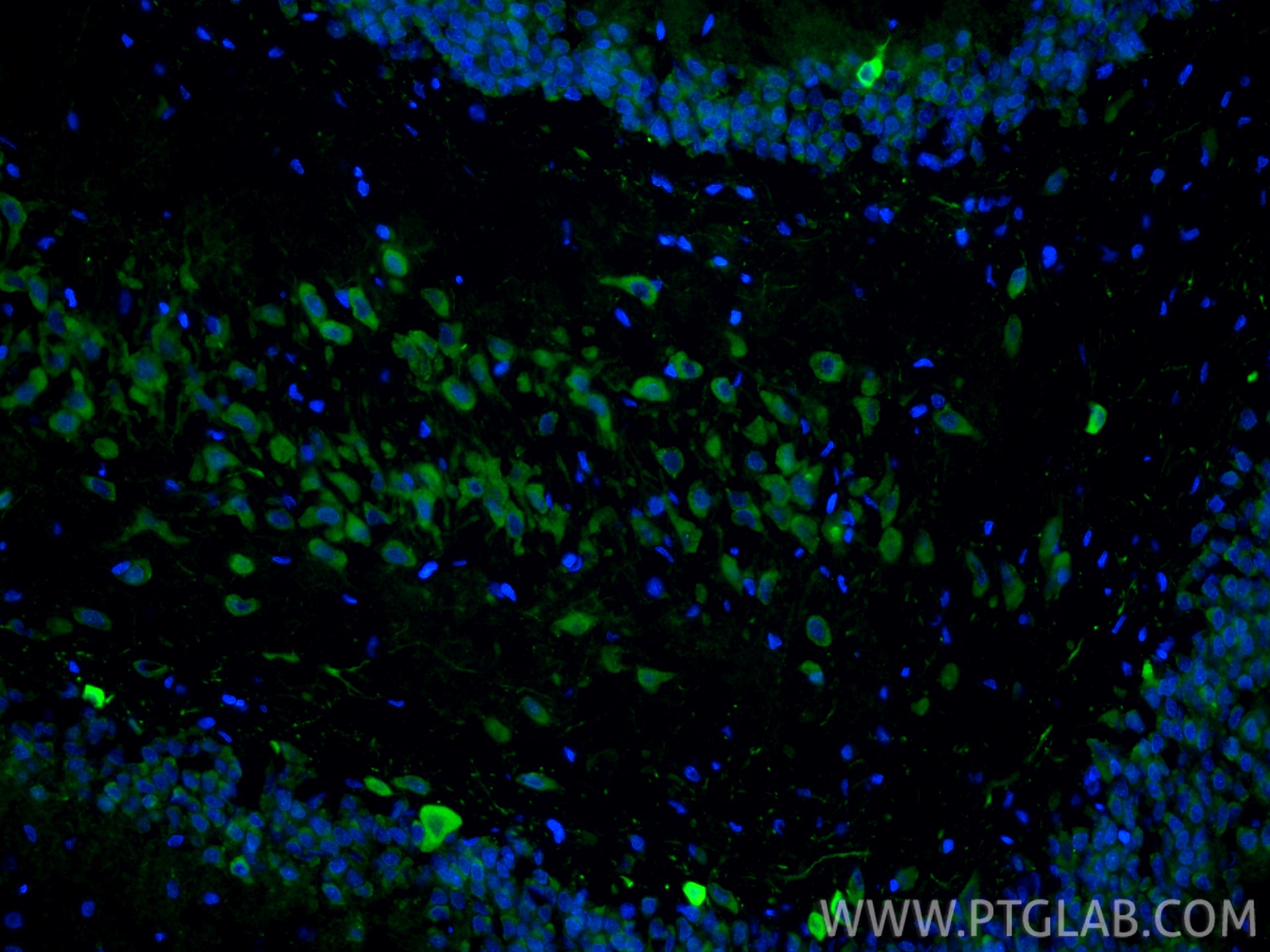
| Positive IF-Fro detected in | rat brain tissue |
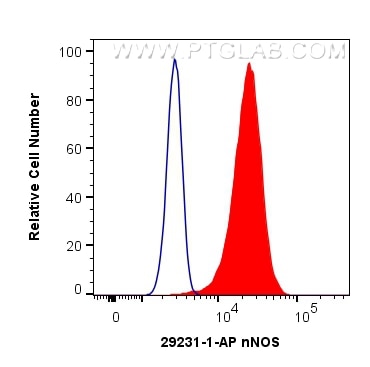
| Positive FC (Intra) detected in | HeLa cells |
Recommended dilution
| Application | Dilution |
|---|---|
| Western Blot (WB) | WB : 1:1000-1:4000 |
| Immunohistochemistry (IHC) | IHC : 1:250-1:1000 |
| Immunofluorescence (IF)-P | IF-P : 1:50-1:500 |
| Immunofluorescence (IF)-FRO | IF-FRO : 1:50-1:500 |
| Flow Cytometry (FC) (INTRA) | FC (INTRA) : 0.40 ug per 10^6 cells in a 100 µl suspension |
| It is recommended that this reagent should be titrated in each testing system to obtain optimal results. | |
| Sample-dependent, Check data in validation data gallery. | |
Product Information
29231-1-AP targets nNOS in WB, IHC, IF-P, IF-Fro, FC (Intra), ELISA applications and shows reactivity with human, mouse, rat samples.
| Tested Reactivity | human, mouse, rat |
| Cited Reactivity | human, mouse, rat, bovine |
| Host / Isotype | Rabbit / IgG |
| Class | Polyclonal |
| Type | Antibody |
| Immunogen |
CatNo: Ag28910 Product name: Recombinant human NOS1 protein Source: e coli.-derived, PGEX-4T Tag: GST Domain: 18-262 aa of NM_000620 Sequence: VRLFKRKVGGLGFLVKERVSKPPVIISDLIRGGAAEQSGLIQAGDIILAVNGRPLVDLSYDSALEVLRGIASETHVVLILRGPEGFTTHLETTFTGDGTPKTIRVTQPLGPPTKAVDLSHQPPAGKEQPLAVDGASGPGNGPQHAYDDGQEAGSLPHANGLAPRPPGQDPAKKATRVSLQGRGENNELLKEIEPVLSLLTSGSRGVKGGAPAKAEMKDMGIQVDRDLDGKSHKPLPLGVENDRVF Predict reactive species |
| Full Name | nitric oxide synthase 1 (neuronal) |
| Calculated Molecular Weight | 161 kDa |
| Observed Molecular Weight | 160 kDa |
| GenBank Accession Number | NM_000620 |
| Gene Symbol | nNOS |
| Gene ID (NCBI) | 4842 |
| RRID | AB_2918255 |
| Conjugate | Unconjugated |
| Form | Liquid |
| Purification Method | Antigen affinity purification |
| UNIPROT ID | P29475 |
| Storage Buffer | PBS with 0.02% sodium azide and 50% glycerol, pH 7.3. |
| Storage Conditions | Store at -20°C. Stable for one year after shipment. Aliquoting is unnecessary for -20oC storage. 20ul sizes contain 0.1% BSA. |
Background Information
nNOS belongs to the NOS family. nNOS produces nitric oxide (NO) which is a messenger molecule with diverse functions throughout the body. In the brain and peripheral nervous system, NO displays many properties of a neurotransmitter. NO is a reactive free radical which acts as a biologic mediator in several processes, including neurotransmission and antimicrobial and antitumoral activities. NO is synthesized from L-arginine by nitric oxide synthases. nNOS is a nitric oxide synthase which is highly expressed in skeletal muscle. Genetic variations in nNOS gene are associated with susceptibility to infantile hypertrophic pyloric stenosis type 1 (IHPS1).The antibody can recognize isoform 1,2,4 of nNOS.
Protocols
| Product Specific Protocols | |
|---|---|
| FC protocol for nNOS antibody 29231-1-AP | Download protocol |
| IF protocol for nNOS antibody 29231-1-AP | Download protocol |
| IHC protocol for nNOS antibody 29231-1-AP | Download protocol |
| WB protocol for nNOS antibody 29231-1-AP | Download protocol |
| Standard Protocols | |
|---|---|
| Click here to view our Standard Protocols |
Publications
What published studies show
The nNOS Polyclonal antibody (Cat# 29231-1-AP) has 14 citations published in journals including Cell Metabolism, Journal of Nanobiotechnology, Antioxidants, Fluids & Barriers of the CNS, Life Sciences, European Journal of Pharmacology, American Journal of Pathology, Journal of Cellular and Molecular Medicine, Pain Research and Management, Asian Journal of Andrology, International Journal of Impotence Research, Neuroscience Letters, and Materials Today Bio. Research fields span erectile dysfunction, oxidative stress, neuronal apoptosis, stem cell therapy, pain mechanisms, and metabolic regulation.
| Species | Application | Title |
|---|---|---|
Cell Metab Galnt2 neurons in the ventromedial hypothalamus counterregulate hypoglycemia via a brain-liver neurocircuit. | ||
J Nanobiotechnology Biodegradable nano black phosphorus based SDF1-α delivery system ameliorates Erectile Dysfunction in a cavernous nerve injury rat model by recruiting endogenous stem/progenitor cells | ||
Antioxidants (Basel) Development of an AAPH-Induced Oxidative Stress Model in Bovine Mammary Epithelial Cells and Investigation of Its Molecular Mechanisms. | ||
Fluids Barriers CNS Rh-relaxin-2 attenuates oxidative stress and neuronal apoptosis via ERK-nNOS-NO pathway after germinal matrix hemorrhage in rats | ||
Life Sci An animal model induced by bilateral cavernous nerve crushing mimics post-radical prostatectomy erectile dysfunction in old rats | ||
Eur J Pharmacol Klotho-derived peptide preserves erectile function by limiting fibrosis, oxidative stress, and apoptosis of penile smooth muscle cells in cavernous nerve injured-rats through suppression of the TGF-β1/TGF-β type II receptor signaling. |







