
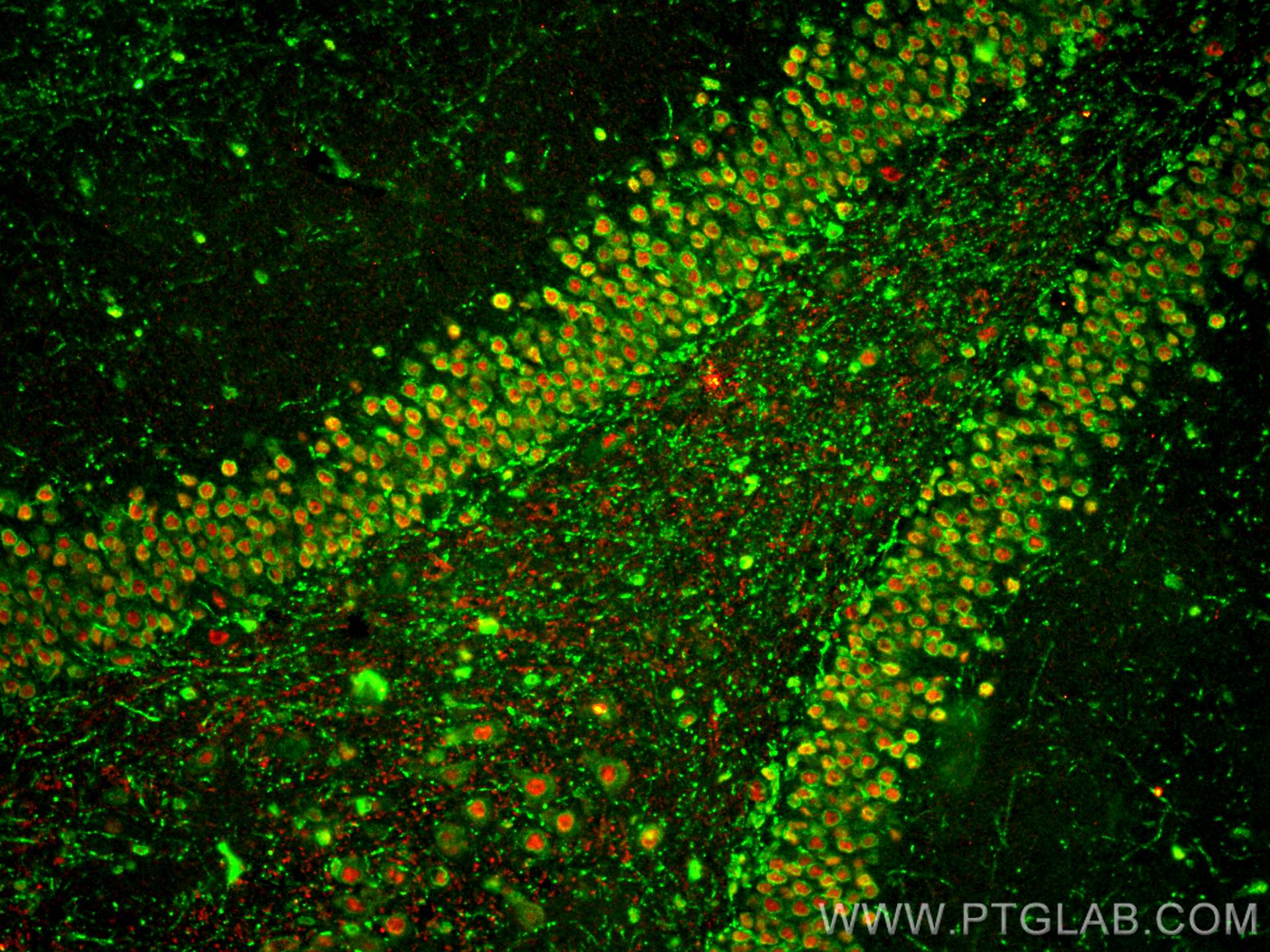
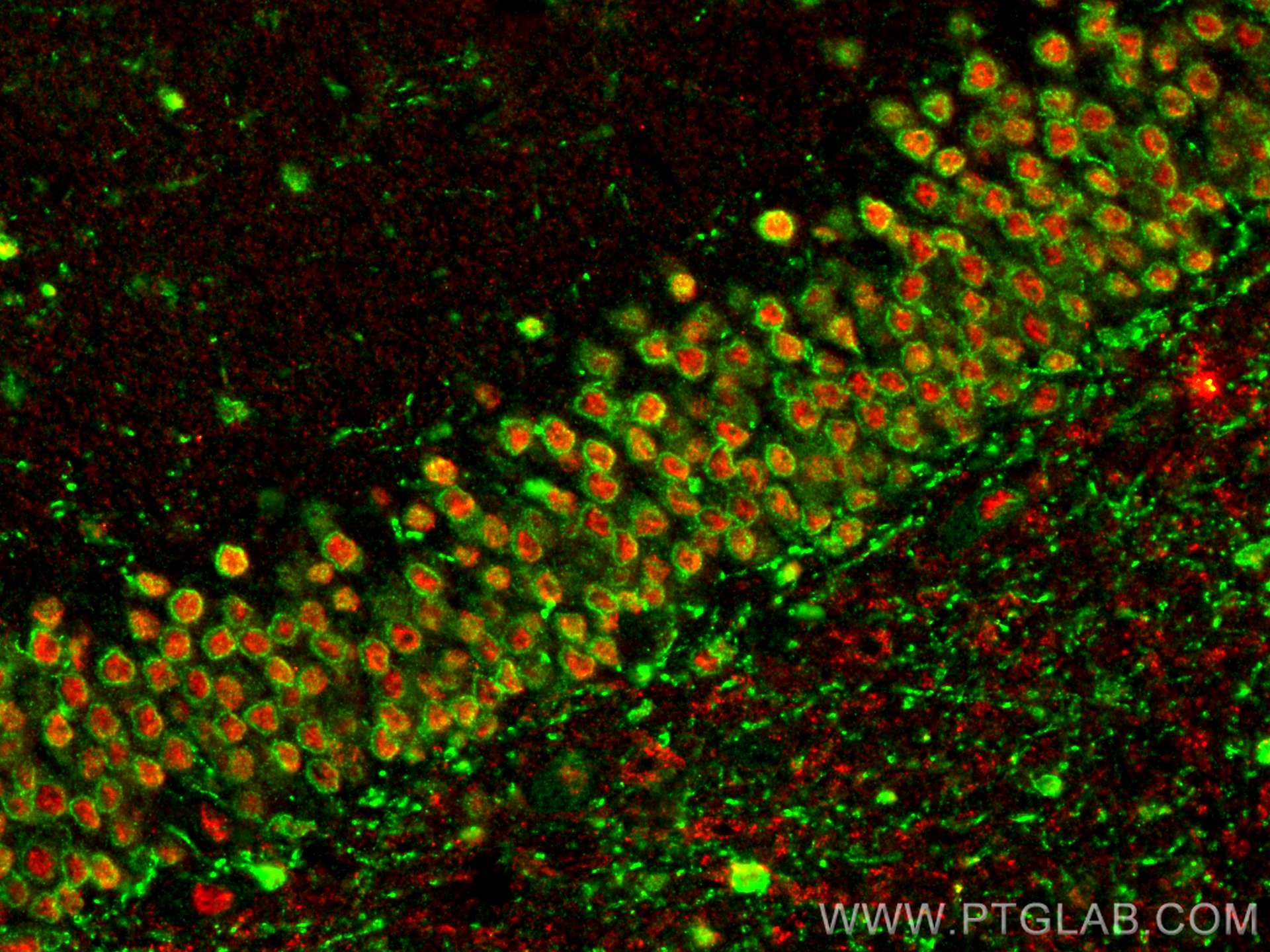

Tested Applications
| Positive IF-P detected in | rat brain tissue |
Recommended dilution
| Application | Dilution |
|---|---|
| Immunofluorescence (IF)-P | IF-P : 1:50-1:500 |
| It is recommended that this reagent should be titrated in each testing system to obtain optimal results. | |
| Sample-dependent, Check data in validation data gallery. | |
Product Information
30490-1-AP targets NRXN2 in IF-P, ELISA applications and shows reactivity with human, rat samples.
| Tested Reactivity | human, rat |
| Cited Reactivity | mouse |
| Host / Isotype | Rabbit / IgG |
| Class | Polyclonal |
| Type | Antibody |
| Immunogen |
CatNo: Ag32646 Product name: Recombinant human NRXN2 protein Source: e coli.-derived, PGEX-4T Tag: GST Domain: 1480-1636 aa of NM_015080 Sequence: ERDDSDCEEPIEASGFASGEVFDSSLPPTDDEDFYTTFPLVTDRTTLLSPRKPAPRPNLRTDGATGAPGVLFAPSAPAPNLPAGKMNHRDPLQPLLENPPLGPGAPTSFEPRRPPPLRPGVTSAPGFPHLPTANPTGPGERGPPGAVEVIRESSSTT Predict reactive species |
| Full Name | neurexin 2 |
| Calculated Molecular Weight | 185KD |
| GenBank Accession Number | NM_015080 |
| Gene Symbol | NRXN2 |
| Gene ID (NCBI) | 9379 |
| RRID | AB_3669727 |
| Conjugate | Unconjugated |
| Form | Liquid |
| Purification Method | Antigen affinity purification |
| UNIPROT ID | P58401 |
| Storage Buffer | PBS with 0.02% sodium azide and 50% glycerol, pH 7.3. |
| Storage Conditions | Store at -20°C. Stable for one year after shipment. Aliquoting is unnecessary for -20oC storage. 20ul sizes contain 0.1% BSA. |
Background Information
The three members of the human neurexin gene family, neurexin 1 (NRXN1), neurexin 2 (NRXN2), and neurexin 3 (NRXN3), encode neuronal adhesion proteins that have important roles in synapse development and function (PMID: 22209245).
Protocols
| Product Specific Protocols | |
|---|---|
| IF protocol for NRXN2 antibody 30490-1-AP | Download protocol |
| Standard Protocols | |
|---|---|
| Click here to view our Standard Protocols |
Publications
What published studies show
The NRXN2 Polyclonal antibody (Cat# 30490-1-AP) has 1 total citation. It was cited in a study published in medRxiv (2025) titled "Exploratory autoantibody profiling in autism spectrum disorder," using immunofluorescence (IF) in mouse samples. The research field is neurodevelopmental disorders, specifically autism spectrum disorder autoantibody profiling.
| Species | Application | Title |
|---|---|---|



