

Tested Applications
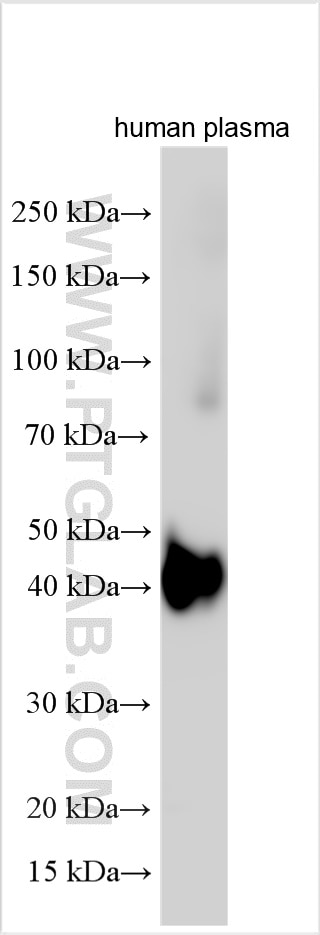
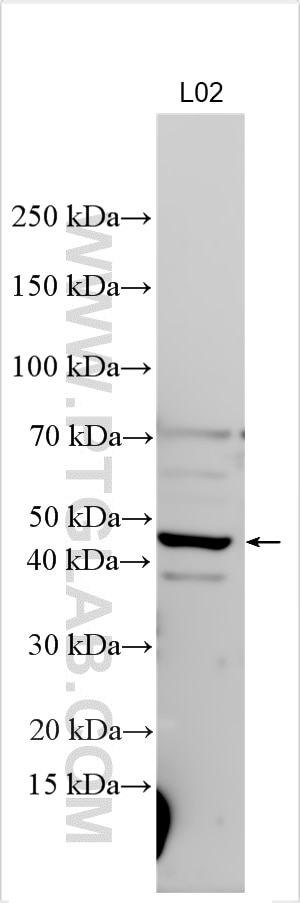
| Positive WB detected in | human plasma, L02 cells |
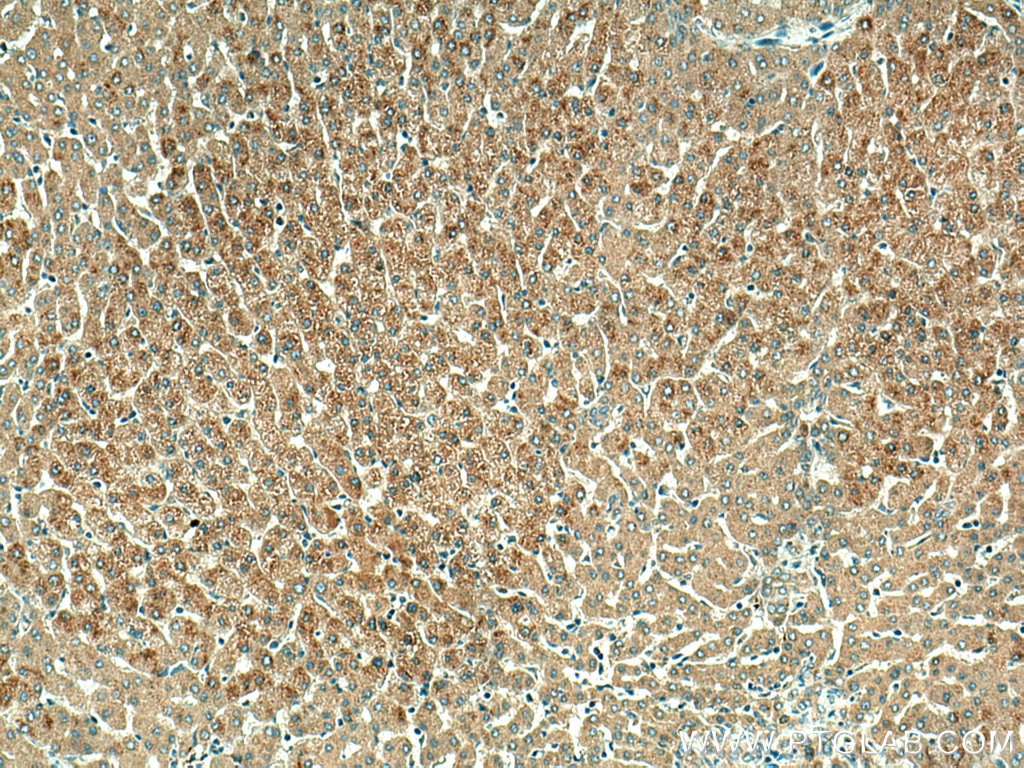
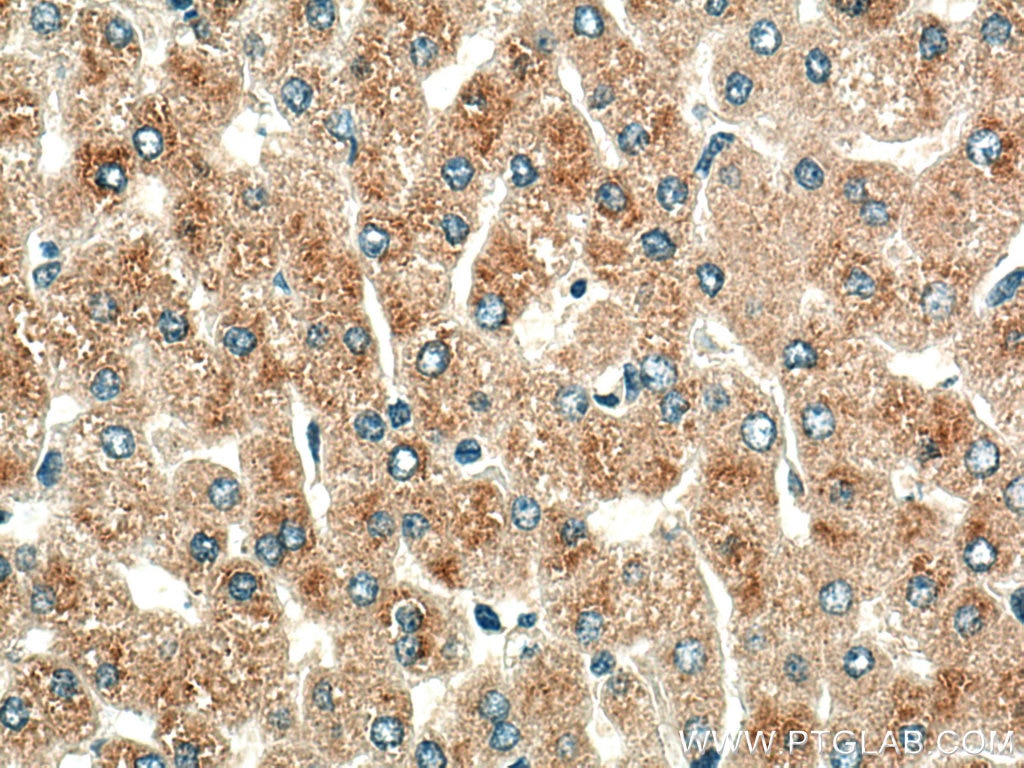
| Positive IHC detected in | human liver tissue Note: suggested antigen retrieval with TE buffer pH 9.0; (*) Alternatively, antigen retrieval may be performed with citrate buffer pH 6.0 |
Recommended dilution
| Application | Dilution |
|---|---|
| Western Blot (WB) | WB : 1:500-1:2000 |
| Immunohistochemistry (IHC) | IHC : 1:50-1:500 |
| It is recommended that this reagent should be titrated in each testing system to obtain optimal results. | |
| Sample-dependent, Check data in validation data gallery. | |
Product Information
11199-1-AP targets ORM1/2 in WB, IHC, ChIP, ELISA applications and shows reactivity with human samples.
| Tested Reactivity | human |
| Cited Reactivity | human |
| Host / Isotype | Rabbit / IgG |
| Class | Polyclonal |
| Type | Antibody |
| Immunogen |
CatNo: Ag1667 Product name: Recombinant human ORM2 protein Source: e coli.-derived, PGEX-4T Tag: GST Domain: 1-201 aa of BC015964 Sequence: MALSWVLTVLSLLPLLEAQIPLCANLVPVPITNATLDRITGKWFYIASAFRNEEYNKSVQEIQATFFYFTPNKTEDTIFLREYQTRQNQCFYNSSYLNVQRENGTVSRYEGGREHVAHLLFLRDTKTLMFGSYLDDEKNWGLSFYADKPETTKEQLGEFYEALDCLCIPRSDVMYTDWKKDKCEPLEKQHEKERKQEEGES Predict reactive species |
| Full Name | orosomucoid 2 |
| Calculated Molecular Weight | 24 kDa |
| Observed Molecular Weight | 24-28 kDa, 41-47 kDa |
| GenBank Accession Number | BC015964 |
| Gene Symbol | ORM2 |
| Gene ID (NCBI) | 5005 |
| RRID | AB_2158180 |
| Conjugate | Unconjugated |
| Form | Liquid |
| Purification Method | Antigen affinity purification |
| UNIPROT ID | P19652 |
| Storage Buffer | PBS with 0.02% sodium azide and 50% glycerol, pH 7.3. |
| Storage Conditions | Store at -20°C. Stable for one year after shipment. Aliquoting is unnecessary for -20oC storage. 20ul sizes contain 0.1% BSA. |
Background Information
ORM2, also named as AGP2 and OMD 2, belongs to the calycin superfamily and Lipocalin family. It functions as transport protein in the blood stream. ORM2 binds various hydrophobic ligands in the interior of its beta-barrel domain. It also binds synthetic drugs and influences their distribution and availability. ORM2 appears to function in modulating the activity of the immune system during the acute-phase reaction. ORM2 is one of the conserved endoplasmic reticulum membrane proteins which regulating lipid homeostasis and protein quality control. This antibody can recognize both ORM1 and ORM2.
Protocols
| Product Specific Protocols | |
|---|---|
| IHC protocol for ORM1/2 antibody 11199-1-AP | Download protocol |
| WB protocol for ORM1/2 antibody 11199-1-AP | Download protocol |
| Standard Protocols | |
|---|---|
| Click here to view our Standard Protocols |
Publications
What published studies show
The ORM1/2 Polyclonal antibody (Cat# 11199-1-AP) has 5 total citations. These appear in Am J Pathol, Sci Rep, BMC Cancer, Carcinogenesis, and Mol Cell Biol. Research fields span lipid metabolism and steatotic liver disease, heat-stress neurology via the gut-liver-brain axis, breast cancer proteomics, pediatric liver cancer (FXR-Gankyrin axis), and RNA-binding protein regulation of liver cancer. Cited applications include ChIP, IHC, and WB.
| Species | Application | Title |
|---|---|---|
Am J Pathol TRIM24 Up-Regulates ORM2 to Alleviate Abnormal Lipid Metabolism, Inflammation, and Oxidative Stress in Mice with Obstructive Sleep Apnea Syndrome and Metabolic Dysfunction-Associated Steatotic Liver Disease | ||
Sci Rep Periodic heat waves-induced neuronal etiology in the elderly is mediated by gut-liver-brain axis: a transcriptome profiling approach | ||
BMC Cancer Differential profiling of breast cancer plasma proteome by isotope-coded affinity tagging method reveals biotinidase as a breast cancer biomarker. | ||
Mol Cell Biol RNA Binding Protein CUGBP1 Inhibits Liver Cancer in a Phosphorylation-Dependent Manner. |
Reviews
What customers say
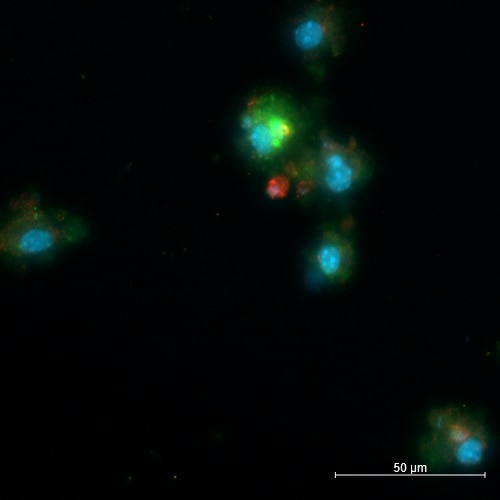
The single review for this antibody (11199-1-AP) was rated 4 out of 5. The user tested it at a 1:400 dilution for both immunohistochemistry and immunofluorescence. While the rating is positive, the reviewer expressed some concern about the antibody's capacity, noting that based on the results obtained, they found the antibody's performance to be somewhat questionable. Overall, the feedback is mixed—acknowledging usable results while raising doubts about the reagent's capacity.
The reviews below have been submitted by verified Proteintech customers who received an incentive for providing their feedback.
Hanyang (Verified Customer) (03-03-2022) | Considering results we got, the capacity of antibody is regarded as suspicious.
 |





