

Tested Applications
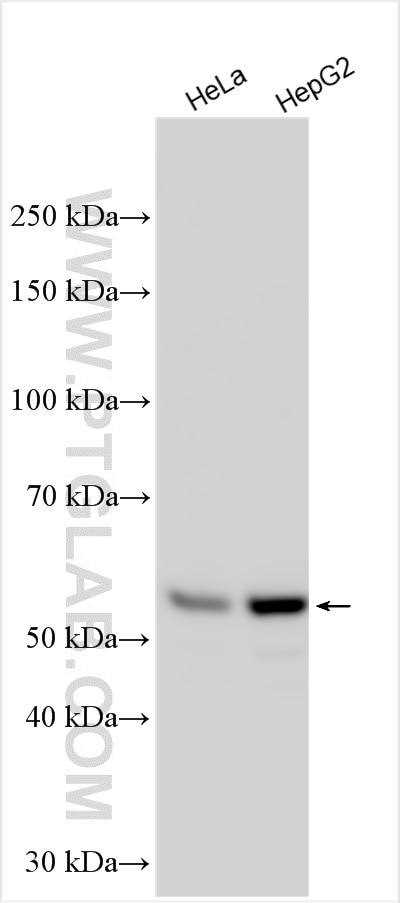
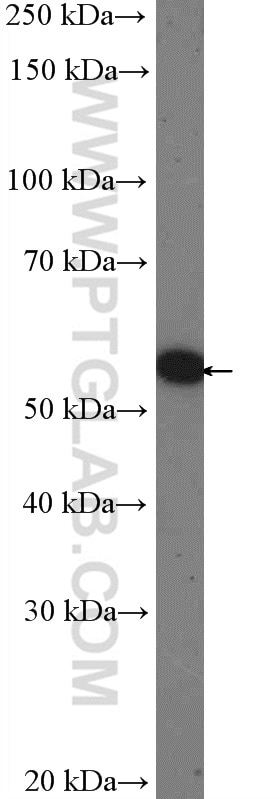
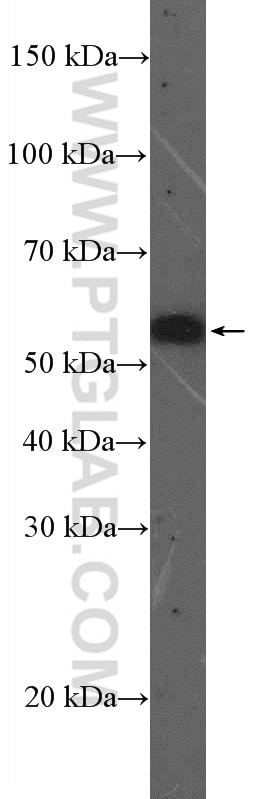
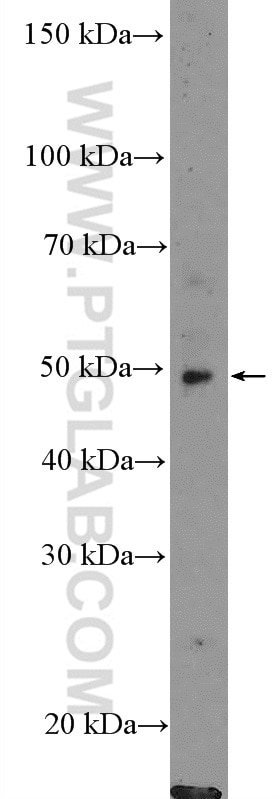
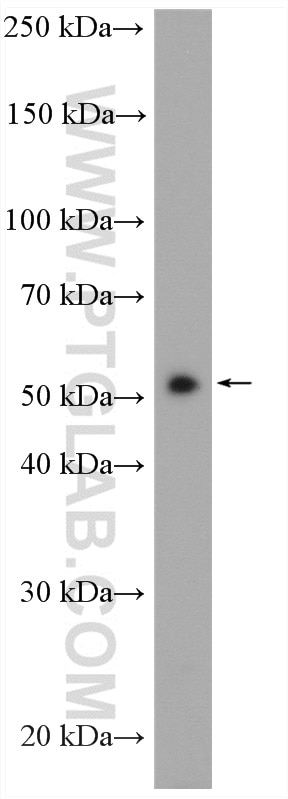
| Positive WB detected in | HeLa cells, A549 cells, HuH-7 cells, mouse brain tissue, HepG2 cells |
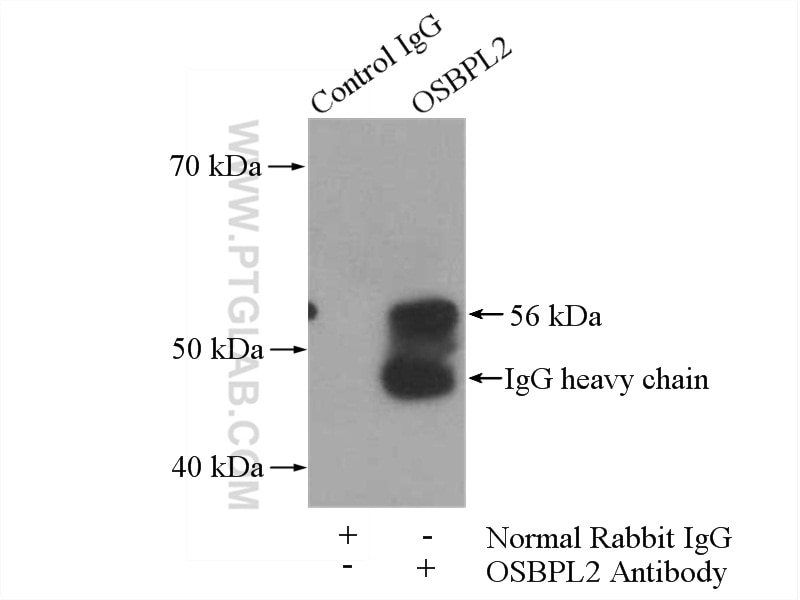
| Positive IP detected in | HeLa cells |
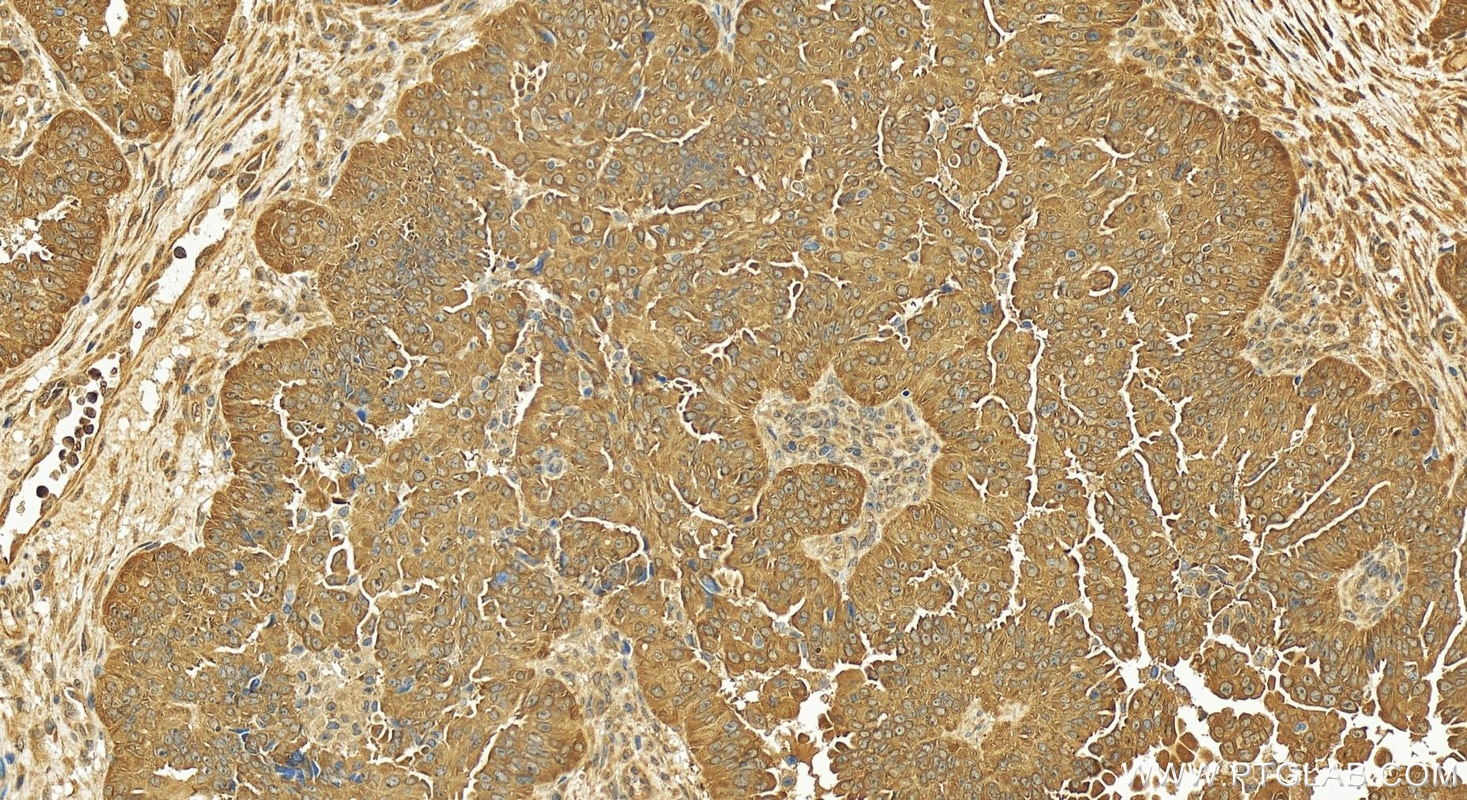
| Positive IHC detected in | human ovary cancer tissue Note: suggested antigen retrieval with TE buffer pH 9.0; (*) Alternatively, antigen retrieval may be performed with citrate buffer pH 6.0 |
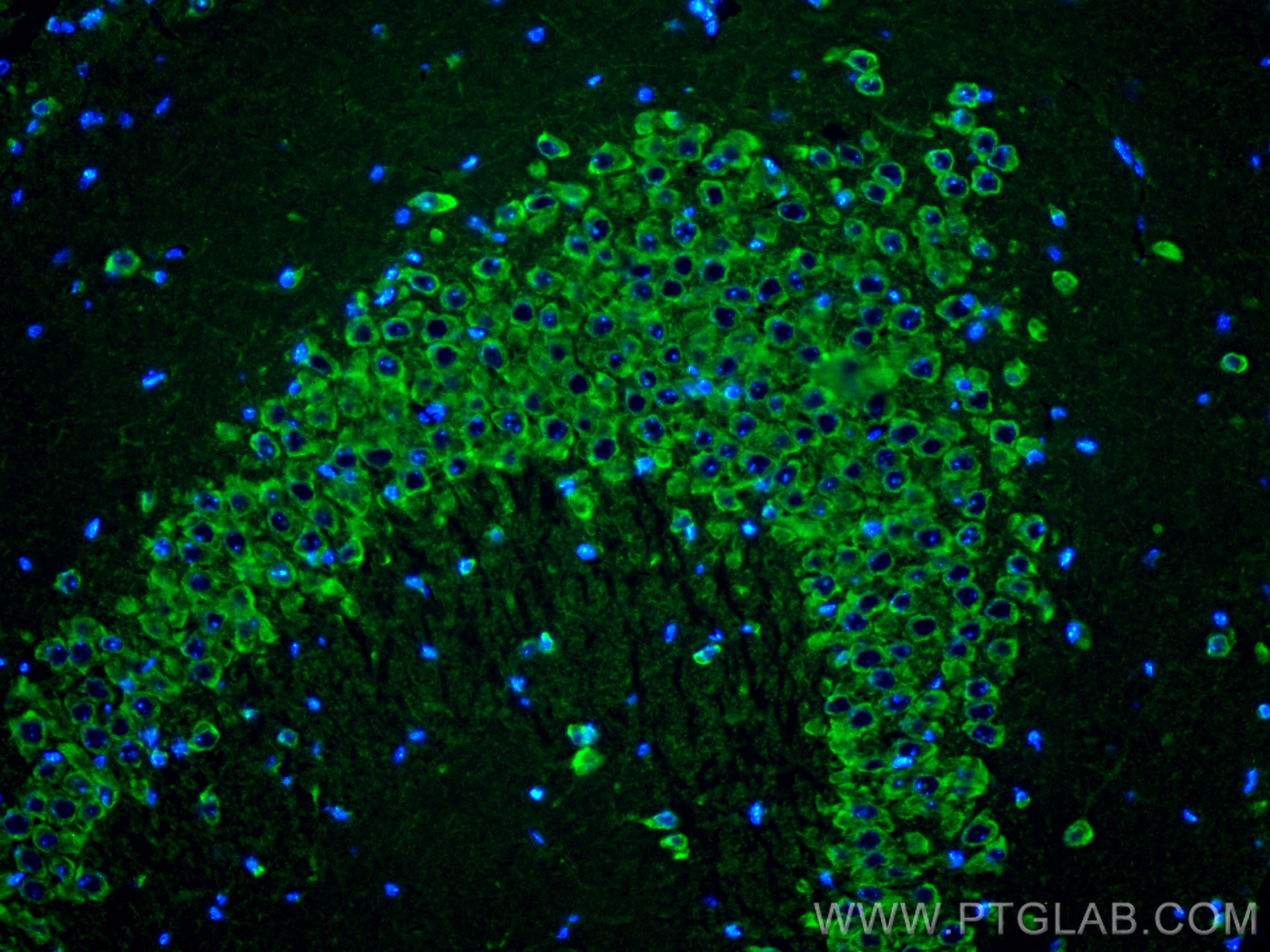
| Positive IF-P detected in | mouse brain tissue |
Recommended dilution
| Application | Dilution |
|---|---|
| Western Blot (WB) | WB : 1:1000-1:8000 |
| Immunoprecipitation (IP) | IP : 0.5-4.0 ug for 1.0-3.0 mg of total protein lysate |
| Immunohistochemistry (IHC) | IHC : 1:50-1:500 |
| Immunofluorescence (IF)-P | IF-P : 1:200-1:800 |
| It is recommended that this reagent should be titrated in each testing system to obtain optimal results. | |
| Sample-dependent, Check data in validation data gallery. | |
Product Information
14751-1-AP targets OSBPL2 in WB, IHC, IF-P, IP, ChIP, ELISA applications and shows reactivity with human, mouse samples.
| Tested Reactivity | human, mouse |
| Cited Reactivity | human, mouse |
| Host / Isotype | Rabbit / IgG |
| Class | Polyclonal |
| Type | Antibody |
| Immunogen |
CatNo: Ag6496 Product name: Recombinant human OSBPL2 protein Source: e coli.-derived, PGEX-4T Tag: GST Domain: 128-480 aa of BC000296 Sequence: ERMQSVAAFAVSAVASQWERTGKPFNPLLGETYELIREDLGFRFISEQVSHHPPISAFHSEGLNHDFLFHGSIYPKLKFWGKSVEAEPRGTITLELLKHNEAYTWTNPTCCVHNVIIGKLWIEQYGTVEILNHRTGHKCVLHFKPCGLFGKELHKVEGHIQDKNKKKLFMIYGKWTECLWGIDPVSYESFKKQERRGDHLRKAKLDEDSGKADSDVADDVPVAQETVQVIPGSKLLWRINTRPPNSAQMYNFTSFTVSLNELETGMEKTLPPTDCRLRPDIRGMENGNMDLASQEKERLEEKQREARRERAKEEAEWQTRWFYPGNNPYTGTPDWLYAGDYFERNFSDCPDIY Predict reactive species |
| Full Name | oxysterol binding protein-like 2 |
| Calculated Molecular Weight | 55 kDa |
| Observed Molecular Weight | 51 kDa, 56 kDa |
| GenBank Accession Number | BC000296 |
| Gene Symbol | OSBPL2 |
| Gene ID (NCBI) | 9885 |
| RRID | AB_2156092 |
| Conjugate | Unconjugated |
| Form | Liquid |
| Purification Method | Antigen affinity purification |
| UNIPROT ID | Q9H1P3 |
| Storage Buffer | PBS with 0.02% sodium azide and 50% glycerol, pH 7.3. |
| Storage Conditions | Store at -20°C. Stable for one year after shipment. Aliquoting is unnecessary for -20oC storage. 20ul sizes contain 0.1% BSA. |
Protocols
| Product Specific Protocols | |
|---|---|
| IF protocol for OSBPL2 antibody 14751-1-AP | Download protocol |
| IHC protocol for OSBPL2 antibody 14751-1-AP | Download protocol |
| IP protocol for OSBPL2 antibody 14751-1-AP | Download protocol |
| WB protocol for OSBPL2 antibody 14751-1-AP | Download protocol |
| Standard Protocols | |
|---|---|
| Click here to view our Standard Protocols |
Publications
What published studies show
The anti-OSBPL2 antibody (Cat# 14751-1-AP) has 16 total citations published in journals including Autophagy, Protein & Cell, Molecular Cell, Cell Reports, JCI Insight, Genetics in Medicine, Hepatology Communications, Cell Signaling, iScience, Journal of Biological Chemistry, Journal of Biomedical Research, Experimental Cell Research, Molecular and Cellular Endocrinology, Hearing Research, PLoS ONE, and PNAS. Research fields span autophagy, lipophagy, cholesterol homeostasis, hearing loss, liver disease (MASH/MASLD), ferroptosis, lipid droplet biology, and cytoskeletal regulation.
| Species | Application | Title |
|---|---|---|
Autophagy OSBPL2 mutations impair autophagy and lead to hearing loss, potentially remedied by rapamycin. | ||
Mol Cell ORP2 Delivers Cholesterol to the Plasma Membrane in Exchange for Phosphatidylinositol 4, 5-Bisphosphate (PI(4,5)P2).
| ||
Cell Rep Niemann-Pick Type C Disease Reveals a Link between Lysosomal Cholesterol and PtdIns(4,5)P2 That Regulates Neuronal Excitability. | ||
JCI Insight Mutations in OSBPL2 cause hearing loss associated with primary cilia defects via Sonic Hedgehog signaling. | ||
Genet Med Identification of OSBPL2 as a novel candidate gene for progressive nonsyndromic hearing loss by whole-exome sequencing. |
Reviews
What customers say
The single review for 14751-1-AP is from Boyan Zhang (November 2024), who rated the product 5 stars. The reviewer used it for Western Blot and reported that it recognized a band at the expected molecular weight, indicating reliable performance for their application.
The reviews below have been submitted by verified Proteintech customers who received an incentive for providing their feedback.
Boyan (Verified Customer) (11-25-2024) | recognized a band at the expected molecular weight
|









