

Tested Applications
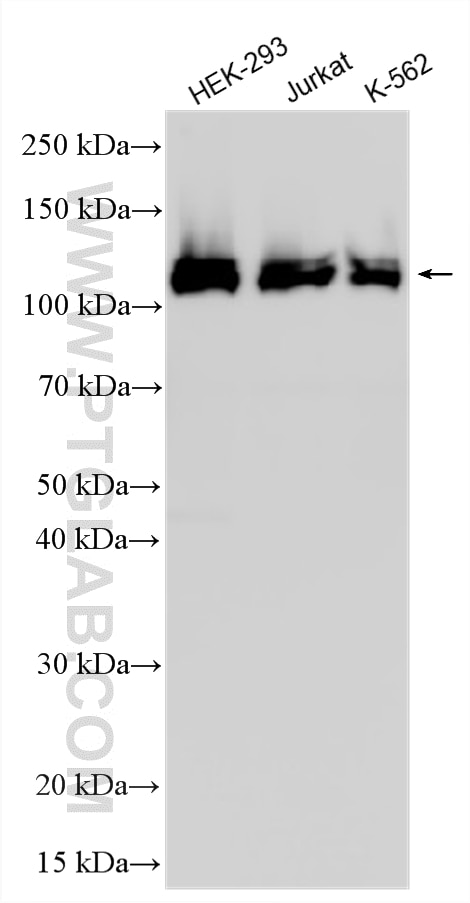
| Positive WB detected in | HEK-293 cells, Jurkat cells, K-562 cells |
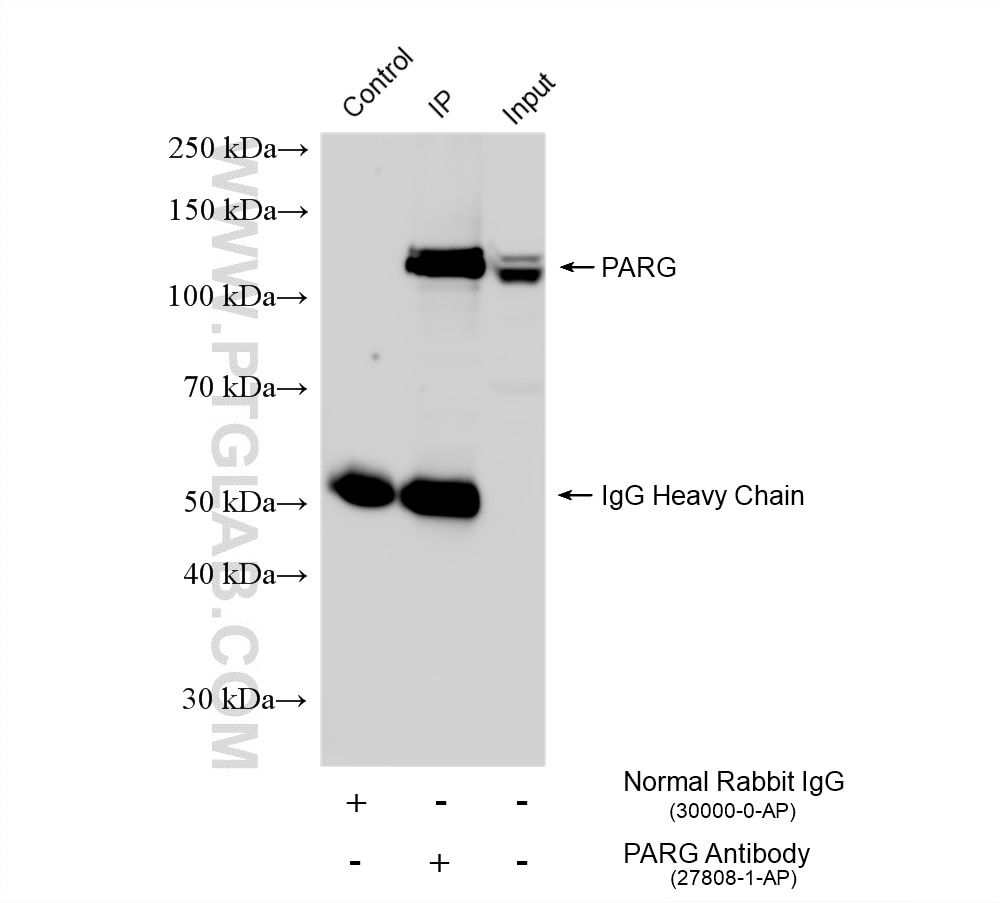
| Positive IP detected in | Jurkat cells |
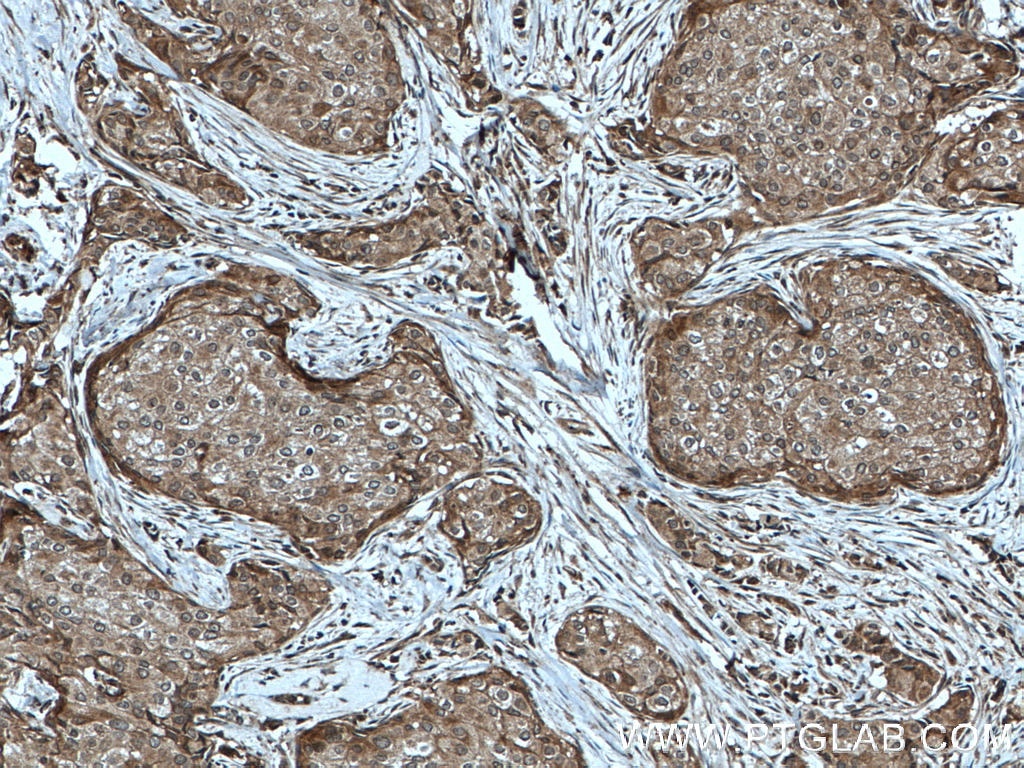
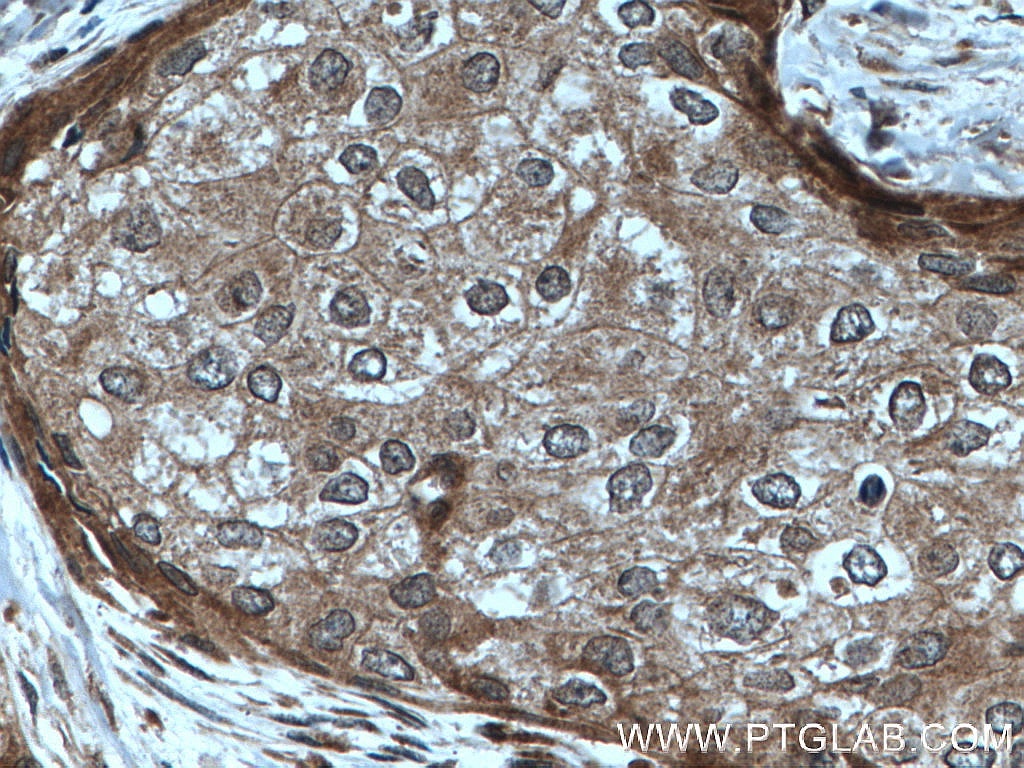
| Positive IHC detected in | human breast cancer tissue Note: suggested antigen retrieval with TE buffer pH 9.0; (*) Alternatively, antigen retrieval may be performed with citrate buffer pH 6.0 |
Recommended dilution
| Application | Dilution |
|---|---|
| Western Blot (WB) | WB : 1:2000-1:10000 |
| Immunoprecipitation (IP) | IP : 0.5-4.0 ug for 1.0-3.0 mg of total protein lysate |
| Immunohistochemistry (IHC) | IHC : 1:50-1:500 |
| It is recommended that this reagent should be titrated in each testing system to obtain optimal results. | |
| Sample-dependent, Check data in validation data gallery. | |
Product Information
27808-1-AP targets PARG in WB, IHC, IF, IP, ELISA applications and shows reactivity with human samples.
| Tested Reactivity | human |
| Cited Reactivity | human, zebrafish |
| Host / Isotype | Rabbit / IgG |
| Class | Polyclonal |
| Type | Antibody |
| Immunogen |
CatNo: Ag27137 Product name: Recombinant human PARG protein Source: e coli.-derived, PGEX-4T Tag: GST Domain: 183-441 aa of BC052966 Sequence: SNANIDRSPQNDDHSDTDSEENRDNQQFLTTVKLANAKQTTEDEQAREAKSHQKCSKSCDPGEDCASCQQDEIDVVPESPLSDVGSEDVGTGPKNDNKLTRQESCLGNSPPFEKESEPESPMDVDNSKNSCQDSEADEETSPGFDEQEDGSSSQTANKPSRFQARDADIEFRKRYSTKGGEVRLHFQFEGGESRTGMNDLNAKLPGNISSLNVECRNSKQHGKKDSKITDHFMRLPKAEDRRKEQWETKHQRTERKIPK Predict reactive species |
| Full Name | poly (ADP-ribose) glycohydrolase |
| Calculated Molecular Weight | 111 kDa |
| Observed Molecular Weight | 110-130 kDa |
| GenBank Accession Number | BC052966 |
| Gene Symbol | PARG |
| Gene ID (NCBI) | 8505 |
| RRID | AB_2880979 |
| Conjugate | Unconjugated |
| Form | Liquid |
| Purification Method | Antigen affinity purification |
| UNIPROT ID | Q86W56 |
| Storage Buffer | PBS with 0.02% sodium azide and 50% glycerol, pH 7.3. |
| Storage Conditions | Store at -20°C. Stable for one year after shipment. Aliquoting is unnecessary for -20oC storage. 20ul sizes contain 0.1% BSA. |
Background Information
Poly(ADP-ribose) glycohydrolase (PARG) is an enzyme that reverses the PARylation process by breaking down long chains of PAR polymers on proteins, thus having an opposite function to PARP. It hydrolyzes PAR into ADP-ribose units, terminating signals initiated by PARP enzymes. PARG's function is crucial for maintaining PAR balance within cells, which is essential for DNA repair, transcriptional regulation, and cell death. PARG possesses multiple isoforms with distinct subcellular localizations, and its activity is essential for cellular survival. (PMID: 38580335, PMID: 39546575)
Protocols
| Product Specific Protocols | |
|---|---|
| IHC protocol for PARG antibody 27808-1-AP | Download protocol |
| IP protocol for PARG antibody 27808-1-AP | Download protocol |
| WB protocol for PARG antibody 27808-1-AP | Download protocol |
| Standard Protocols | |
|---|---|
| Click here to view our Standard Protocols |
Publications
What published studies show
The PARG antibody (Cat# 27808-1-AP) has 12 total citations across journals including Cancer Research, Molecular Cell, Nature Chemical Biology, Theranostics, Journal of Clinical Investigation, Advanced Science, Oncogene, International Journal of Molecular Sciences, Chemical Biology & Interactions, Viruses, and Onco Targets and Therapy. Research fields span DNA damage repair, PARylation metabolism, cancer biology (hepatocellular, gastric, and breast cancer), intervertebral disc degeneration, viral infection, sperm health, and acute kidney injury.
| Species | Application | Title |
|---|---|---|
Cancer Res PARG Governs a PARylation-Ubiquitination Toggle that Stabilizes RAD51AP1 to Drive Homologous Recombination-Mediated Chemoresistance. | ||
Nat Chem Biol Stabilization of AFF1 by PARylation ensures transcriptional restart after DNA damage | ||
Theranostics Hepatoma cell-intrinsic TLR9 activation induces immune escape through PD-L1 upregulation in hepatocellular carcinoma. | ||
J Clin Invest Poly(ADP-ribose) glycohydrolase enforces p21 degradation via dePARylation to promote gastric cancer progression | ||
Adv Sci (Weinh) Elevated TRIM25 Impairs Poly (ADP-ribose) Metabolism via PARG Degradation and Mediates Compression-Induced Intervertebral Disc Degeneration.
|





