

Product Information
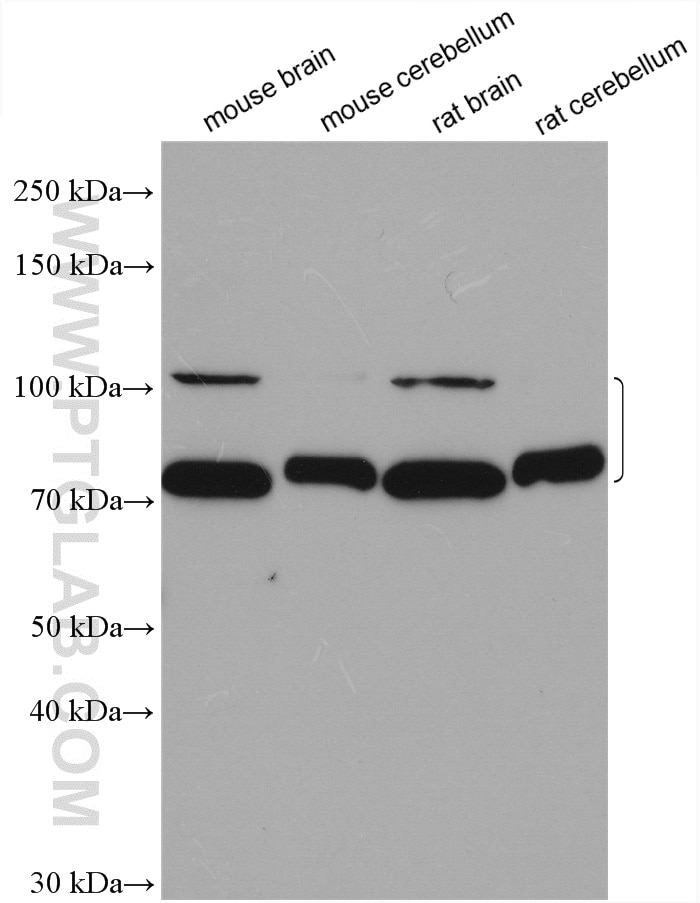
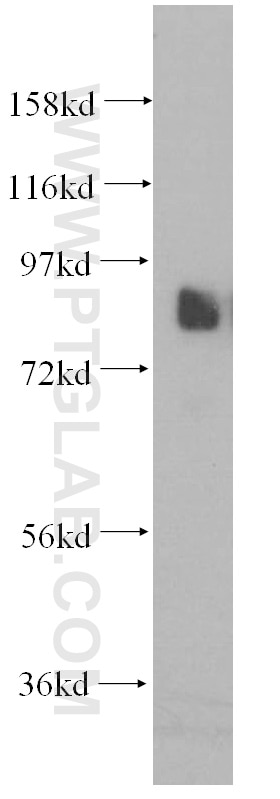
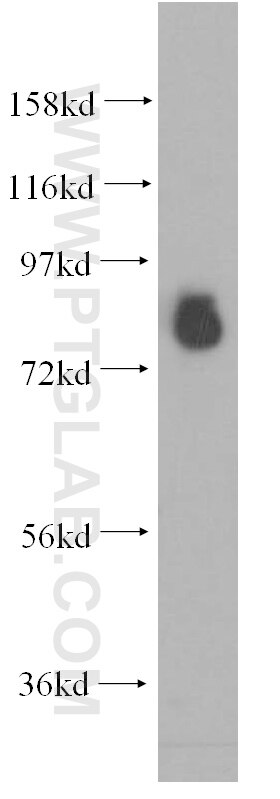
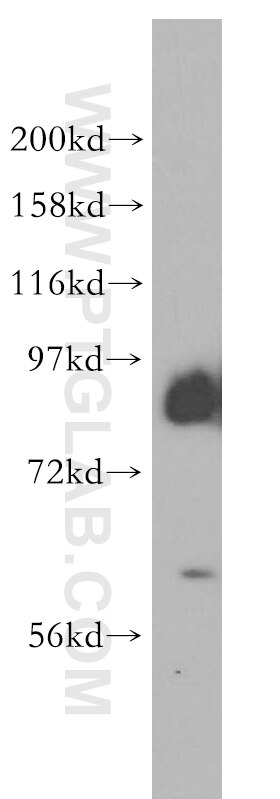
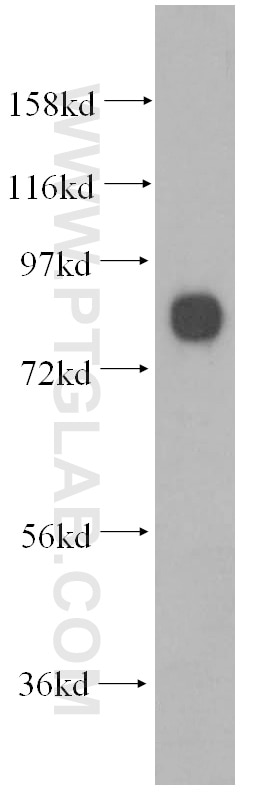
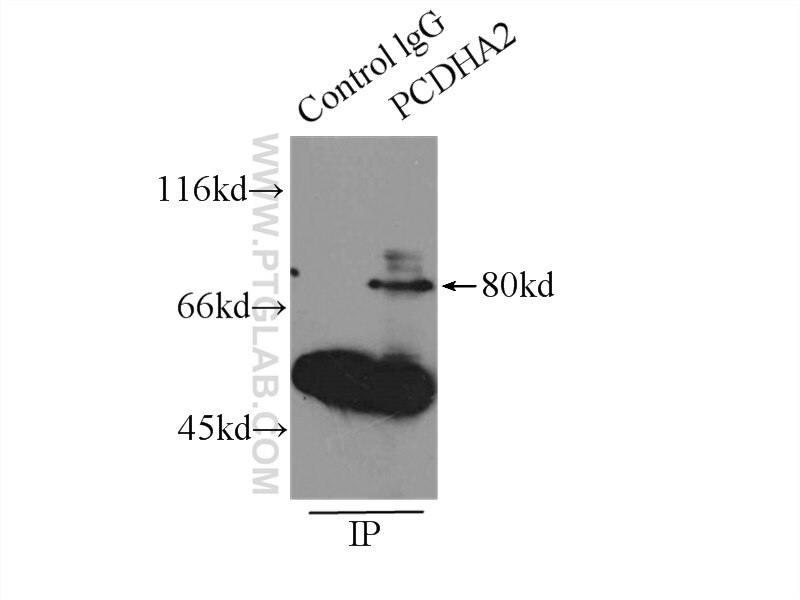
10127-2-PBS targets PCDHA2 in WB, IP, Indirect ELISA applications and shows reactivity with human, mouse, rat samples.
| Tested Reactivity | human, mouse, rat |
| Host / Isotype | Rabbit / IgG |
| Class | Polyclonal |
| Type | Antibody |
| Immunogen |
CatNo: Ag0173 Product name: Recombinant human PCDHA2 protein Source: e coli.-derived, PGEX-4T Tag: GST Domain: 98-259 aa of BC003126 Sequence: RSAECSIHVEVIVDRPLQVFHVEVEVKDINDNPPIFPMTVKTIRFPESRLLDSRFPLEGASDADIGVNALLSYKLSSSEFFFLDIQANDELSESLSLVLGKSLDREETAEVNLLLVATDGGKPELTGTVQILIKVLDVNDNEPTFAQSVYKVKLLENTANGT Predict reactive species |
| Full Name | protocadherin alpha 2 |
| Calculated Molecular Weight | 102 kDa |
| Observed Molecular Weight | 102 kDa, 80 kDa |
| GenBank Accession Number | BC003126 |
| Gene Symbol | PCDHA2 |
| Gene ID (NCBI) | 56146 |
| RRID | AB_2158964 |
| Conjugate | Unconjugated |
| Form | Liquid |
| Purification Method | Antigen affinity purification |
| UNIPROT ID | Q9Y5H9 |
| Storage Buffer | PBS only, pH 7.3. |
| Storage Conditions | Store at -80°C. |
Background Information
Protocadherins, which constitute the largest subgroup within the cadherin superfamily, are predominantly expressed in the nervous system and are probably involved in the regulation of neuronal recognition and connectivity (PMID: 17936607; 12231349; 17133224). The protocadherin subfamily can be further subdivided into three groups: the clustered protocadherins, comprising α-, β- and γ-protocadherins; δ-protocadherins; and others, many of which are solitary (PMID: 17133224). PCDHA2 (protocadherin alpha 2) is a single-pass type I membrane protein containing 6 cadherin domains. It may be involved in the establishment and maintenance of specific neuronal connections in the brain. Three isoforms produced by alternative splicing have been described (UniProt).







