
Product Information
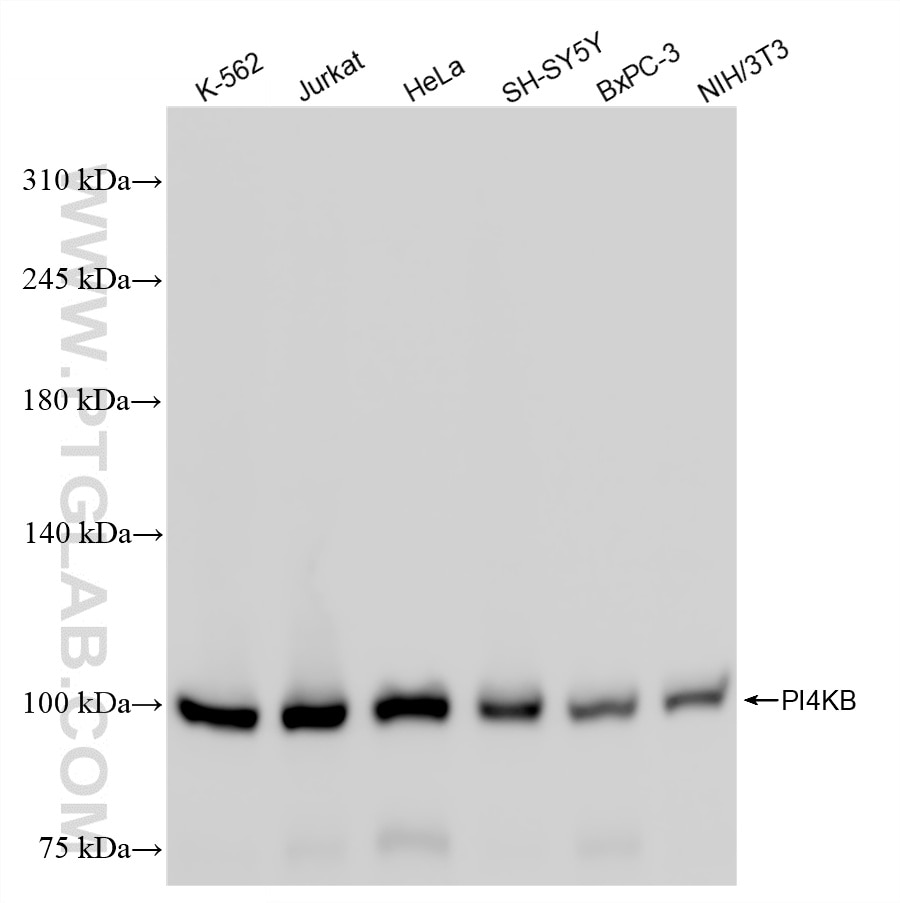
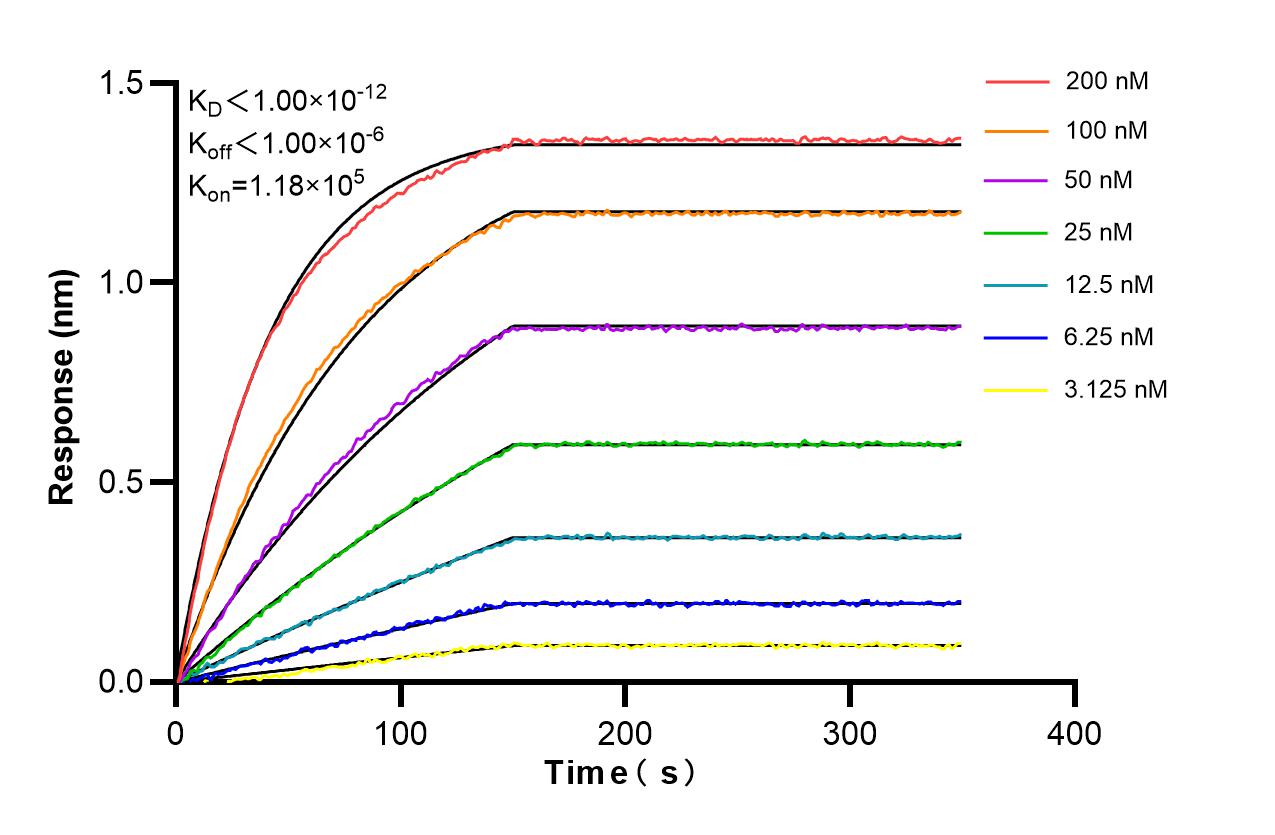
86285-3-PBS targets PI4KB in WB, Indirect ELISA applications and shows reactivity with human, mouse samples.
| Tested Reactivity | human, mouse |
| Host / Isotype | Rabbit / IgG |
| Class | Recombinant |
| Type | Antibody |
| Immunogen |
CatNo: Ag3989 Product name: Recombinant human PI4KB protein Source: e coli.-derived, PGEX-4T Tag: GST Domain: 449-801 aa of BC040300 Sequence: IGELQVELPEVHTNSCDNISQFSVDSITSQESKEPVFIAAGDIRRRLSEQLAHTPTAFKRDPEDPSAVALKEPWQEKVRRIREGSPYGHLPNWRLLSVIVKCGDDLRQELLAFQVLKQLQSIWEQERVPLWIKPYKILVISADSGMIEPVVNAVSIHQVKKQSQLSLLDYFLQEHGSYTTEAFLSAQRNFVQSCAGYCLVCYLLQVKDRHNGNILLDAEGHIIHIDFGFILSSSPRNLGFETSAFKLTTEFVDVMGGLDGDMFNYYKMLMLQGLIAARKHMDKVVQIVEIMQQGSQLPCFHGSSTIRNLKERFHMSMTEEQLQLLVEQMVDGSMRSITTKLYDGFQYLTNGIM Predict reactive species |
| Full Name | phosphatidylinositol 4-kinase, catalytic, beta |
| Calculated Molecular Weight | 801 aa, 90 kDa |
| Observed Molecular Weight | 100 kDa |
| GenBank Accession Number | BC040300 |
| Gene Symbol | PI4KB |
| Gene ID (NCBI) | 5298 |
| RRID | AB_3744782 |
| Conjugate | Unconjugated |
| Form | Liquid |
| Purification Method | Protein A purification |
| UNIPROT ID | Q9UBF8 |
| Storage Buffer | PBS only, pH 7.3. |
| Storage Conditions | Store at -80°C. |
Background Information
PI4KB(phosphatidylinositol 4-kinase beta) is also named as PIK4CB, NPIK, PI4K92 and belongs to the PI3/PI4-kinase family. It may regulate Golgi disintegration/reorganization during mitosis, possibly via its phosphorylation and involved in Golgi-to-plasma membrane trafficking. PI4KB is a type III enzyme that is sensitive to wortmannin(PMID:9020160). This protein has 3 isoforms produced by alternative splicing.



