
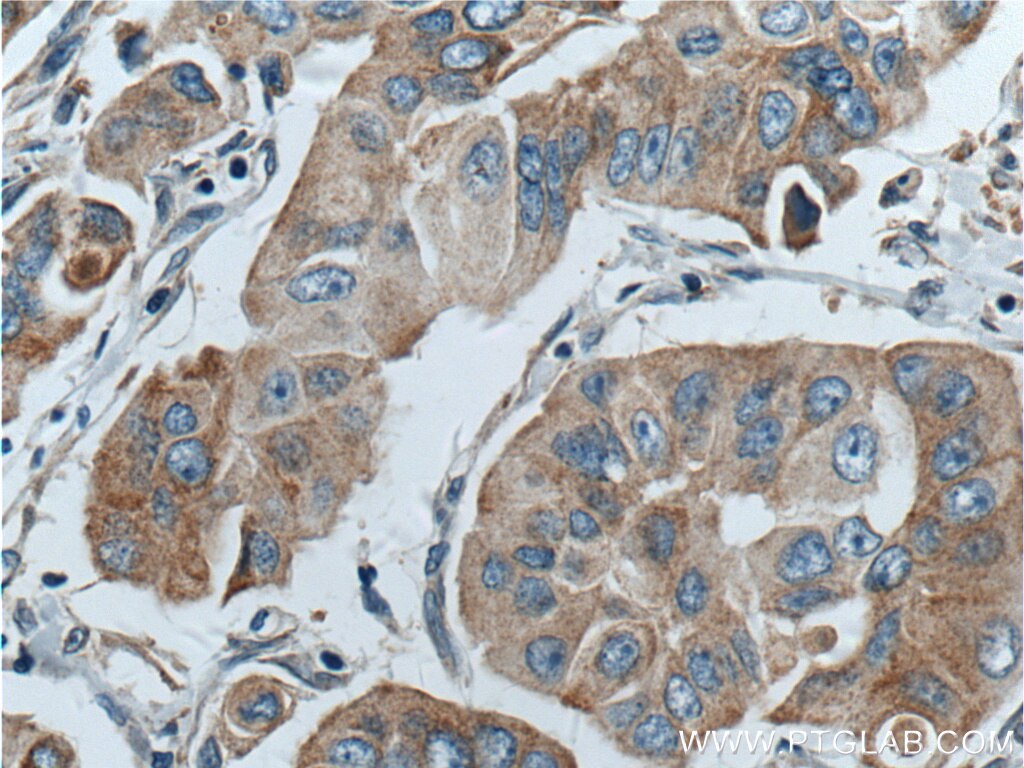

Tested Applications
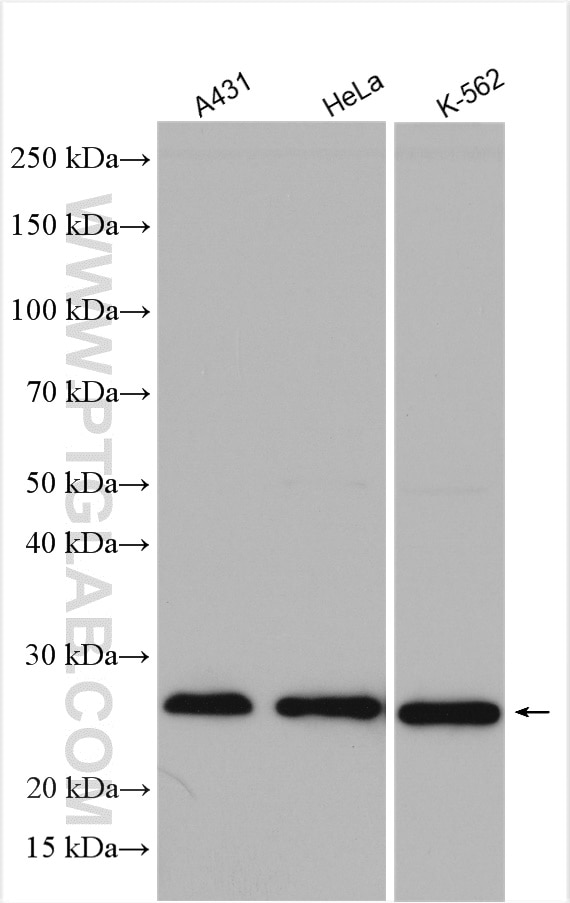
| Positive WB detected in | A431 cells, HeLa cells, K-562 cells |
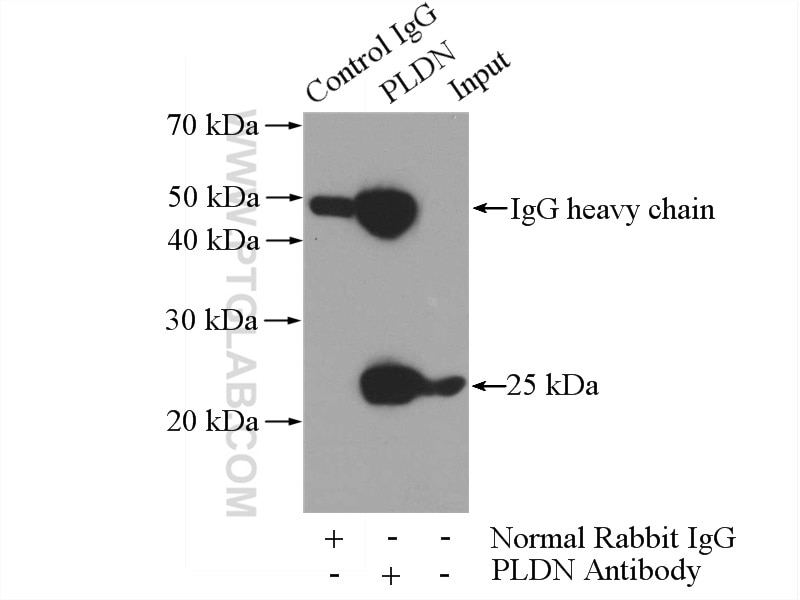
| Positive IP detected in | K-562 cells |
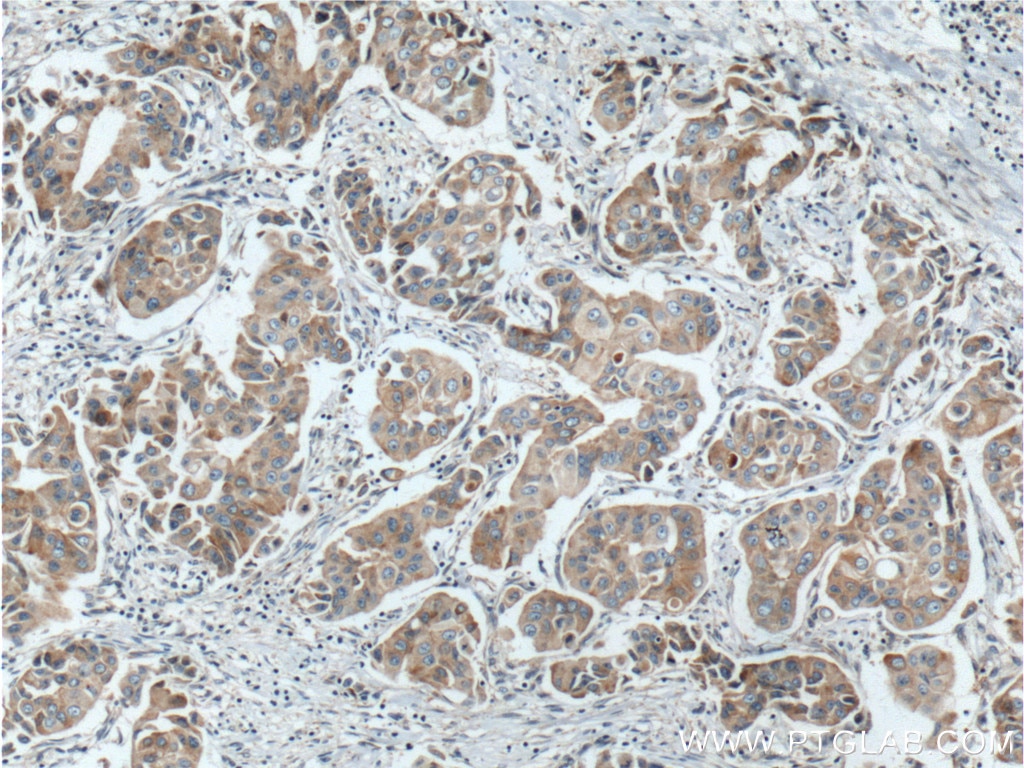
| Positive IHC detected in | human breast cancer tissue Note: suggested antigen retrieval with TE buffer pH 9.0; (*) Alternatively, antigen retrieval may be performed with citrate buffer pH 6.0 |
Recommended dilution
| Application | Dilution |
|---|---|
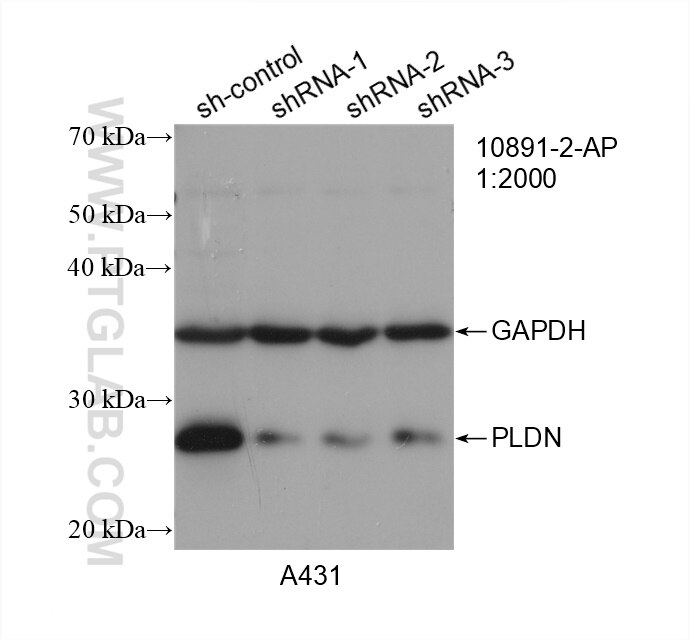
| Western Blot (WB) | WB : 1:1000-1:4000 |
| Immunoprecipitation (IP) | IP : 0.5-4.0 ug for 1.0-3.0 mg of total protein lysate |
| Immunohistochemistry (IHC) | IHC : 1:50-1:500 |
| It is recommended that this reagent should be titrated in each testing system to obtain optimal results. | |
| Sample-dependent, Check data in validation data gallery. | |
Product Information
10891-2-AP targets PLDN in WB, IHC, IF, IP, ELISA applications and shows reactivity with human, mouse, rat samples.
| Tested Reactivity | human, mouse, rat |
| Cited Reactivity | human, mouse, rat |
| Host / Isotype | Rabbit / IgG |
| Class | Polyclonal |
| Type | Antibody |
| Immunogen |
CatNo: Ag1337 Product name: Recombinant human PLDN protein Source: e coli.-derived, PGEX-4T Tag: GST Domain: 1-172 aa of BC004819 Sequence: MSVPGPSSPDGALTRPPYCLEAGEPTPGLSDTSPDEGLIEDLTIEDKAVEQLAEGLLSHYLPDLQRSKQALQELTQNQVVLLDTLEQEISKFKECHSMLDINALFAEAKHYHAKLVNIRKEMLMLHEKTSKLKKRALKLQQKRQKEELEREQQREKEFEREKQLTARPAKRM Predict reactive species |
| Full Name | pallidin homolog (mouse) |
| Calculated Molecular Weight | 23~24 kDa |
| Observed Molecular Weight | 25 kDa |
| GenBank Accession Number | BC004819 |
| Gene Symbol | PLDN |
| Gene ID (NCBI) | 26258 |
| RRID | AB_2164174 |
| Conjugate | Unconjugated |
| Form | Liquid |
| Purification Method | Antigen affinity purification |
| UNIPROT ID | Q9UL45 |
| Storage Buffer | PBS with 0.02% sodium azide and 50% glycerol, pH 7.3. |
| Storage Conditions | Store at -20°C. Stable for one year after shipment. Aliquoting is unnecessary for -20oC storage. 20ul sizes contain 0.1% BSA. |
Background Information
Pallidin, also named as PLDN and PA, is involved in the development of lysosome-related organelles, such as melanosomes and platelet-dense granules. It may play a role in intracellular vesicle trafficking, particularly in the vesicle-docking and fusion process. Pallidin interacts with syntaxin-12 which is a t-SNARE protein that mediates vesicle docking and fusion. Pallidin is a 25 kDa subunit of the octamer BLOC-1.
Protocols
| Product Specific Protocols | |
|---|---|
| IHC protocol for PLDN antibody 10891-2-AP | Download protocol |
| IP protocol for PLDN antibody 10891-2-AP | Download protocol |
| WB protocol for PLDN antibody 10891-2-AP | Download protocol |
| Standard Protocols | |
|---|---|
| Click here to view our Standard Protocols |
Publications
What published studies show
The PLDN Polyclonal antibody (Cat# 10891-2-AP) has 21 citations published in journals including Nature Communications, Developmental Cell, Current Biology, Journal of Cell Biology, Journal of Neuroscience, Molecular Biology of the Cell, eLife, and others. Research fields span BLOC-1 complex function, endosomal/lysosomal trafficking, synaptic vesicle biogenesis, Hermansky-Pudlak syndrome, schizophrenia-related dysbindin pathways, platelet dense granule formation, autophagy, and immune defense mechanisms.
| Species | Application | Title |
|---|---|---|
Nat Commun Loss of the batten disease protein CLN3 leads to mis-trafficking of M6PR and defective autophagic-lysosomal reformation | ||
Curr Biol BLOC-1 Brings Together the Actin and Microtubule Cytoskeletons to Generate Recycling Endosomes.
| ||
Am J Respir Cell Mol Biol Gene-edited MLE-15 Cells as a Model for the Hermansky Pudlak Syndromes.
|






