



Tested Applications
| Positive WB detected in | mouse colon tissue, COLO 320 cells, human colon tissue, rat colon tissue, rat spinal cord tissue |
| Positive IHC detected in | mouse brain tissue, human colon tissue, human brain tissue, rat brain tissue Note: suggested antigen retrieval with TE buffer pH 9.0; (*) Alternatively, antigen retrieval may be performed with citrate buffer pH 6.0 |
| Positive IF-P detected in | human colon tissue |
| Positive FC (Intra) detected in | PC-12 cells |
Recommended dilution
| Application | Dilution |
|---|---|
| Western Blot (WB) | WB : 1:20000-1:100000 |
| Immunohistochemistry (IHC) | IHC : 1:50-1:500 |
| Immunofluorescence (IF)-P | IF-P : 1:50-1:500 |
| Flow Cytometry (FC) (INTRA) | FC (INTRA) : 0.40 ug per 10^6 cells in a 100 µl suspension |
| It is recommended that this reagent should be titrated in each testing system to obtain optimal results. | |
| Sample-dependent, Check data in validation data gallery. | |
Product Information
17399-1-AP targets Peripherin in WB, IHC, IF-P, FC (Intra), ELISA applications and shows reactivity with human, mouse, rat samples.
| Tested Reactivity | human, mouse, rat |
| Cited Reactivity | rat |
| Host / Isotype | Rabbit / IgG |
| Class | Polyclonal |
| Type | Antibody |
| Immunogen |
CatNo: Ag11365 Product name: Recombinant human Peripherin protein Source: e coli.-derived, PGEX-4T Tag: GST Domain: 155-470 aa of BC032703 Sequence: LELLGRERDRVQVERDGLAEDLAALKQRLEEETRKREDAEHNLVLFRKDVDDATLSRLELERKIESLMDEIEFLKKLHEEELRDLQVSVESQQVQQVEVEATVKPELTAALRDIRAQYESIAAKNLQEAEEWYKSKYADLSDAANRNHEALRQAKQEMNESRRQIQSLTCEVDGLRGTNEALLRQLRELEEQFALEAGGYQAGAARLEEELRQLKEEMARHLREYQELLNVKMALDIEIATYRKLLEGEESRISVPVHSFASLNIKTTVPEVEPPQDSHSRKTVLIKTIETRNGEVVTESQKEQRSELDKSSAHSY Predict reactive species |
| Full Name | peripherin |
| Calculated Molecular Weight | 470 aa, 54 kDa |
| Observed Molecular Weight | 54-60 kDa |
| GenBank Accession Number | BC032703 |
| Gene Symbol | Peripherin |
| Gene ID (NCBI) | 5630 |
| RRID | AB_2171195 |
| Conjugate | Unconjugated |
| Form | Liquid |
| Purification Method | Antigen affinity purification |
| UNIPROT ID | P41219 |
| Storage Buffer | PBS with 0.02% sodium azide and 50% glycerol, pH 7.3. |
| Storage Conditions | Store at -20°C. Stable for one year after shipment. Aliquoting is unnecessary for -20oC storage. 20ul sizes contain 0.1% BSA. |
Background Information
Peripherin is a neuron-specific intermediate filament protein that is particularly expressed in peripheral nervous system. It is used to study peripheral nerve development and regeneration, as it is highly expressed during elongation of axon. Peripherin is a routine marker for unmyelinated neurons in trigeminal ganglion (TG) and the dorsal root ganglion (DRG). Peripherin is also expressed in peri-insular areas of islets and it has been identified as a key autoantigen for type 1A diabetes.
Protocols
| Product Specific Protocols | |
|---|---|
| FC protocol for Peripherin antibody 17399-1-AP | Download protocol |
| IF protocol for Peripherin antibody 17399-1-AP | Download protocol |
| IHC protocol for Peripherin antibody 17399-1-AP | Download protocol |
| WB protocol for Peripherin antibody 17399-1-AP | Download protocol |
| Standard Protocols | |
|---|---|
| Click here to view our Standard Protocols |
Publications
What published studies show
The Peripherin Polyclonal antibody (Cat# 17399-1-AP) has 4 citations, all in immunofluorescence (IF) applications. Citations appear in Research, International Journal of Surgery, Scientific Reports, and Biotechniques. Research fields span neuropathic pain (neuroinflammation), cancer pain (microglial activation), pulsed radiofrequency anti-inflammatory mechanisms, and immunolabeling methodology in thick tissue sections. Most studies used rat samples.
| Species | Application | Title |
|---|---|---|
Research (Wash D C) Multi-Omics Analysis Reveals Nono-Kcnq2 Regulation of Neuronal Excitability in Chronic Constriction Injury-Induced Neuropathic Pain. | ||
Int J Surg Olfactory ensheathing cell transplantation alleviates cancer pain by inhibiting P2X7 receptor expression-mediated activation of microglia. | ||
Sci Rep Elucidation of the treatment mechanism of pulsed radiofrequency based on its antiinflammatory effects | ||
Biotechniques Antibody incubation at 37°C improves fluorescent immunolabeling in free-floating thick tissue sections. |
Reviews
What customers say
The single review for this product is a 5-star rating. The user applied it for immunofluorescence on FFPE human skin tissue at a 1:300 dilution. They noted that they pretreated the FFPE human tissue with Proteinase K at 37°C for 10 minutes before staining. Overall, the feedback is positive, with the reviewer sharing a useful protocol detail regarding antigen retrieval for optimal results.
The reviews below have been submitted by verified Proteintech customers who received an incentive for providing their feedback.
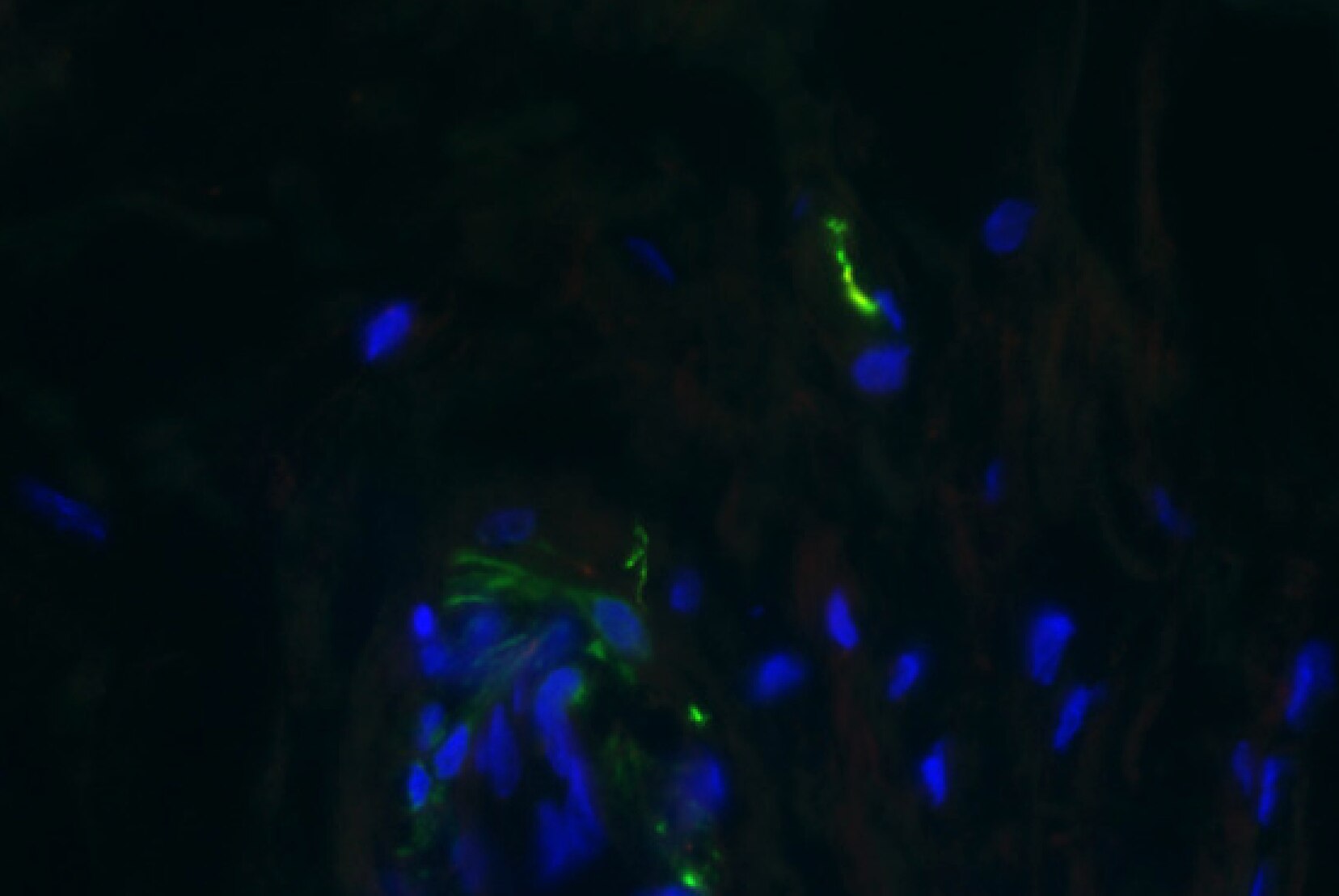
Merissa (Verified Customer) (09-11-2026) | Pretreated FFPE human tissue with Proteinase K at 37C for 10mins.
 |


