

Tested Applications
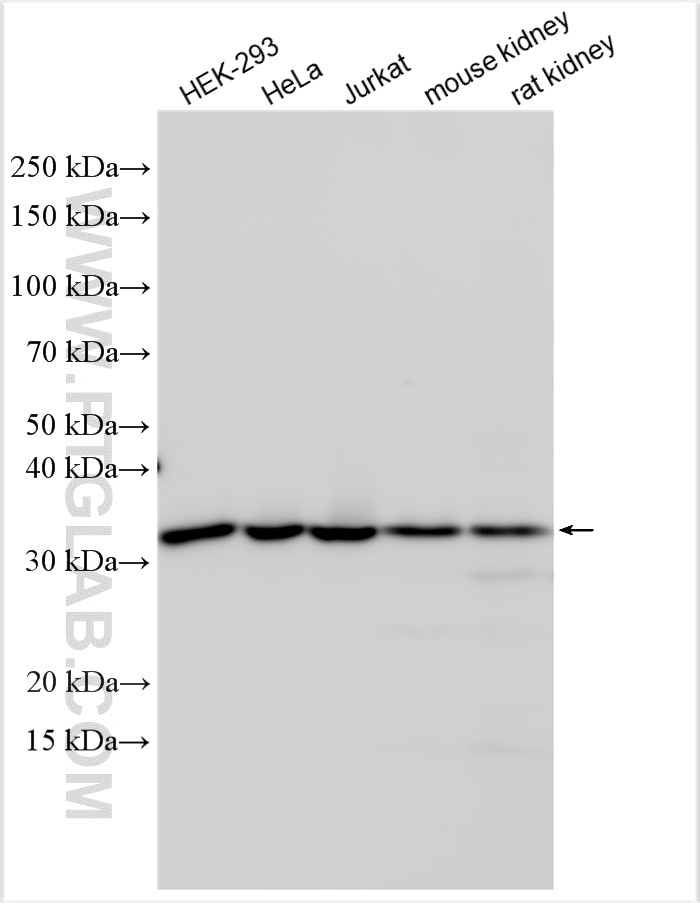
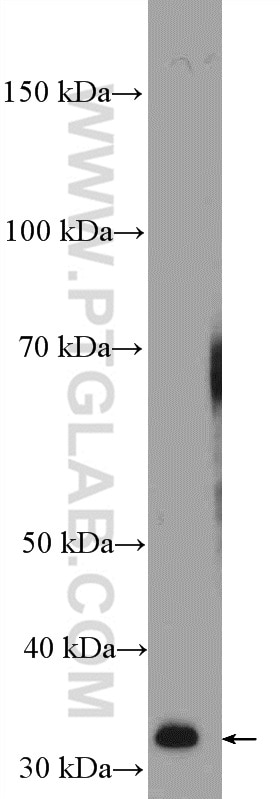
| Positive WB detected in | HEK-293 cells, rat spleen tissue, HeLa cells, Jurkat cells, mouse kidney tissue, rat kidney tissue |
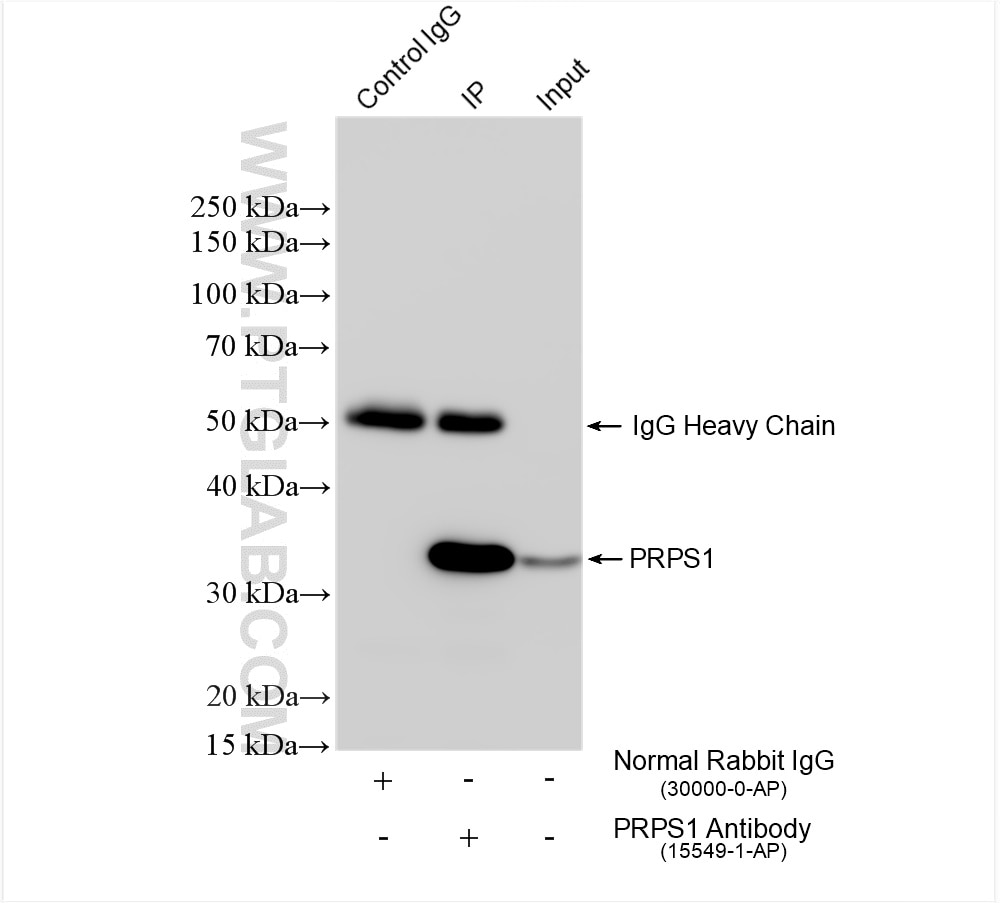
| Positive IP detected in | HeLa cells |
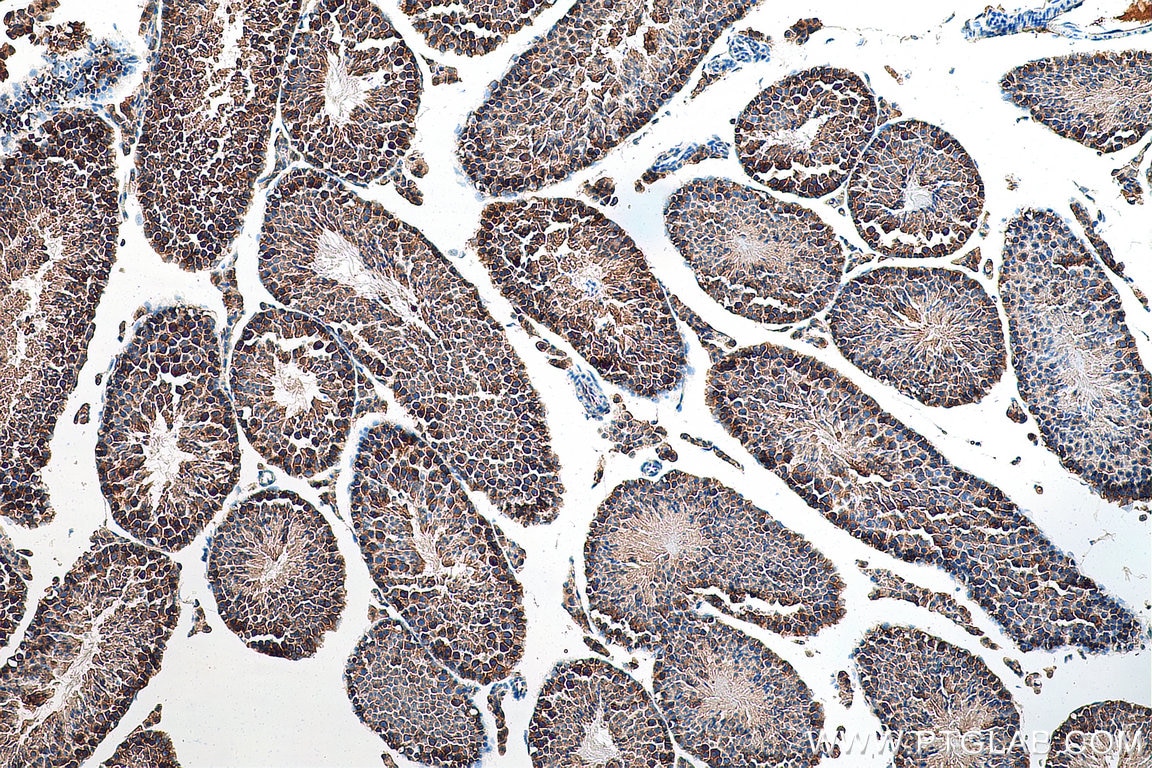
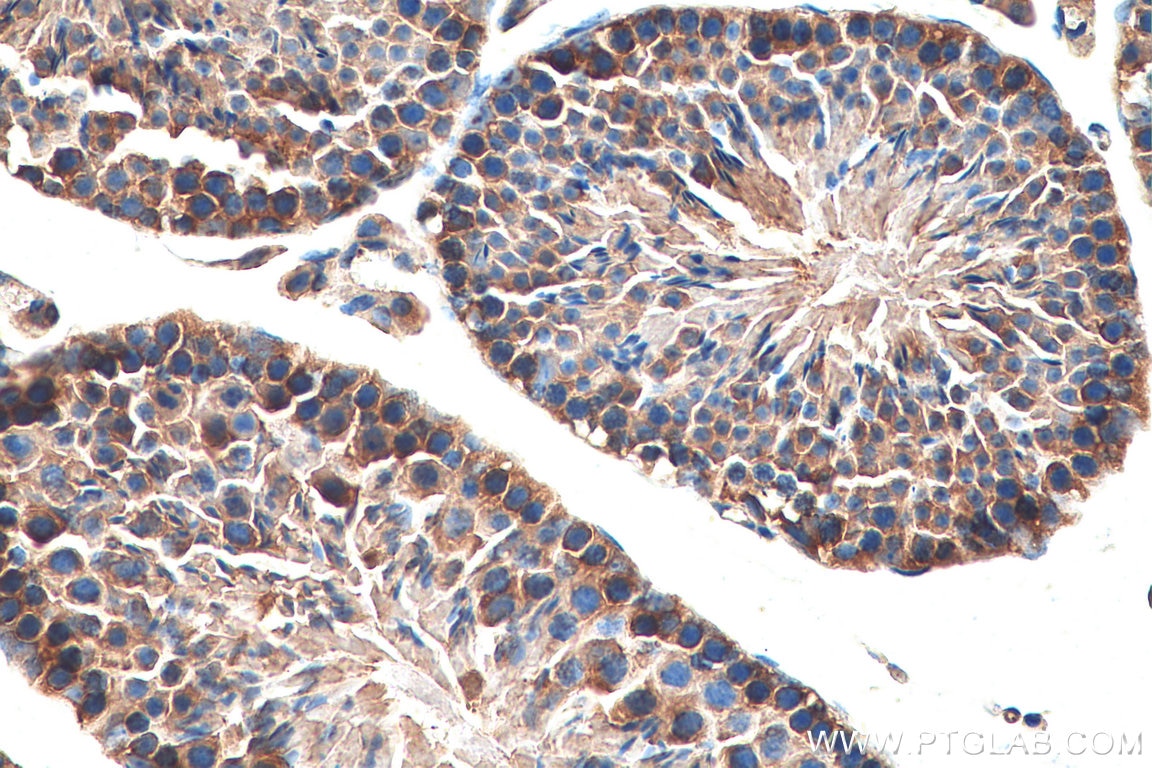
| Positive IHC detected in | mouse testis tissue Note: suggested antigen retrieval with TE buffer pH 9.0; (*) Alternatively, antigen retrieval may be performed with citrate buffer pH 6.0 |
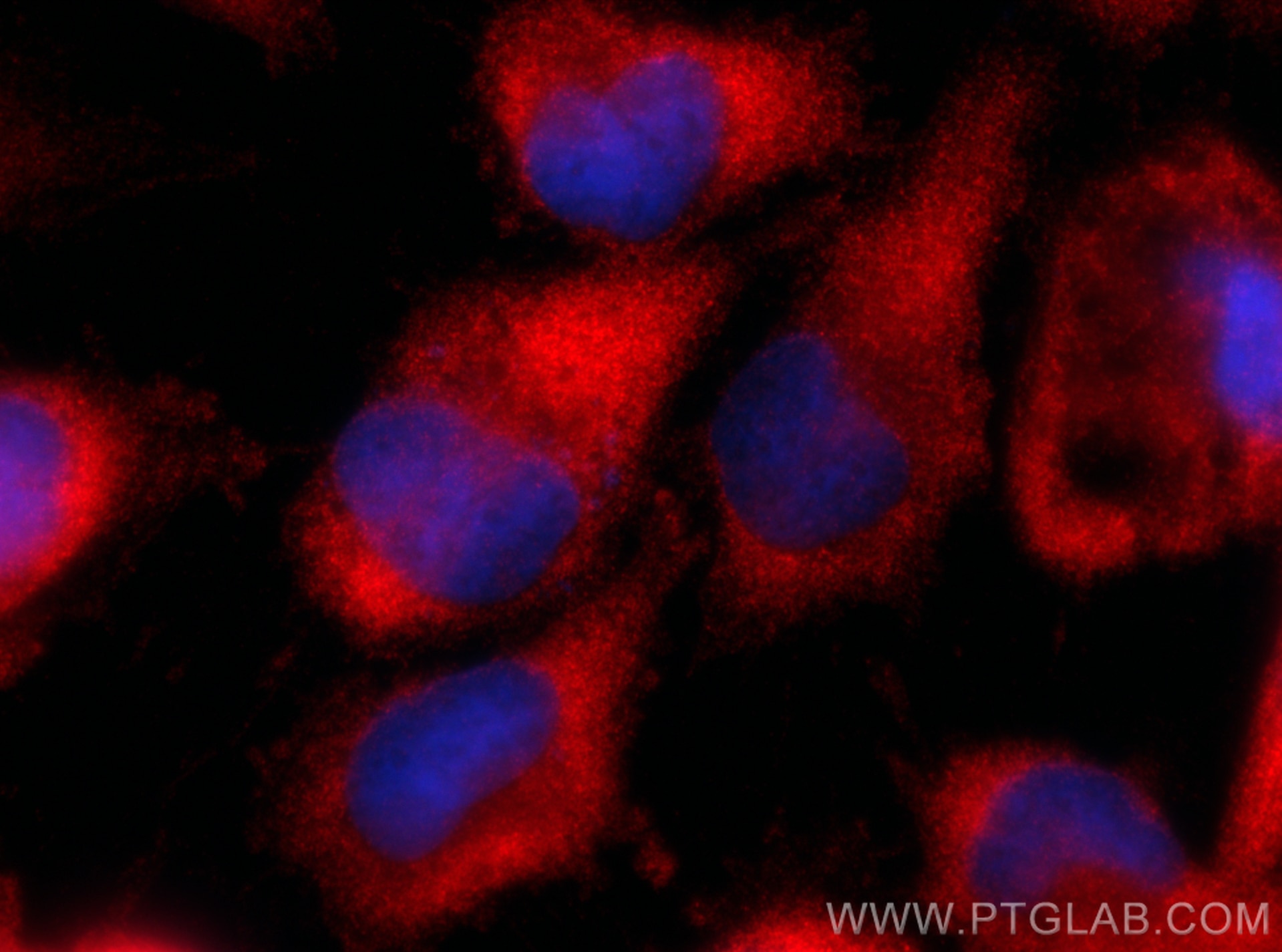
| Positive IF/ICC detected in | U-251 cells |
Recommended dilution
| Application | Dilution |
|---|---|
| Western Blot (WB) | WB : 1:1000-1:6000 |
| Immunoprecipitation (IP) | IP : 0.5-4.0 ug for 1.0-3.0 mg of total protein lysate |
| Immunohistochemistry (IHC) | IHC : 1:50-1:500 |
| Immunofluorescence (IF)/ICC | IF/ICC : 1:50-1:500 |
| It is recommended that this reagent should be titrated in each testing system to obtain optimal results. | |
| Sample-dependent, Check data in validation data gallery. | |
Product Information
15549-1-AP targets PRPS1 in WB, IHC, IF/ICC, IP, CoIP, ELISA applications and shows reactivity with human, mouse, rat samples.
| Tested Reactivity | human, mouse, rat |
| Cited Reactivity | human, mouse, rat |
| Host / Isotype | Rabbit / IgG |
| Class | Polyclonal |
| Type | Antibody |
| Immunogen |
CatNo: Ag7907 Product name: Recombinant human PRPS1 protein Source: e coli.-derived, PGEX-4T Tag: GST Domain: 1-318 aa of BC001605 Sequence: MPNIKIFSGSSHQDLSQKIADRLGLELGKVVTKKFSNQETCVEIGESVRGEDVYIVQSGCGEINDNLMELLIMINACKIASASRVTAVIPCFPYARQDKKDKSRAPISAKLVANMLSVAGADHIITMDLHASQIQGFFDIPVDNLYAEPAVLKWIRENISEWRNCTIVSPDAGGAKRVTSIADRLNVDFALIHKERKKANEVDRMVLVGDVKDRVAILVDDMADTCGTICHAADKLLSAGATRVYAILTHGIFSGPAISRINNACFEAVVVTNTIPQEDKMKHCSKIQVIDISMILAEAIRRTHNGESVSYLFSHVPL Predict reactive species |
| Full Name | phosphoribosyl pyrophosphate synthetase 1 |
| Calculated Molecular Weight | 318 aa, 35 kDa |
| Observed Molecular Weight | 35 kDa |
| GenBank Accession Number | BC001605 |
| Gene Symbol | PRPS1 |
| Gene ID (NCBI) | 5631 |
| RRID | AB_10694269 |
| Conjugate | Unconjugated |
| Form | Liquid |
| Purification Method | Antigen affinity purification |
| UNIPROT ID | P60891 |
| Storage Buffer | PBS with 0.02% sodium azide and 50% glycerol, pH 7.3. |
| Storage Conditions | Store at -20°C. Stable for one year after shipment. Aliquoting is unnecessary for -20oC storage. 20ul sizes contain 0.1% BSA. |
Background Information
PRPS1, also named as Ribose-phosphate pyrophosphokinase 1, is a 318 amino acid protein, which belongs to the ribose-phosphate pyrophosphokinase family. PRPS1 can form Homodimer and the active form is probably a hexamer composed of 3 homodimers. PRPS1 catalyzes the synthesis of phosphoribosylpyrophosphate (PRPP) which is essential for nucleotide synthesis. PRPS1 as a module has an association with the Hepatocellular carcinoma.
Protocols
| Product Specific Protocols | |
|---|---|
| IF protocol for PRPS1 antibody 15549-1-AP | Download protocol |
| IHC protocol for PRPS1 antibody 15549-1-AP | Download protocol |
| IP protocol for PRPS1 antibody 15549-1-AP | Download protocol |
| WB protocol for PRPS1 antibody 15549-1-AP | Download protocol |
| Standard Protocols | |
|---|---|
| Click here to view our Standard Protocols |
Publications
What published studies show
The PRPS1 Polyclonal antibody (Cat# 15549-1-AP) has 23 citations across journals including Science, Cell, Nature Metabolism, Nature Communications, Molecular Cell, Nature Chemical Biology, Science Advances, Cell Death & Differentiation, Frontiers in Immunology, Oncotarget, and bioRxiv. Research fields span purine/nucleotide biosynthesis, metabolic reprogramming, mitochondrial function, energy stress, cancer (melanoma, leukemia, lymphoma, hepatocellular carcinoma), redox homeostasis, drug resistance, and Alzheimer's disease.
| Species | Application | Title |
|---|---|---|
Science NUDT5 regulates purine metabolism and thiopurine sensitivity by interacting with PPAT | ||
Science mTORC1 induces purine synthesis through control of the mitochondrial tetrahydrofolate cycle. | ||
Nat Commun The role of gene duplication and paralog specialisation in the evolution of the mammalian PRPS complex
| ||
Nat Commun Identification of purine biosynthesis as an NADH-sensing pathway to mediate energy stress
|







