


Tested Applications
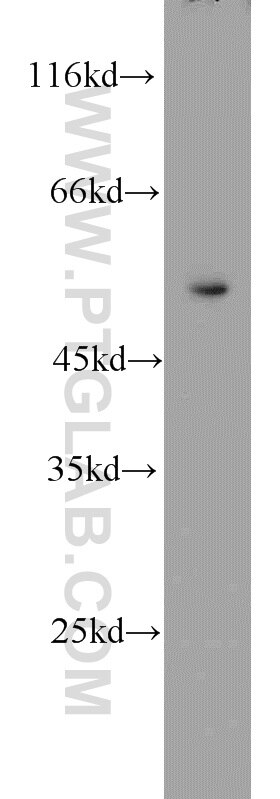
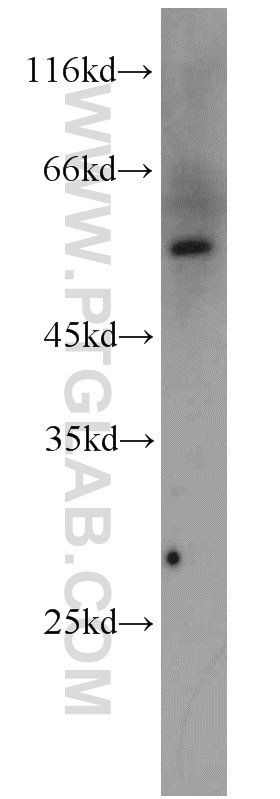
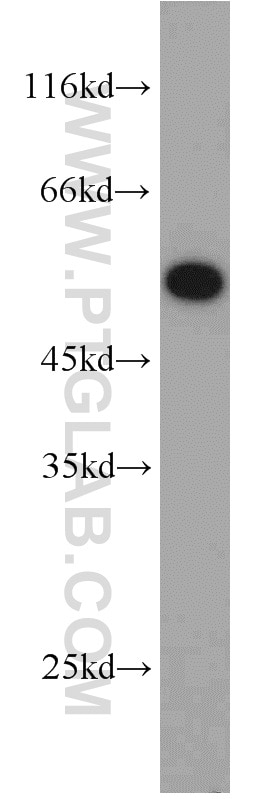
| Positive WB detected in | DU 145 cells, A549 cells, HeLa cells, mouse lung tissue, Jurkat cells, mouse brain tissue, rat brain tissue |
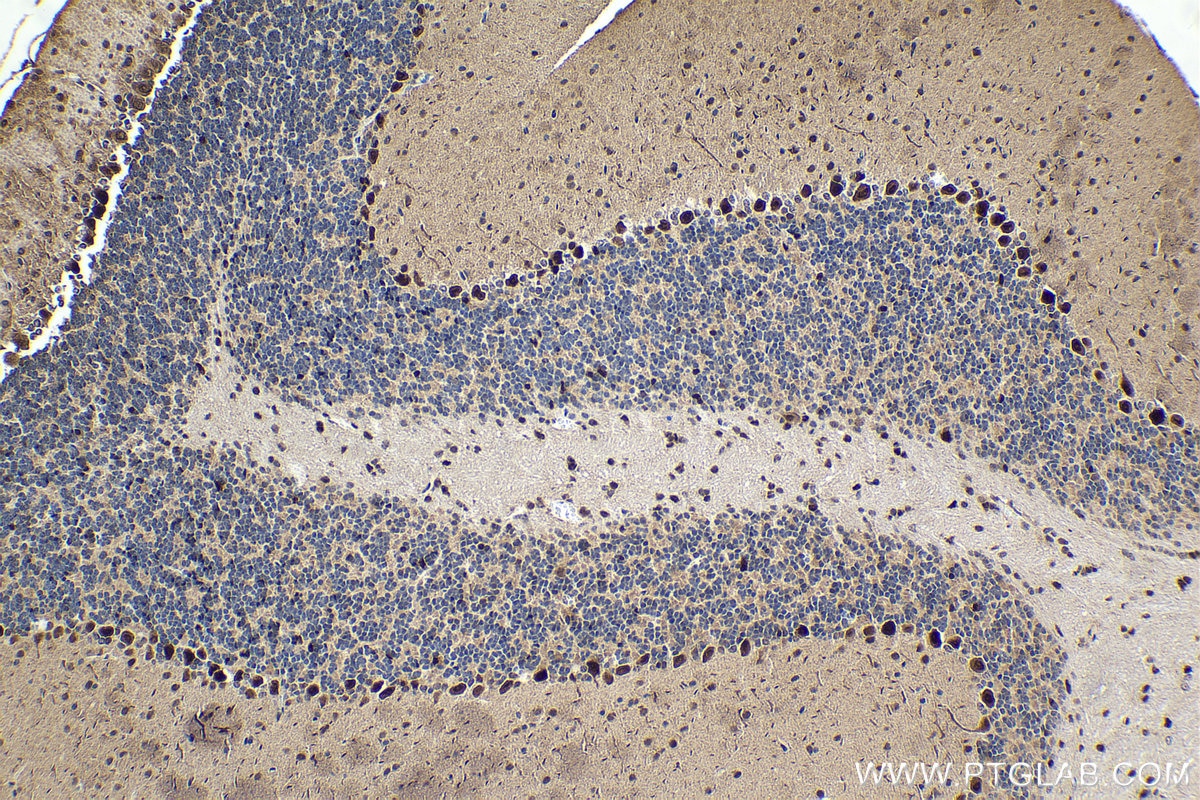
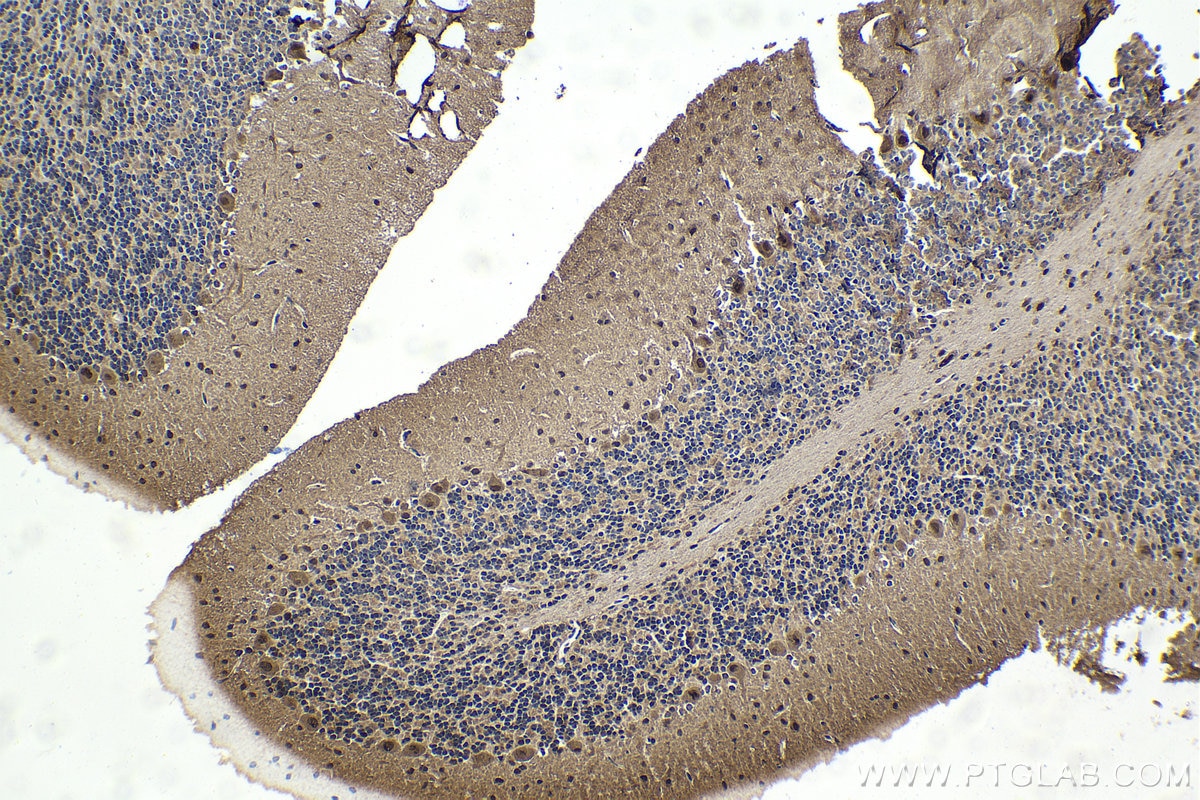
| Positive IHC detected in | mouse cerebellum tissue, rat cerebellum tissue Note: suggested antigen retrieval with TE buffer pH 9.0; (*) Alternatively, antigen retrieval may be performed with citrate buffer pH 6.0 |
Recommended dilution
| Application | Dilution |
|---|---|
| Western Blot (WB) | WB : 1:1000-1:4000 |
| Immunohistochemistry (IHC) | IHC : 1:50-1:500 |
| It is recommended that this reagent should be titrated in each testing system to obtain optimal results. | |
| Sample-dependent, Check data in validation data gallery. | |
Product Information
11196-1-AP targets PSMC1 in WB, IHC, ELISA applications and shows reactivity with human, mouse, rat samples.
| Tested Reactivity | human, mouse, rat |
| Cited Reactivity | human, mouse, rat |
| Host / Isotype | Rabbit / IgG |
| Class | Polyclonal |
| Type | Antibody |
| Immunogen |
CatNo: Ag1677 Product name: Recombinant human PSMC1 protein Source: e coli.-derived, PGEX-4T Tag: GST Domain: 77-440 aa of BC016368 Sequence: EFIRNQEQMKPLEEKQEEERSKVDDLRGTPMSVGTLEEIIDDNRAIVSTSVGSEHYVSILSFVDKDLLEPGCSVLLNHKVHAVIGVLMDDTDPLVTVMKVEKAPQETYADIGGLDNQIQEIKESVELPLTHPEYYEEMGIKPPKGVILYGPPGTGKTLLAKAVANQTSATFLRVVGSELIQKYLGDGPKLVRELFRVAEEHAPSIVFIDEIDAIGTKRYDSNSGGEREIQRTMLELLNQLDGFDSRGDVKVIMATNRIETLDPALIRPGRIDRKIEFPLPDEKTKKRIFQIHTSRMTLADDVTLDDLIMAKDDLSGADIKAICTEAGLMALRERRMKVTNEDFKKSKENVLYKKQEGTPEGLYL Predict reactive species |
| Full Name | proteasome (prosome, macropain) 26S subunit, ATPase, 1 |
| Calculated Molecular Weight | 49 kDa |
| Observed Molecular Weight | 52-57 kDa |
| GenBank Accession Number | BC016368 |
| Gene Symbol | PSMC1 |
| Gene ID (NCBI) | 5700 |
| RRID | AB_2284521 |
| Conjugate | Unconjugated |
| Form | Liquid |
| Purification Method | Antigen affinity purification |
| UNIPROT ID | P62191 |
| Storage Buffer | PBS with 0.02% sodium azide and 50% glycerol, pH 7.3. |
| Storage Conditions | Store at -20°C. Stable for one year after shipment. Aliquoting is unnecessary for -20oC storage. 20ul sizes contain 0.1% BSA. |
Background Information
PSMC1(26S protease regulatory subunit 4) is also named as p26s4 and belongs to the AAA ATPase family.The 26S protease is involved in the ATP-dependent degradation of ubiquitinated proteins. The regulatory (or ATPase) complex confers ATP dependency and substrate specificity to the 26S complex.
Protocols
| Product Specific Protocols | |
|---|---|
| IHC protocol for PSMC1 antibody 11196-1-AP | Download protocol |
| WB protocol for PSMC1 antibody 11196-1-AP | Download protocol |
| Standard Protocols | |
|---|---|
| Click here to view our Standard Protocols |
Publications
What published studies show
The PSMC1 Polyclonal antibody (Cat# 11196-1-AP) has 10 total citations published in journals including Science Advances, Pharmacological Research, Cell Death & Disease, Oncogene, Cellular and Molecular Life Sciences, International Immunopharmacology, Acta Biochimica et Biophysica Sinica, PLoS One, Neuropathology, and Physical Activity and Nutrition. Research fields span proteasome biology, ubiquitin-mediated protein degradation, cancer, neurodegeneration, drug mechanisms, and cardiac catabolism.
| Species | Application | Title |
|---|---|---|
Cell Death Dis Dihydrolipoamide dehydrogenase (DLD) is a novel molecular target of bortezomib | ||
Pharmacol Res Curcumin modulates β-catenin stabilization via targeting proteasomal deubiquitinating enzyme USP14 | ||
Oncogene The degradation of p53 and its major E3 ligase Mdm2 is differentially dependent on the proteasomal ubiquitin receptor S5a. | ||
Cell Mol Life Sci The insulin-degrading enzyme is an allosteric modulator of the 20S proteasome and a potential competitor of the 19S. | ||
Int Immunopharmacol RNF180 suppressed aggressiveness by degrading NOTCH1, TRIM24 and FOXC1, and chemoresistance by degrading ACC1 and ACLY in colorectal cancer |







